Partial Dentures Made to Your Rx: Metal, Titanium, Flexible, and Acrylic
Istar Digital Dental Lab makes partial dentures for dental clinics and dental labs in the US and Europe: cast-framework, titanium, flexible, and acrylic RPDs, plus attachment-retained designs. Every case starts from a dentist’s prescription: you choose the partial type, and we survey, design, fabricate, and inspect it to that Rx in our own labs.
Partial Dentures We Make
We also make PEEK frameworks. For edentulous arches, see our complete dentures.
Choosing a Removable Partial Denture Type for the Case
The choice you write on the Rx decides more than the price. It sets how the partial is supported, whether it can be relined, and how easily it can be changed when an abutment fails.
Metal Frameworks for Definitive Partials
A framework partial is supported by rests on prepared teeth and joined by a rigid major connector, so occlusal load is shared by the abutments rather than carried by the ridge alone. The saddles are processed in resin over retention mesh, which keeps them relinable as the ridge resorbs.
Cobalt-chromium is the usual framework alloy. Choose titanium when the patient’s allergy history rules out Co-Cr, keeping in mind that titanium is more flexible and is designed with heavier connectors. Our metal dentures guide compares the alloys in detail.
Flexible Partials: Where They Work and Where They Don't
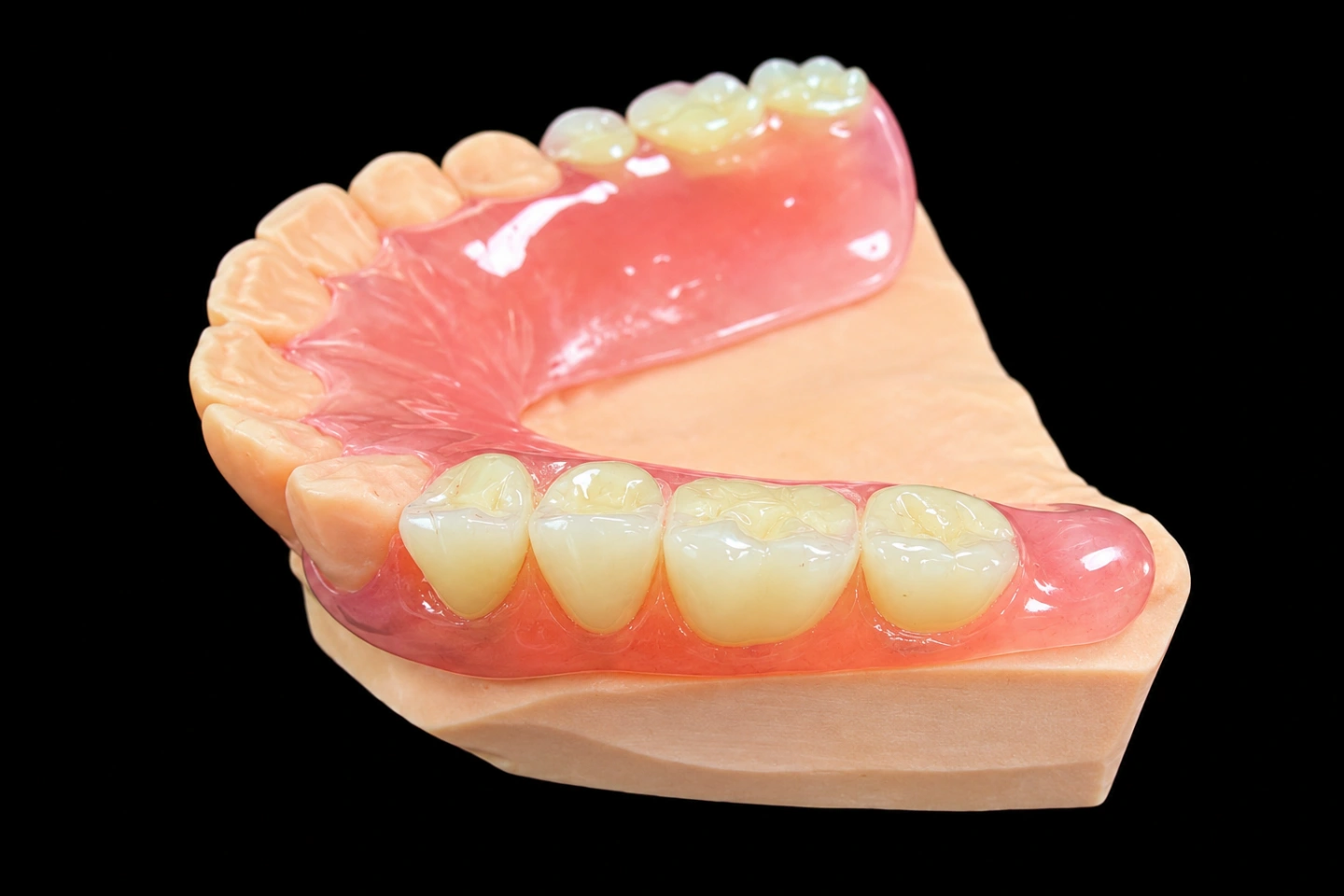
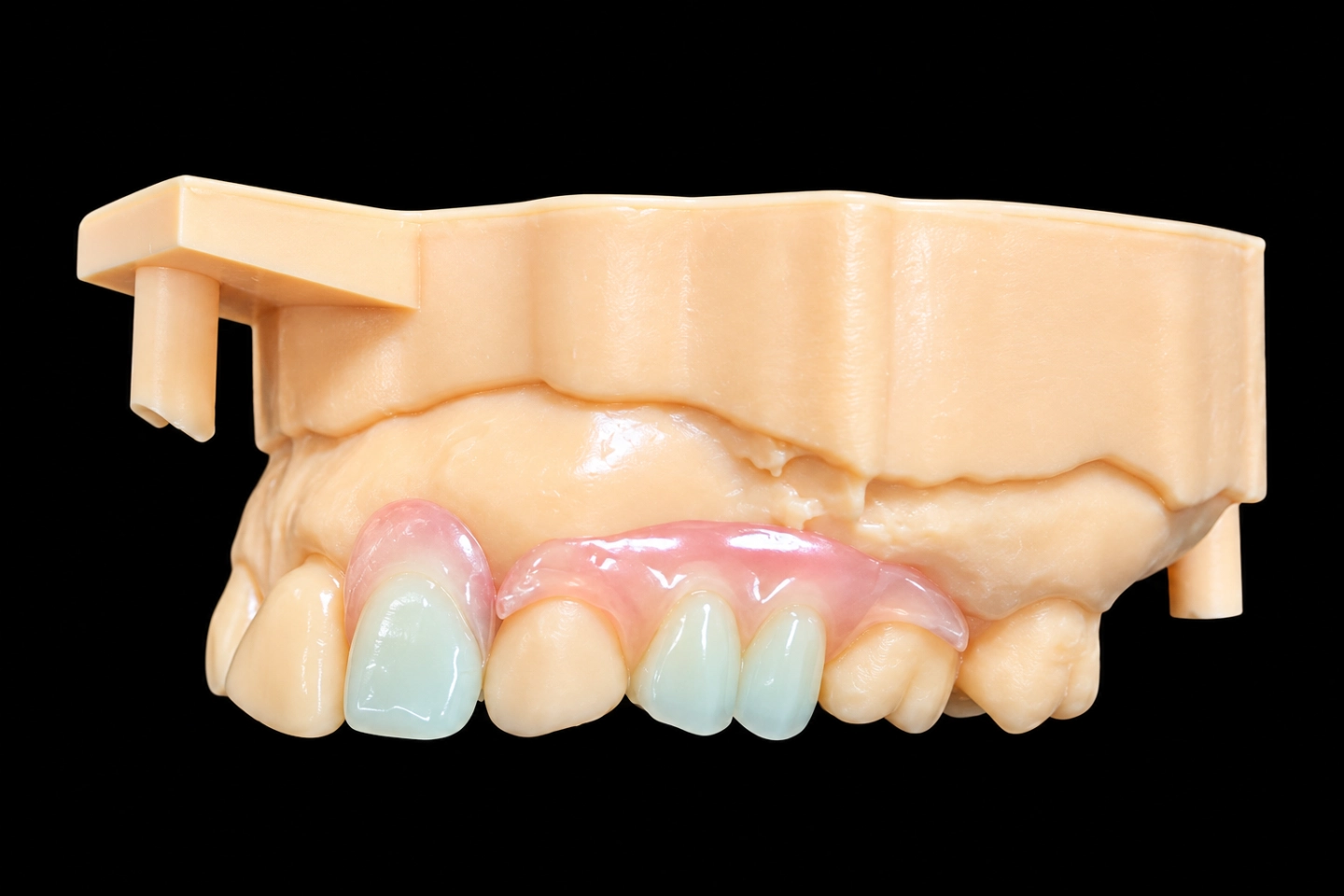
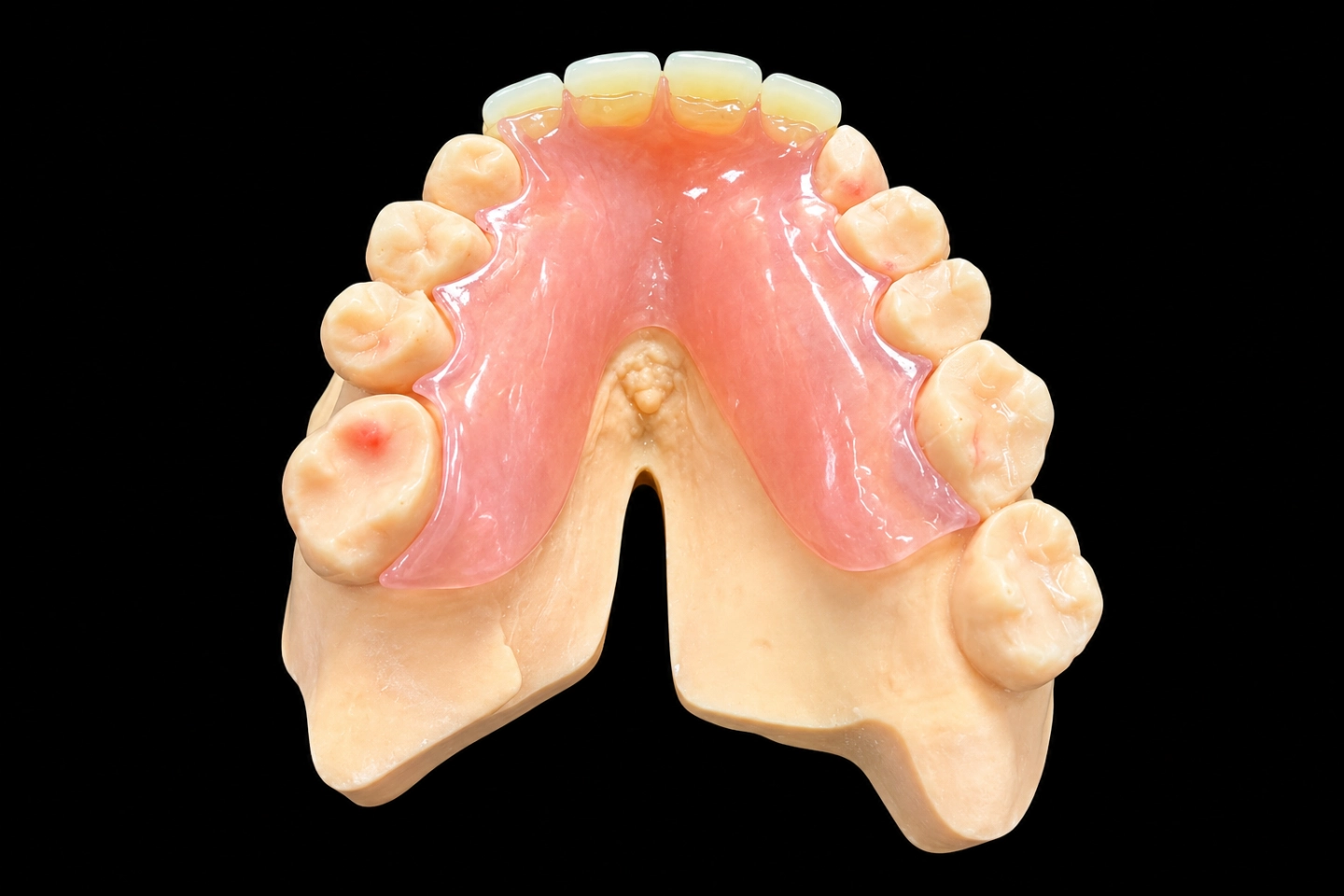
Flexible partials suit one or several missing teeth, patients with a metal allergy, and cases where visible clasps are the main objection. They aren’t the right choice for heavy occlusal forces, large base coverage, or very deep abutment undercuts: the material flexes and deforms under those conditions.
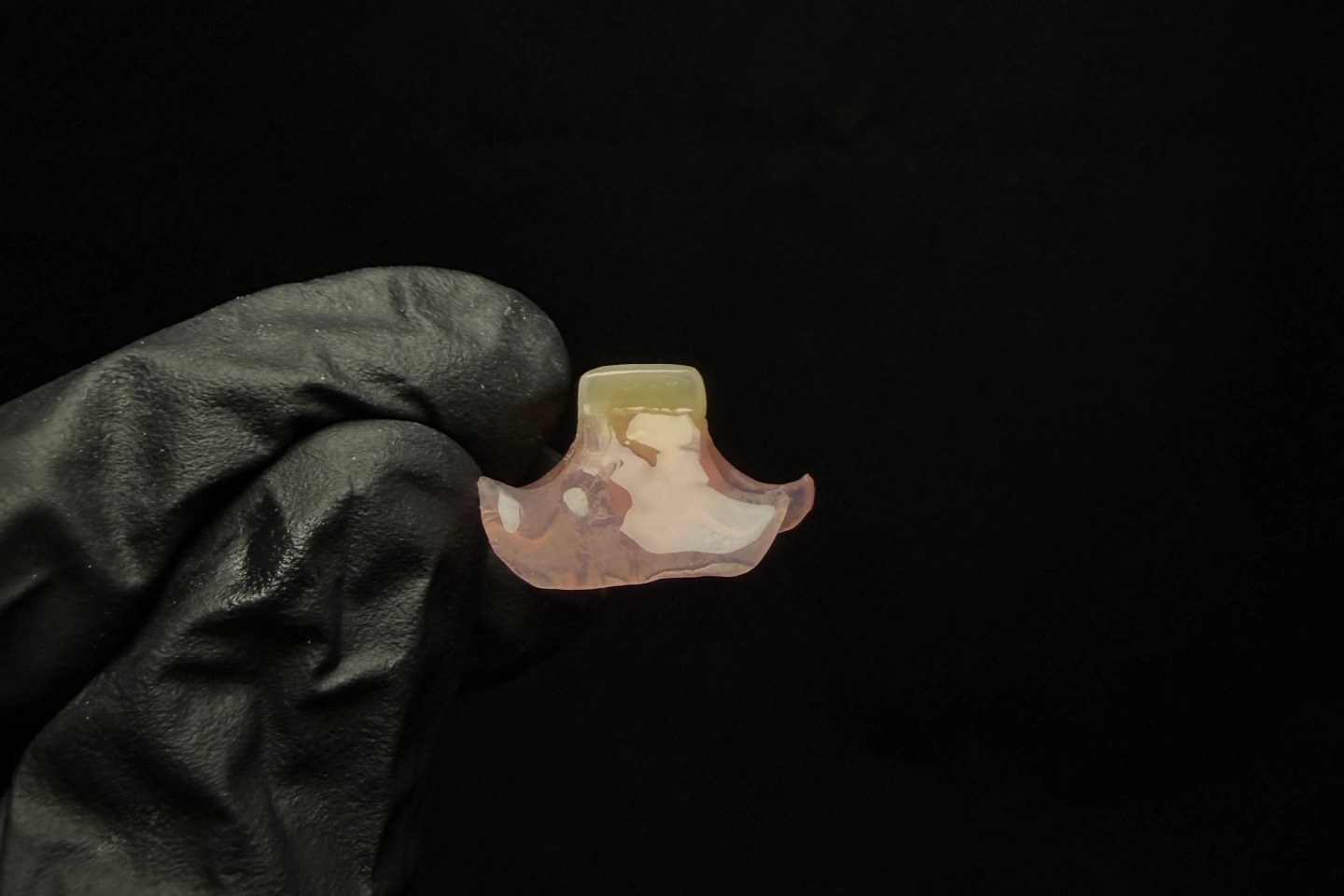
Our flexible partials can be relined, repaired, and have teeth added. For a single missing tooth, see our single-tooth flexible denture.
Acrylic Partials for Transitional Cases
An acrylic partial gives the patient teeth during healing or while the definitive treatment is decided. Without a rigid framework, it leans more on the ridge for support. Plan it as a transitional prosthesis rather than a substitute for a framework partial.
Denture Teeth and Base Resin
Heat curing is the conventional route. Injection molding shrinks less and adapts more closely, and milling repeats a digital design exactly but reproduces fine soft-tissue borders less well. Tell us on the Rx if you want a specific brand or batch and we’ll use it. We never switch a material without your consent, written or verbal.
Framework Design: Who Surveys, Who Approves
Framework errors usually trace back to a design nobody confirmed. We split the work this way:
We can’t create rest seats or guide planes on the model if they aren’t in the mouth, so mark on the Rx which teeth you prepared. If you have your own design, draw it on the Rx or the model. If you design frameworks yourself, send an editable exocad or 3Shape file and we’ll fabricate from it.
What the Design Approval Shows
Before fabrication, we send the framework design as a screenshot or file, by email or in your case group chat. It marks:
- Clasp types and positions, such as I-bars and circumferential (C) clasps
- Rest positions
- Major and minor connector dimensions
- Retention mesh coverage for the bases
Complex framework partials and every attachment or telescopic case always go through approval; any other case can on request. Approval adds 1–2 working days, includes two rounds of changes at no charge, and changes you ask for early don’t affect the turnaround or the fee. Once you approve, we build to that design. Any later change is recorded on the work order with the date.
Abutments With a Guarded Prognosis
Tell us which abutments you doubt. We can then keep the design ready for a tooth or a clasp to be added later, instead of remaking the whole partial when that tooth is lost.
What to Send With a Partial Denture Case
Impressions and Bite Records
- Impression: VPS or polyether. Alginate shrinks and can raise quarantine issues in international shipping, so we don’t recommend it for cases sent to China.
- Coverage: the full arch with clear rest seats and abutment contours, plus the opposing arch.
- Bite: a VPS bite registration rather than wax, which softens and distorts in transit. Where too few teeth occlude to hold a stable bite, use a record base with a wax rim.
- Rx: partial type, design or “please propose design,” teeth prepared, shade and tooth mold, and any material restriction.
If records are missing or contradict each other, production stops and we contact you before anything is made.
Scans and Digital Files
We accept scans from 3Shape TRIOS, Medit, iTero, CEREC, Shining3D, and Planmeca, in STL, PLY, OBJ, DCM, or 3Shape .3oxz, sent by email, WeTransfer, 3Shape Communicate, or Medit Link. Zip each case in its own folder (not RAR) with one case ID across the scans, Rx, and photos. We check every scan within one working day and tell you if it needs a rescan, for example when rest seats are unclear, the arch isn’t fully covered, or the bite is misaligned.
Scans are most established on tooth-bounded spans. A systematic review of digital removable partial dentures found that full-digital RPDs can be made without a stone cast, but clinical-trial evidence is still limited and largely confined to Kennedy Class III and IV cases. If you scan a long distal extension, a framework try-in lets you confirm seating on the patient before the teeth go on. More on our digital dental laboratory page.
Delivery Options and Try-Ins
How We Make and Inspect Partial Dentures
Every removable case runs through records review, scanning or model work, CAD design review, model printing or forming, setup, waxing, flasking and processing, and finishing. Four points in the process are checked before the case moves on: the model, the wax setup, the tooth arrangement, and the finished processed denture.
Frameworks are inspected visually and under magnification for porosity, cracks, and distortion, then checked on the master model. Seating must be smooth, with no rocking. Clasps must have the planned form and flexibility, rests must seat fully, and connector cross-sections must match the design without interfering with the opposing arch. Each alloy has its own tools, sandblasting and polishing equipment, and recycling stream.
The resin-to-metal bond depends on retention mesh, beads, or grooves and a sandblasted, degreased surface. Primers support the bond but never replace mechanical retention.
Bases are processed with measured powder-to-liquid ratios, a stepped heat cure, and slow cooling in the bath to limit shrinkage and tooth movement. We measure base thickness with calipers and transilluminate the base to find internal bubbles. During polishing, the tissue surface and borders are protected so their fit isn’t altered.
Finished partials are checked for centric and excursive contacts, base extension and adaptation, and clasp fit on the abutments. Bubbles, porosity, poor adaptation, or an inaccurate bite mean a remake before the case leaves us.
Turnaround, Quotes, and Warranty
In-lab time counts working days from the day we receive complete records. Each stage of a staged case is scheduled separately, and waiting time for records, replies, or your design approval isn’t counted. Weekends, Chinese public holidays, international shipping, and customs clearance fall outside in-lab time. Rush service is free for clients who send 10 or more cases a month; we guarantee the ship date, though not the arrival date, because customs is outside our control.
Quotes are itemized to what you order rather than bundled, and you can confirm the full cost before production starts. Request our removable price list for current fees. You pay to send impressions or models to us. We pay to ship finished work back, remakes included.
All our partial dentures carry a one-year warranty, which on framework partials covers the framework as well as the resin. We adjust or remake lab-caused problems free of charge:
- A partial that doesn’t seat
- Lifted borders
- A poorly placed clasp
- An inaccurate bite
- Unsatisfactory esthetics or base color
Before any remake, we agree the cause with you, and remakes go to the front of the queue. A remake is charged when the original requirements change, such as a new shade or material, or when we flagged unusable records before production and were asked to proceed anyway.
Registrations and Material Documentation
Istar Digital Dental Lab is an FDA-registered establishment, Registration Number 3039441248, which you can check in the FDA establishment registration database. Our device listings include partial and complete dentures. For EU clinics, removable partial dentures follow the MDR custom-made device procedure, and we issue the statement for each case. Our labs operate under an ISO 13485 quality management system.
Partial dentures are prescription devices: we make them to a licensed dentist’s written instructions, in line with the ADA’s policy on direct-to-consumer dental services. On request, we supply the brand, origin, batch number, and certificate for the alloy and resins used in your case. Every case carries a unique number that links it to the technicians, equipment, material batches, and inspection results behind it.
A Removable Department Built for Volume
Istar Digital Dental Lab has made dental restorations since 2012 and runs four labs in Shenzhen and Huizhou, China, with about 460 staff. Removable work has its own department of about 55 people, and a separate team of about 25 handles quality control across all four labs. The removable line produces about 4,000 cases a month in a normal season and about 6,500 at peak.
Nothing is outsourced. Design, framework fabrication, setup, processing, and finishing all happen in our own labs. You’re welcome to see them on an on-site visit or a video tour of the factory, and you can read more about Istar Digital.
Cases from our lab
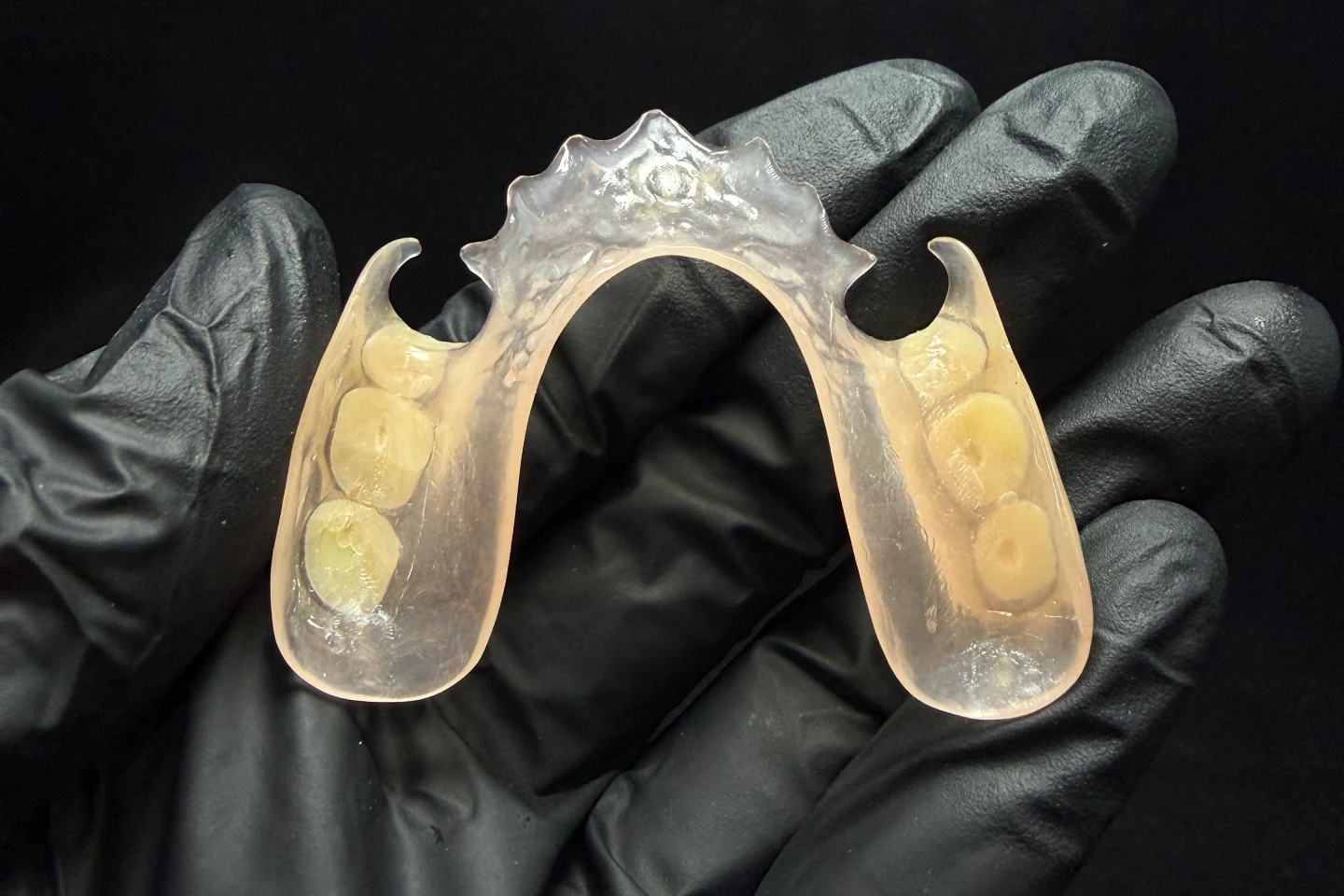
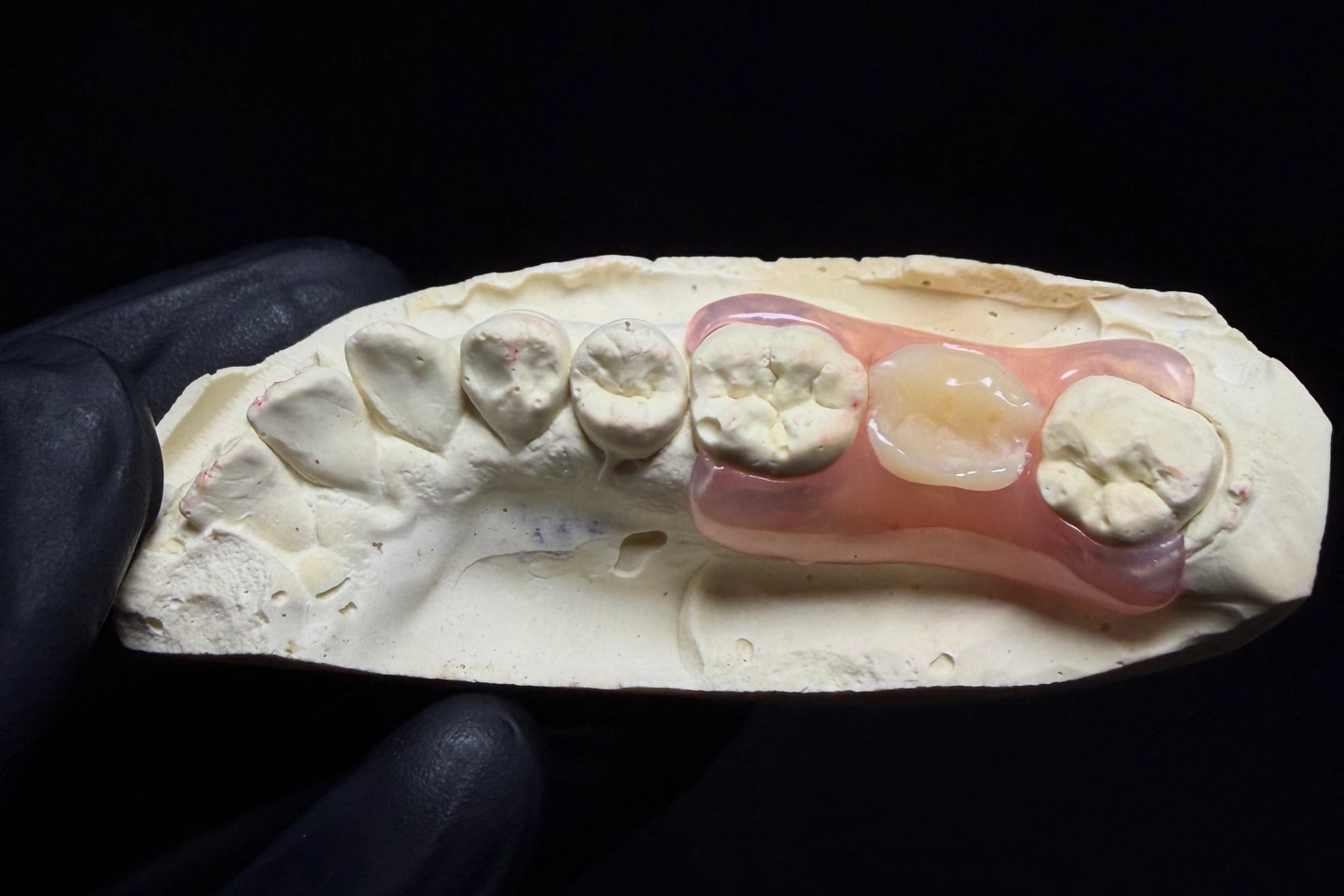
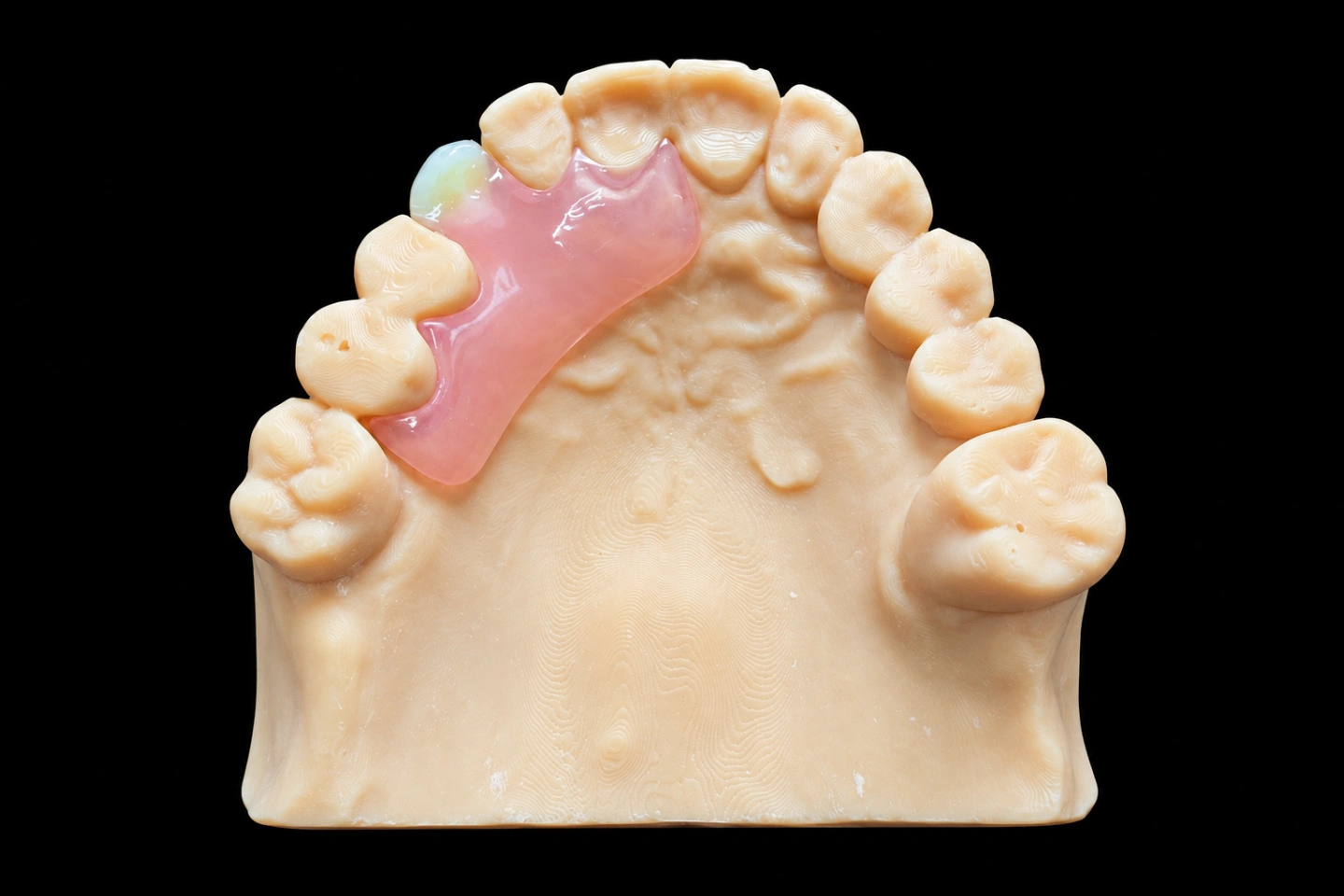
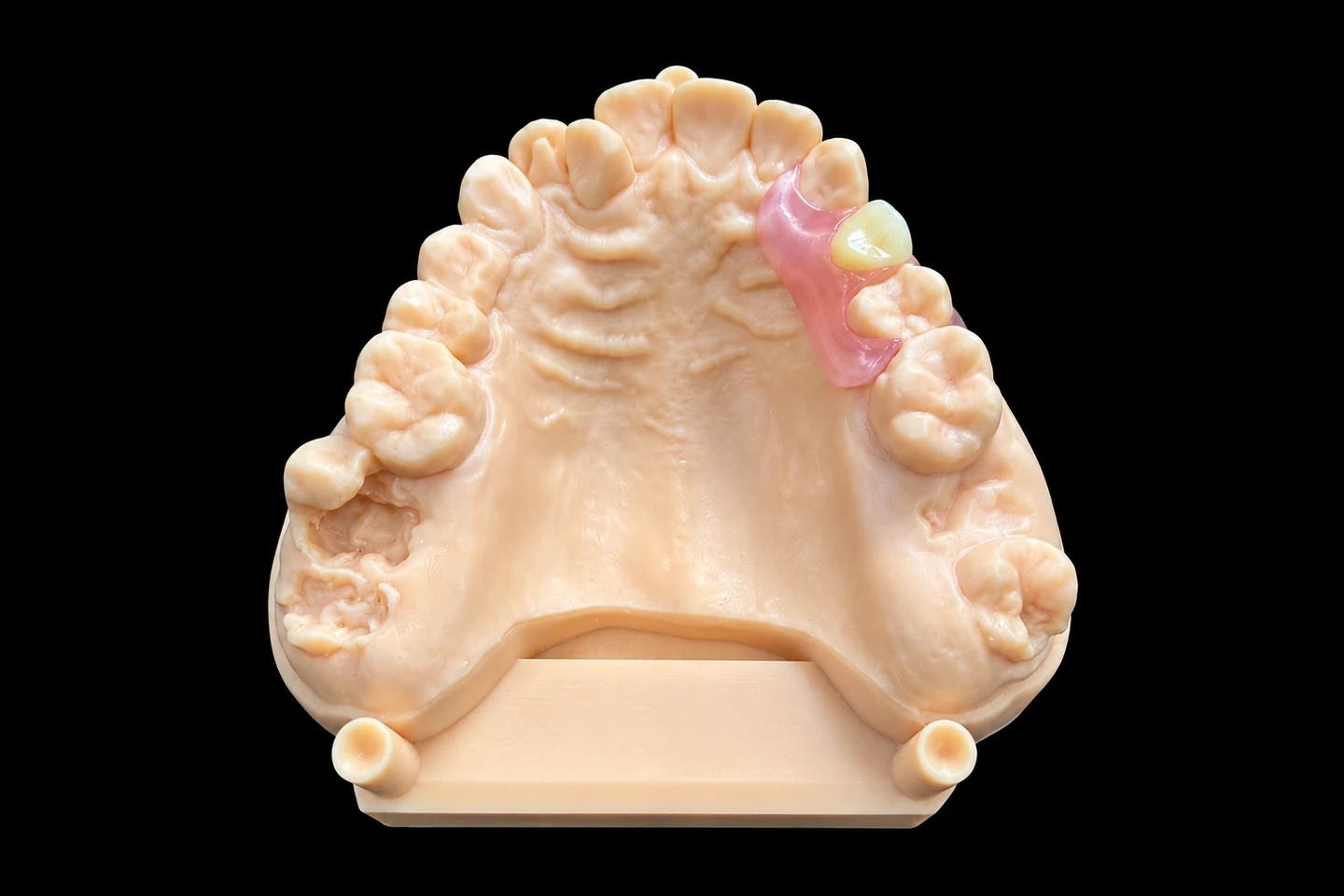
Partial Denture FAQs
Which CDT codes apply to each type of dental partial denture?
CDT describes the prosthesis by its base and framework. Resin-base partials are D5211 (maxillary) and D5212 (mandibular); cast metal framework partials with resin bases are D5213 and D5214; flexible-base partials are D5225 and D5226; immediate cast-framework partials are D5223 and D5224. Check the current CDT edition and payer rules, because coding is the treating dentist’s decision.
Can you add a tooth or clasp to a partial we didn't make?
Usually, yes. Send upper and lower models, the existing partial, and a bite record. We use resin of the same type as the original, roughen and clean the old surface so the new resin bonds, keep processing temperatures low enough not to damage the denture, and strength-test the repair before it ships. On titanium frameworks, we can laser-weld a new clasp.
Can you ship finished cases straight to my client's office?
Yes. Dental labs can have partials shipped to any address they name, and packaging and paperwork can leave out the Istar Digital name. The sender address on the waybill can’t be changed.
Can you keep each dentist's design preferences on file?
Yes. Our case system records preferences separately for each prescriber, which helps group practices and DSOs. Our four labs use largely the same materials but have separate technician teams, and if you prefer one team’s work, we’ll assign your cases to it.
What if a case arrives damaged?
Within 24 hours of delivery, send us an unboxing video that shows the courier label, along with the damaged piece, and keep the original packaging. With that evidence, we remake the case free of charge.
When can I reach your team?
Customer service works 9:30 a.m. to 6:00 p.m. China time (UTC+8) and stays available until midnight for urgent cases. Technical questions during working hours usually get an answer within an hour; outside them, within 12 hours.
Send Your First Partial Denture Case
The fastest way to judge a lab’s partials is one case on your own patient. Single trial cases are welcome, and ongoing partnerships suit a regular flow of cases.
- Digital case: send your scans with a completed Rx form, and ask for the framework design first if you’d like to review it.
- Impression case: follow our how-to-send guide. We can send you a prepared waybill, or you can ship to us and send the tracking number.
- Not sure which type fits? Send the records and ask for our design and material recommendation before you commit.
Questions before your first case? Contact our removable team.