Zirconia Veneers for Dental Labs and Prescribing Clinicians
Istar Digital Dental Lab is a contract dental laboratory. We mill, sinter, and finish zirconia veneers to your prescription in our own production facility in Shenzhen and Huizhou, and we ship to dental practices and partner laboratories across the United States and Western Europe. We are not a clinic, we do not treat patients, and we do not sell to patients.
If you prescribe veneers, run a laboratory that outsources part of its workload, or source restorations wholesale, this page tells you what we build, what you receive with every case, how we quote the work, and what happens when a case does not seat the first time. Send us a single case to trial, or send a case parameter sheet for a feasibility review. We will tell you in writing what we can build to your prescription before you ship impressions, scans, or models.
Our three zirconia veneer product lines
A zirconia veneer is not one product. We produce three distinct restorations under this heading, each with a different internal structure, a different clinical indication, and a different cost driver. Writing the wrong one into a prescription is the single most common reason a veneer case comes back for a remake.
| Product line | What it is | Where it fits | Main cost driver |
|---|---|---|---|
| Monolithic zirconia veneer | A single homogeneous zirconia block, milled, stained, and glazed. No veneering porcelain. | Posterior aesthetic cases, bruxism patients, cases where strength and chip-resistance matter more than internal effects. | Lowest hand-work; price moves mainly with the blank generation (3Y, 4Y, 5Y) you choose. |
| Multilayer zirconia veneer | One zirconia block with a factory-built translucency gradient: denser at the cervical, more translucent at the incisal. | The anterior full-zirconia case that still has to look natural. The gradient does the shade work the technician would otherwise layer by hand. | Mid; priced close to monolithic for a comparable blank. |
| Layered zirconia veneer | A zirconia core with feldspathic porcelain fired onto the facial, sometimes incisal. | Highest aesthetic demand, stable occlusion, cooperative patient. Veneering porcelain gives the chroma and translucency the monolithic family cannot. | Highest; the most hand-work and the only line where ceramic chipping is a real failure mode. |
Zirconia generation (3Y, 4Y, 5Y) is a second axis. Lower yttria means higher strength and lower translucency; higher yttria is the opposite. We select the generation against your indication and record it on the case sheet.
Where lithium disilicate is honestly the better call, we will say so and quote that instead rather than put a case into zirconia for the sake of this product page. Our e.max line runs on the same intake, quality, and remake rules as the zirconia lines described here.
On the phrase “zirconia porcelain veneer.” This label is used three ways on the open web: a glazed monolithic veneer, a layered zirconia-and-porcelain restoration, and sometimes anything made in a dental lab. On our intake, we read it as the layered line unless you tell us otherwise, and we confirm back in writing before milling.
How we produce a zirconia veneer
Every case runs through the same production chain. Where a step is case-dependent we tell you at intake, not after the fact.
- Digital design. CAD technicians work from your intraoral scan or a scanned impression. Where you have hand-marked the margin on the scan, we respect your line over the software’s automatic detection. Deep bites, tight embrasures, and multi-tooth anterior rehabilitation cases are routed to senior CAD technicians.
- Blank selection. We mill from factory zirconia blanks whose brand, country of origin, and batch number we record per case. The generation is chosen against your indication. A new blank batch is validated on sample work and against a standard test coupon before it enters production.
- Milling. Five-axis milling, with sprue placement chosen to minimise distortion on thin incisal edges.
- Sintering with controlled shrinkage compensation. Zirconia shrinks on sintering. We hold the compensation factor against the batch’s manufacturer value, verify it per batch against a standard coupon, and recalibrate on a schedule rather than on complaint.
- Finishing. Staining and glazing for the monolithic and multilayer lines; porcelain layering for the layered line. Both are done by hand by technicians dedicated to that line; our ceramic bench is a separate 70-person group, not rotated in from crown-and-bridge.
- Final quality check against the confirmed prescription and the signed-off design: marginal fit, intaglio surface quality, seating and passive adaptation, proximal contact tightness, centric and excursive contacts, form and contour, polish, and absence of cracks, voids, or chipping. Cases that fail this check are rebuilt internally; they never leave the laboratory.
- Packaging and documentation. The case is fitted with the paperwork described in the next section, then shipped.
A veneer moves between dedicated CAD, milling, ceramic, and QC teams, not through generalists. For a buyer comparing laboratories, that is the production-side question worth asking every candidate in the same words.
What you receive with every zirconia veneer case
A zirconia veneer leaves our facility with:
- The restoration, final-polished or glazed and fit-checked on the working model.
- The working model for conventional impression cases. Digital cases ship without a physical model and save the cross-border model transit time at the start of the case.
- A case sheet identifying the blank brand, country of origin, and batch number used for your case.
On request at the time of order, we add a design preview before milling, a written cost confirmation before production starts, and a per-case material pack (brand, origin, batch, certificate of conformity) within what the supplier permits us to pass through. Regulatory documentation covering our registrations and your material’s raw-level certificates is described in Credentials below.
We do not ship marketing collateral in the case box. We do not add paperwork you did not ask for.
Turnaround
Standard laboratory time for a routine zirconia veneer is in the same range as our crown-and-bridge line. The precise number varies with product line, span, and whether you have asked for design review before milling. We quote per case at intake.
How the turnaround clock behaves
- It starts the working day we receive a complete case: scans or impressions, prescription with the product line specified, shade and preparation photographs, and the occlusal record.
- It counts working days, not calendar days.
- It pauses while we wait for your design approval, for missing records we have flagged, or for your written answer to a prescription query. The clock restarts when we have what we asked for.
- It does not include cross-border shipping or customs clearance. Clearance delays sit outside our control; we support your paperwork and reset the delivery date when they occur.
Two practical levers reduce turnaround more than any rush service:
- Digital cases ship faster than impression cases. The model does not cross a border at the start of the case.
- Rush service. When our floor can accommodate it, qualifying rush cases run at no premium. Rush availability is confirmed per case, not blanket-promised. Remake cases jump the queue on a shorter cycle than a new case of the same type.
Remakes and the clinical-adjustment line
The most expensive question in a new laboratory relationship is who absorbs the cost when a case does not sit the first time. We publish our written rule here so you can decide before shipping.
Clinically adjustable
The restoration seats, the margin is closed, the proximal contacts and occlusion are workable, and the deviation is small enough to be refined chairside without affecting the main structure, seating, or finish line. These do not come back to us. For zirconia specifically, chairside adjustment should be followed by proper repolishing with a zirconia-specific polishing system; adjusting zirconia with crown-and-bridge polishers leaves it rougher than it started.
Must be remade
Fit, margin seal, occlusion, retention, or biological safety cannot be corrected in the mouth. The restoration returns to us.
Who pays
- Our workmanship or an unapproved material choice on our side: no charge.
- Model or impression quality we flagged in writing before starting, where you asked us to proceed anyway: the remake is chargeable, and we tell you the likely outcome before we start.
- Material prescribed by the clinician that turned out wrong for the case: chargeable, because the prescription was followed.
- Clinician changes the target shade after the case was built to the original prescription: decided case-by-case between the clinician and our account team; not automatic.
- Patient preparation changed between the first case and the planned remake: free remake on the new preparation.
- Shipping damage with full evidence (opening video within 24 hours of delivery, carrier label, damaged pieces, original packaging): no charge; damage after signing is not covered.
Credentials you can verify
Registered and listed, not “approved” or “certified.” Our laboratory holds active FDA establishment registration and device listing (custom crowns, bridges, inlays and onlays, veneers, custom implant abutments and superstructures, full and partial dentures, temporary restorations; implant bodies are not covered). EU market access is delivered under MDR Annex XIII custom-device notification via our authorised representative. We hold MHRA registration for the United Kingdom and operate an ISO 13485 quality management system. Our raw-material suppliers hold their own CE marking and ISO 10993 biocompatibility files at the material level.
These are market-access registrations, not product approvals or quality certifications. A supplier that writes “FDA approved” or “CE certified” on a dental veneer page is using the wrong words.
Searchable and auditable. Our FDA records are public in the FDA database and we share FEI and listing numbers at account setup. We accept scheduled site visits and documented remote video audits of our Shenzhen and Huizhou facilities.
Technical questions we check against every prescription
Three questions sit under almost every veneer failure we see. The right numbers depend on the case; we read the prescription against each before milling and flag mismatches in writing.
Reduction and finish line
Published guides disagree by a factor of several: structural minimum, clinical typical, and aesthetic optimum over a dark substrate are three different numbers. We check your reduction against the product line you chose and the stump colour you documented; if it is outside the window, we ask before milling.
Bonding protocol
The intaglio zirconia surface of all three lines is bonded with sandblasting plus an MDP-containing primer; hydrofluoric acid etch does not work on polycrystalline zirconia [[1]][[2]]. The facial porcelain of a layered veneer is bonded with HF-plus-silane. On request we confirm, in writing per case, which surface takes which protocol.
Shade and stump colour
Veneers are too thin to mask whatever sits under them. For anterior cases we need target shade, stump shade, and a shade tab photograph beside the preparation. Mismatched records get queried before milling, not after.
What a complete zirconia veneer prescription contains
A case is complete when it has scans or impressions, a prescription stating the product line (monolithic, multilayer, or layered) and the generation if you have a preference, margin design and vertical position with a dimension in mm, facial and incisal reduction target, final shade in your usual system, stump shade, and whether you want design preview before milling. The intake records we need alongside this are a bite registration taken in polyvinyl siloxane or polyether (wax deforms in cross-border transit and we see the vertical error downstream), photographs including a shade tab beside the preparation, and occlusion information including centric contacts, guidance pattern, and night-guard history. A one-page template with these fields is linked from our case submission guide.
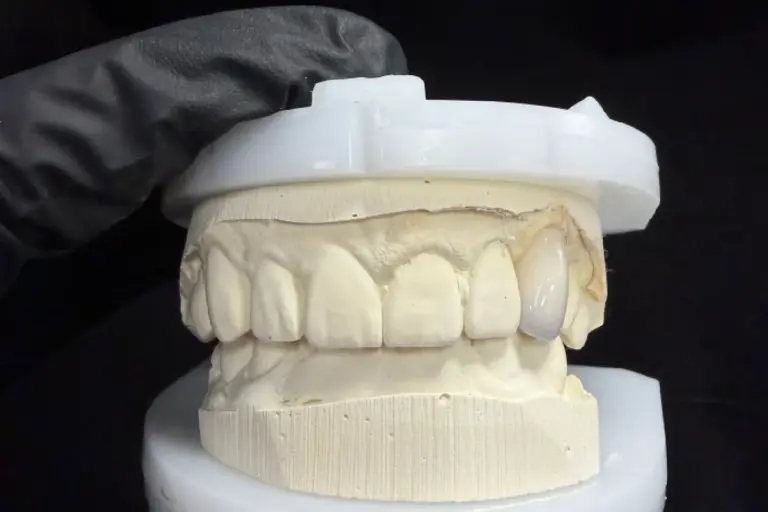
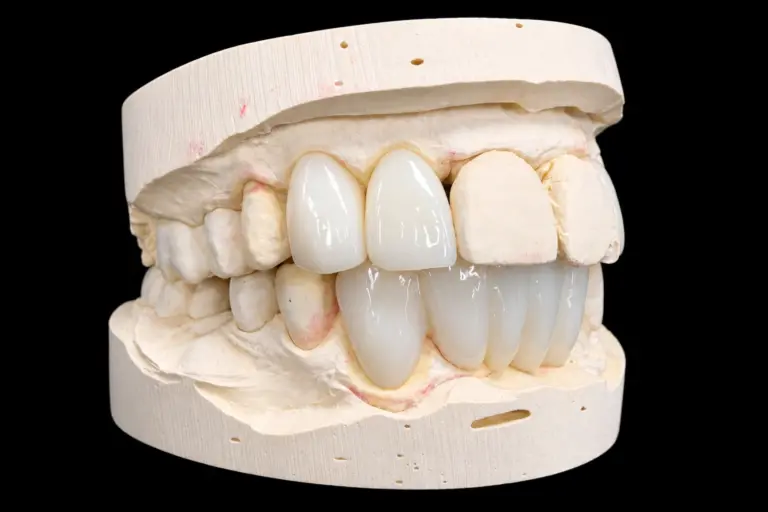
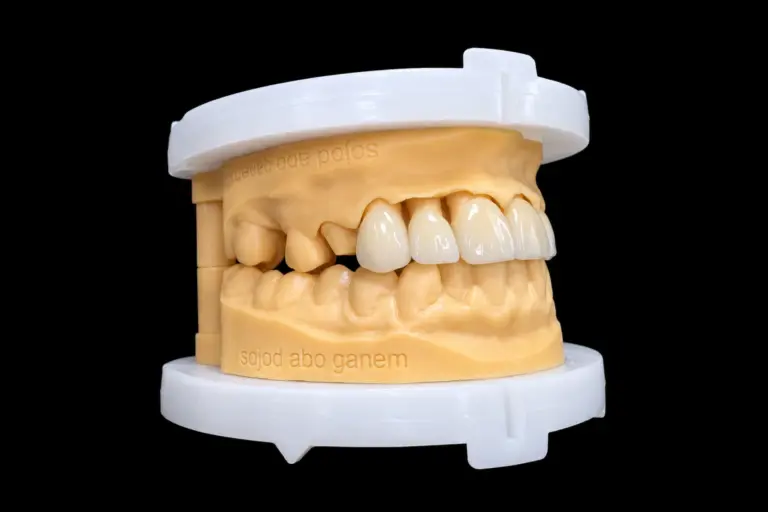
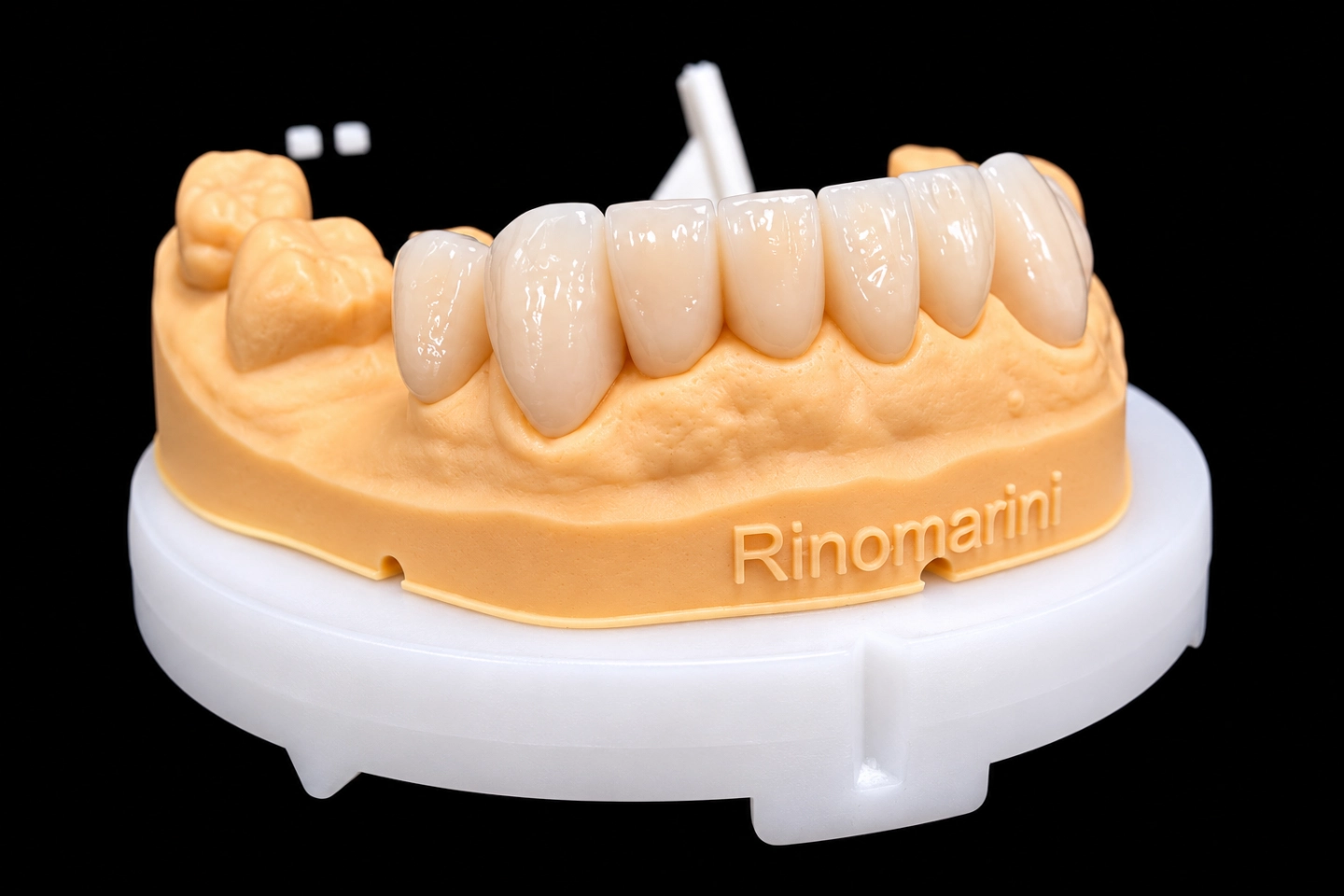
Cases from our lab
Frequently asked questions
What is your first-pass QC release rate for veneers?
Internally tracked and reported to accounts on request. We define it as the proportion of cases released by QC on first inspection, excluding internal remakes. Remake-rate comparisons only hold when both labs use the same formula, so we explain ours before we give you a number.
Do you quote in USD, and can we invoice in EUR?
USD for US and most international accounts. European accounts can invoice in EUR on request. Payment terms are set at account level.
Which veneering porcelain do you layer the zirconia with?
A feldspathic layering ceramic from a dental-industry manufacturer, matched to the zirconia core and the shade system in use. The specific brand is named per case; selection is driven by shade-system compatibility and by the ceramicist’s experience on that core.
Can you work from a scanner my practice does not currently export in open STL?
In most cases yes. Native file formats from the major scanner platforms (3Shape, iTero, Medit, Carestream, Primescan) are supported. Where a scanner only exports a closed format, we ask you to export to STL from the scanner’s cloud before upload.
Do you ship to all 50 US states and across the EU?
Yes. Shipping is included in every quote; cross-border transit and customs clearance are not counted in laboratory turnaround (see the Turnaround clock above). For long-term accounts in the EU, we route through our authorised representative to simplify customs paperwork.
Start a case with Istar Digital
- Have a case ready? Send it through our contact form. We confirm receipt and flag anything missing within one working day.
- Evaluating us as a vendor? Send scans or photographs plus a two-line description; we reply with a feasibility note before you ship anything.
- Multi-clinic or lab-to-lab account? Our account team handles volume pricing, standing orders, and audit scheduling through the same form.
For related work in the same material family, see our zirconia dental lab overview covering crown, bridge, and implant restorations, and our veneer lab page covering lithium disilicate and composite veneers.
References
- Guide to Zirconia Bonding Essentials. Kuraray Dental. https://kuraraydental.com/wp-content/uploads/2018/05/zirconia_bond_guide-1.pdf
- Z-PRIME Plus Technical Profile. BISCO. https://www.bisco.com/content/bisco_inc-_b2b_/variants_files/Z-Prime_Plus_Archive_Rev_3-18_2024-09-28-07-09-14-2024-09-28-19-09-14-676.pdf