Hard Soft Night Guard: Dual-Laminate Occlusal Guards Made to Your Rx
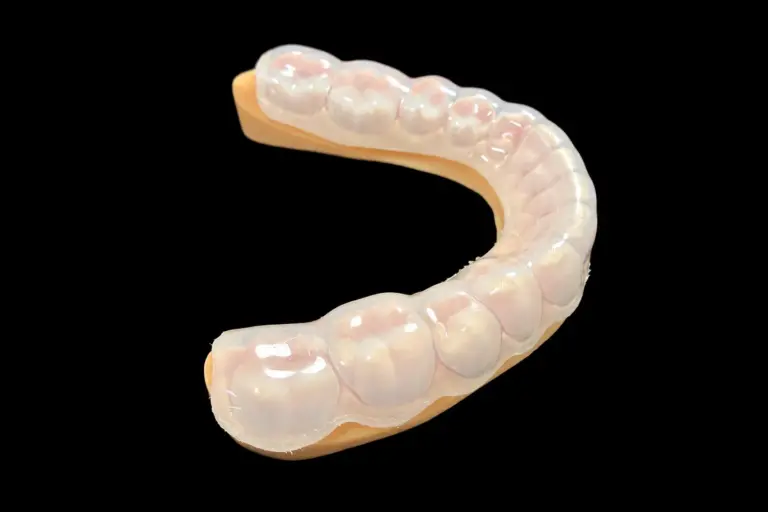
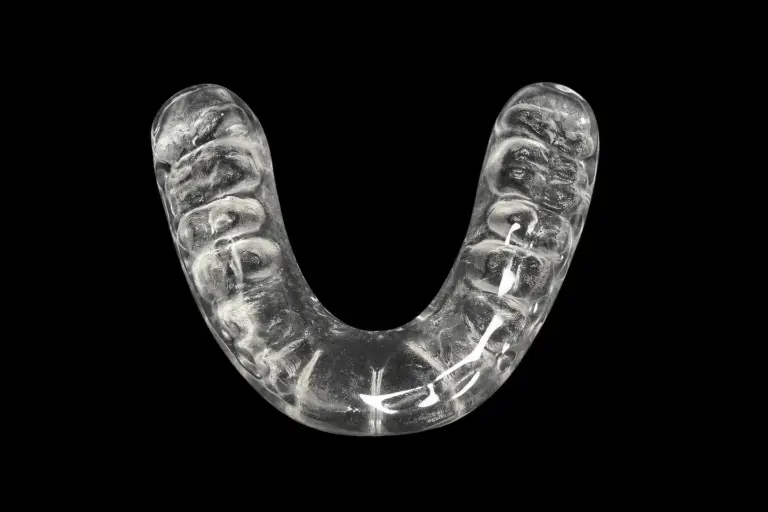
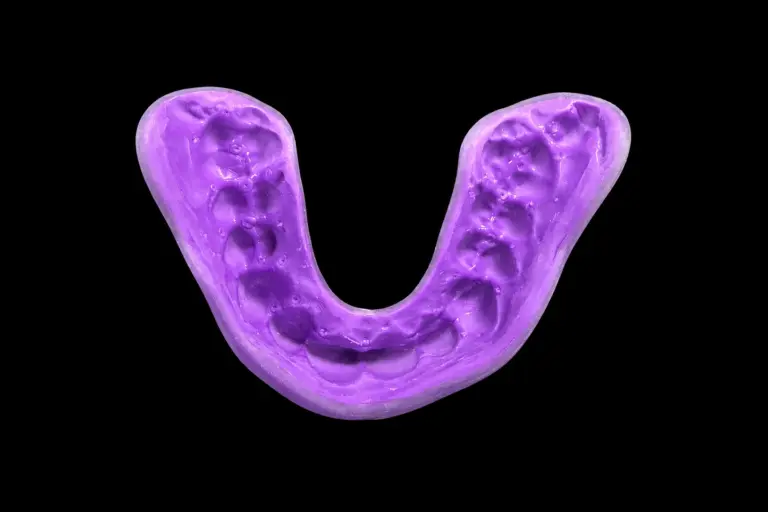
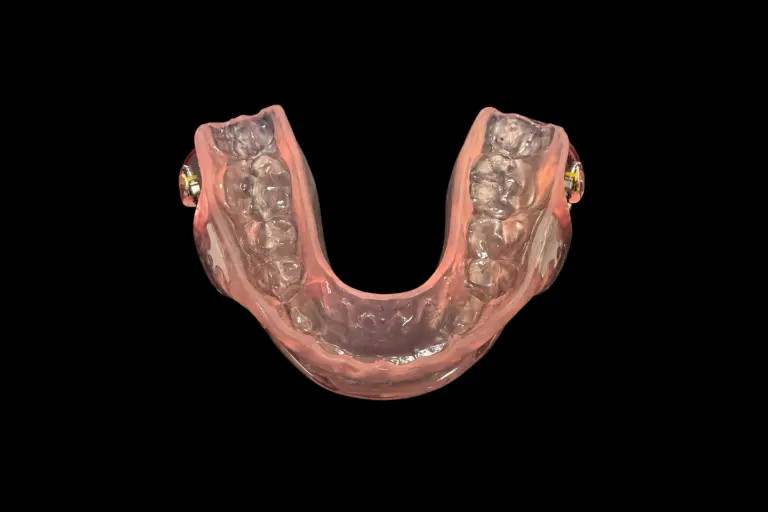
A hard soft night guard from Istar Digital Dental Lab is a custom dual-laminate guard, thermoformed as one piece on a model of your patient’s arch. We make them for dental clinics, DSOs, and dental labs. For every guard type we make, see our night guard dental lab overview.
Night Guard Soft Inside, Hard Outside: What Each Layer Does
Patients usually describe it as a night guard, soft inside, hard outside. That’s accurate, and it’s also the reason the two layers have to be thought about separately. They do different jobs:
| Soft layer | Hard layer | |
|---|---|---|
| Faces | The teeth and gingiva | The opposing arch |
| Job | Seats over the dentition and makes the fit against the teeth more comfortable | Takes the occlusal load and carries the contacts |
Most current dual-laminate sheets pair a polyurethane soft layer with a copolyester hard layer. Erkodent’s Erkoloc-pro, for example, lists TPU on the soft side and PETG on the hard side in its instructions for use. If you prescribe a particular sheet system, name it on the Rx and we’ll use it.
Coding a Hard Soft Occlusal Guard
A dual-laminate guard is coded as a hard appliance. Under the ADA’s guidance on occlusal guards with hard and soft components, the material that contacts the occlusal surface decides the category, and a soft inner layer doesn’t change the guard’s substantive effect. That makes a full-arch hard soft occlusal guard D9944 and a partial-arch one D9946, not D9945. Coding and benefits remain your office’s call.
What the Guard Does, and What It Doesn't
A hard soft night guard is a protective barrier for enamel and restorations. The Cochrane review of occlusal splints for sleep bruxism found insufficient evidence that splints reduce bruxism itself, while noting a possible benefit for tooth wear. Patients who expect the guard to stop the grinding will be disappointed; patients told it protects their teeth won’t be.
When a Hard Soft Night Guard Fits the Case
Typical cases are patients who stopped wearing an all-hard guard because of how it felt on the teeth, and grinders with crowns or veneers that need covering.
Prescribe something else when:
- The appliance is part of a TMD treatment plan. A repositioning or therapeutic splint is a different appliance from a protective guard, with its own design and coding.
- The patient snores or may have sleep-disordered breathing. That needs its own assessment. A night guard isn’t a sleep apnea appliance.
- Interocclusal space is very limited. For the reason explained under thickness below, an all-hard guard may serve better.
- The patient has a known reaction to thermoplastics. Erkodent lists a history of allergy to plastics as a point to clarify before using its PETG/TPU sheet.
Writing the Rx for a Hard Soft Occlusal Guard
The Rx tells us the construction. It doesn’t tell us the design unless you write it. These are the items that change how we make the guard:
| Rx item | What to write | What it changes at the bench |
|---|---|---|
| Arch and coverage | Maxillary or mandibular; full arch, or the teeth covered on a partial | Which model we form on, and where the guard starts and stops |
| Total thickness | The value you want, and whether it’s sheet or finished thickness | The sheet we select (see next section) |
| Sheet system | Brand or product, if you have a preference | Layer chemistry and the split between soft and hard layers |
| Jaw position | MIP or CR, with a bite record taken in that position | The occlusal surface is set to this relationship |
| Occlusal scheme | Even flat contacts, or guidance such as canine or anterior guidance or an anterior ramp | Whether the hard surface stays flat or needs guidance built in |
| Available clearance | Your measured or estimated space at the thinnest point | Whether the total thickness you asked for fits |
| Relief | Tori, recession, deep undercuts, restorations to keep off load | Areas blocked out or relieved on the model before forming |
If the clearance looks too tight for both layers, undercuts are deep enough to make seating and removal difficult, the guidance you want needs a design decision, or the Rx and the records don’t match, we contact you before forming instead of guessing.
Thickness: Two Layers Sharing One Number
“3 mm” on a hard soft night guard is a total, and the soft layer takes part of it. Every millimeter of soft layer is a millimeter the hard layer doesn’t have, so at the same total, a dual-laminate guard has a thinner working surface than an all-hard guard.
Forming adds a second effect. As the sheet is drawn over the model, it stretches and thins, most over cusp tips, incisal edges, and convex surfaces, which is exactly where the guard takes its contacts. A finished guard is thinner than the sheet it came from, and not evenly.
So we measure the finished guard rather than relying on the sheet label. Each one is checked with calipers at multiple points and compared with the thickness on your Rx. If you need a minimum over the posterior contacts, write it as a finished value.
How We Make and Check Each Hard Soft Night Guard
Records check
Scans are checked within one working day of upload. If one shows noise, holes, or missing areas, we tell you right away so a rescan fits around your patient’s schedule. Impressions are checked on arrival for distortion, bubbles, and an incomplete arch.
Models and bite
Digital cases are formed on 3D-printed models, which in our experience match the scan more closely than milled models, and our printers are checked against standard test pieces at regular intervals. The scan and bite record are checked against each other, then the models are mounted on an articulator to confirm the jaw relationship and contacts.
Forming and finishing
The sheet is heated evenly, adapted under stable pressure, and cooled under pressure at a steady rate before release, so the guard keeps the shape it took on the model. The tissue side gets light touch-up at most, because heavy grinding there is a common reason a guard won’t seat.
Final inspection
Along with the thickness readings, every guard is checked on the model before packing:
| Check | What we look for |
|---|---|
| Borders | Smooth, no burrs or lifting, extended as prescribed |
| Adaptation | Close contact with the model, no gaps |
| Retention | Seating and removal on the model to judge grip |
| Material | No cracks, bubbles, or inclusions |
A guard that fails a check is remade automatically. The patient ID follows the work order, model, and guard from intake on, and each finished guard is washed under high pressure, disinfected, and packed individually under that ID.
Across all our product lines, 95% of cases pass final inspection the first time, measured in our lab before shipping. The number that reflects your experience is our remake rate, the share of cases clients send back: 2–3% across the lab.
At Delivery: Adjusting the Hard Layer
A slightly high contact is a chairside fix: adjust on the hard surface, where the contacts are, and polish after. On PETG-type hard layers, acrylic bonds to the surface if you want to add a ramp or a build-up. If a guard you’ve adjusted still needs a remake, the responsibility usually stays with us.
Anything beyond a contact adjustment, including layers that start to separate, shouldn’t be reworked in the mouth. Send the guard back as described under warranty and remakes.
For the patient, the main rule is heat. Thermoplastic guards distort in hot water, dishwashers, or a hot car; Erkodent lists the temperature resistance of its PETG layer at 67 °C. Rinse in cool or lukewarm water, clean as the dentist directs, and store dry in a ventilated case.
Warranty and Remakes
Hard soft night guards carry a one-year warranty. Here’s what it covers and how it works:
- Covered, remade free: problems caused in our lab, such as a guard that doesn’t seat, lifted borders, a bite that doesn’t match the records, cracks, or a defect in the material. A guard that fit well and later broke can usually be remade from the original records; for fit or bite problems we’ll ask for a new scan or impression, because the same records can repeat the same result.
- Charged: a remake because the requirements changed after production, because we flagged a poor impression or scan before starting and you asked us to go ahead, or because of damage after delivery.
- How to claim: report the problem within 24 hours of receiving the case, with the patient name, case number, a description, and photos. We identify the cause with you before remaking, and remakes go to the front of the production queue.
Sending a Hard Soft Night Guard Case
| Digital case | Impression case | |
|---|---|---|
| Arches | Full-arch scans of the guard arch and the opposing arch | Full-arch VPS or polyether impressions of both arches; alginate shrinks and distorts in international transit |
| Bite | Digital bite scan | VPS bite registration; wax softens and distorts in transit |
| Files and systems | STL, PLY, OBJ, DCM, or .3oxz from 3Shape TRIOS, Medit, iTero, CEREC, Shining3D, Planmeca, and other open-format scanners | — |
| How to send | Email, WeTransfer, 3Shape Communicate, or Medit Link; one zipped case folder (not RAR) with one case ID across files and Rx | Disinfect, pack, and ship with the Rx, then send us the tracking number; we can provide a shipping waybill |
Scan export settings are on our digital dental laboratory page, and packing steps are in our guide to sending cases.
Turnaround, Rush Cases, and Pricing
Hard soft night guards take 5–7 working days in the lab, counted from the day we receive complete records. Waiting time for missing records or answers, weekends, Chinese public holidays, shipping, and customs aren’t included. Digital cases skip the inbound leg, so they reach you sooner overall. We send a notice when production is finished and another, with tracking, when the case ships.
Rush service is free on every case type for clients sending 10 or more cases a month. We guarantee the rush ship date; arrival depends on the courier and customs.
Why Clinics and Labs Choose Istar Digital for Guards
Istar Digital Dental Lab has made dental restorations and appliances since 2012, in four labs of our own in Shenzhen and Huizhou, China, with about 460 staff. No step of your case is outsourced, from the records check to packing.
Istar Digital Dental Lab is an FDA-registered establishment, Registration Number 3039441248, which you can look up in the FDA establishment registration database, and our labs work under an ISO 13485 quality management system. If you’d like to see how guards are made before you send one, book a factory visit or a video tour; more about Istar Digital.
Hard Soft Night Guard FAQs
Will you change the sheet if the one I named is out of stock?
Not without your consent. We ask first, and a written or verbal OK both count.
Can you ship finished guards directly to my client's office?
Yes. Labs can have guards delivered to any address they give us, such as the prescribing practice. The sender address on the waybill can’t be changed.
Can we choose which technician team handles our cases?
Yes. Our labs use nearly the same materials, but each has its own technician and service teams. We can compare their quality and service on your cases and assign your work to the team you prefer.
We order for several offices. Can you report on quality?
Yes. DSOs and labs can get monthly reports on on-time delivery, remakes, and complaints.
When is your team available?
Customer service runs 9:30 a.m. to 6:00 p.m. China time (UTC+8), and we stay available until midnight for urgent cases.
Send Your First Hard Soft Night Guard Case
The best test of a guard is one of your own patients. Single trial cases are welcome, and ongoing partnerships suit practices and labs with a regular flow of cases.
- Start a case: upload your scans or ship your impressions with a completed Rx form.
- Not sure a case suits a dual laminate? Ask our team before you send it, with the scans or photos you have.