Vitallium Dentures: Partial Denture Frameworks Built From Your Approved Design
A Vitallium denture from Istar Digital Dental Lab is a cast cobalt-chromium-molybdenum framework for a removable partial denture, made to your Rx and shipped to clinics and dental labs across the US and Europe.
What You Can Order
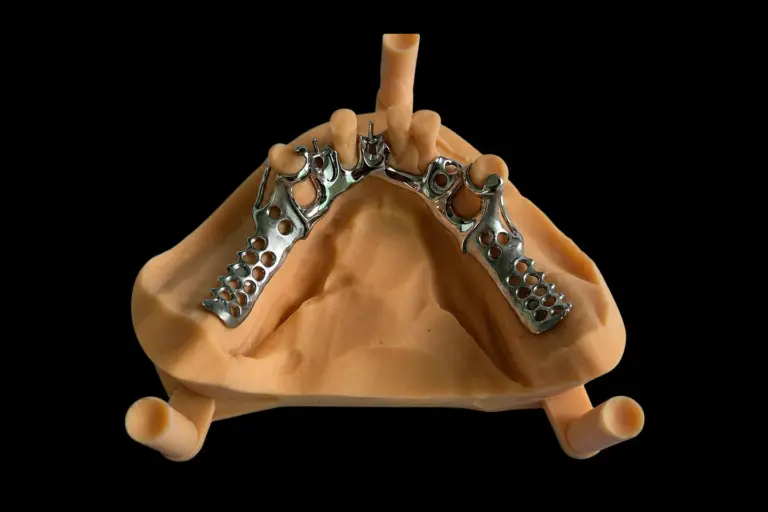
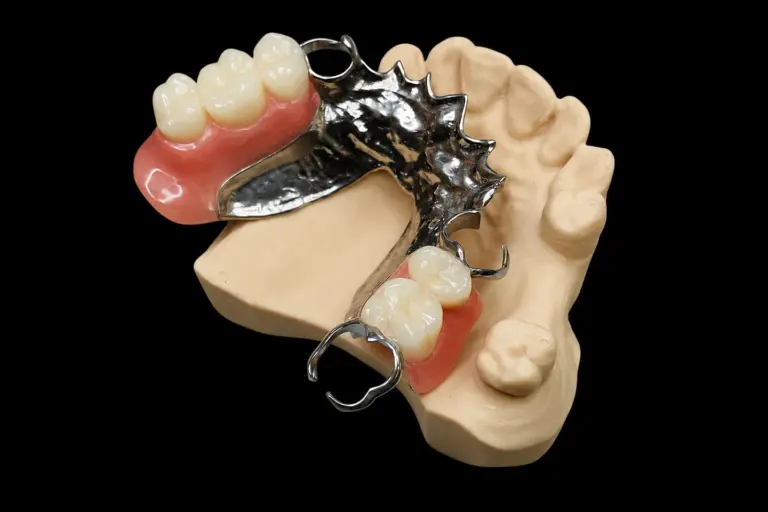
Every Vitallium partial denture starts the same way: a one-piece cast framework with rests, clasps, connectors, and retention mesh for the denture base. What changes is how far you want us to take it.
| Option | What you receive | Who it suits |
|---|---|---|
| Framework only | The cast, finished framework seated on the master model | Clinics that process in-house, and dental labs outsourcing the metal stage |
| Framework try-in, then finish | The framework for an intraoral try-in, then teeth and acrylic once you send it back | Distal-extension cases, and any case where you want to confirm seating before the teeth go on |
| Finished partial denture | Framework, denture teeth, and acrylic base, ready to deliver | Straightforward cases with complete records |
If you design frameworks yourself, send us an editable exocad or 3Shape design file. We’ll cast and finish the framework, and you take it from there. For acrylic, flexible, and implant-retained options, see our removable denture lab.
Vitallium Denture Alloy: What It Is, and What It Isn't
A Trademarked Cobalt-Chromium-Molybdenum Casting Alloy
Vitallium® is a trademark licensed to Dentsply Sirona by Howmedica Osteonics Corporation, and it covers a family of cobalt-chromium-molybdenum alloys for casting partial denture frameworks. It isn’t a generic name for every “chrome” partial: other cobalt-chromium alloys differ in composition and properties from one manufacturer to the next. That’s why we never substitute another alloy for Vitallium without your consent, written or verbal.
When you compare framework alloys from any source, ask which type the alloy is classified as under ISO 22674, the international standard for dental metallic materials. The standard names Type 4 and Type 5 for removable partial dentures and clasps. Type 5 is the class intended for thin parts that need both high stiffness and high proof stress, and it’s the only type with a minimum elastic modulus. The manufacturer’s directions for use state the type for each alloy.
Nickel-Free Doesn't Mean Allergy-Free
The manufacturer describes Vitallium alloys as nickel- and beryllium-free. That can matter for a patient with a documented nickel allergy. It doesn’t make the framework suitable for every patient with metal sensitivity, because the alloy is mostly cobalt and chromium.
A systematic review of cobalt-chromium dental alloys found that they rarely cause sensitization, irritation, or allergic reactions, and that the reactions reported were mainly in people already allergic to cobalt or chromium.
Thin and Rigid, Not Light
Vitallium is often called “lightweight.” It isn’t: cobalt-chromium is considerably denser than titanium. Its real advantage is stiffness and strength. Major connectors, rests, and clasp arms can stay thin and still resist flexing under load, so the framework covers less tissue and feels less bulky.
That stiffness has a cost. A framework that doesn’t seat passively won’t flex into place, so design and casting accuracy matter more than the alloy name.
Cases That Suit a Vitallium Partial Denture, and When We Suggest Something Else
A cast cobalt-chromium framework is the conventional choice for a long-term removable partial denture. Typical cases include:
- Distal extensions (Kennedy Class I and II). The base is supported by both teeth and compressible ridge tissue, so rest placement, clasp design, and indirect retention need careful planning. A rigid major connector helps spread the load across the arch.
- Tooth-bounded spaces (Kennedy Class III), including longer spans where a fixed bridge isn’t planned.
- Multiple edentulous areas that need cross-arch stabilization.
- Combination cases where the framework works with crowns or attachments.
We’ll recommend a different material when:
- The patient has a history of cobalt or chromium sensitivity. Consider a titanium partial denture framework or a PEEK framework.
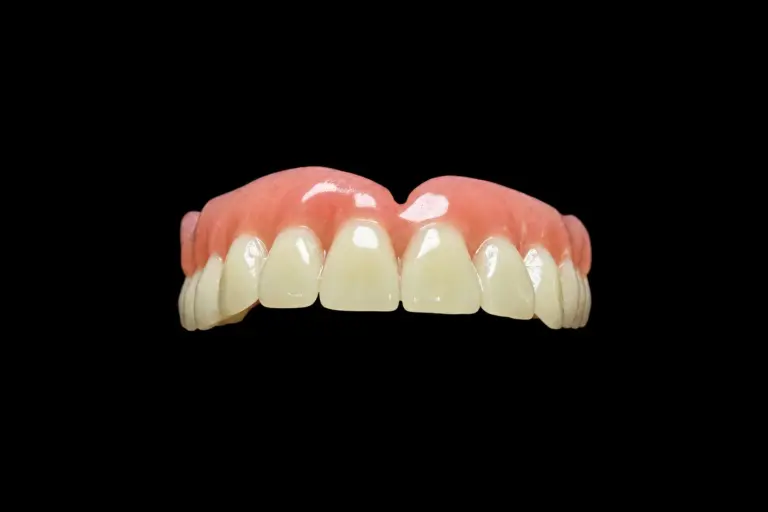
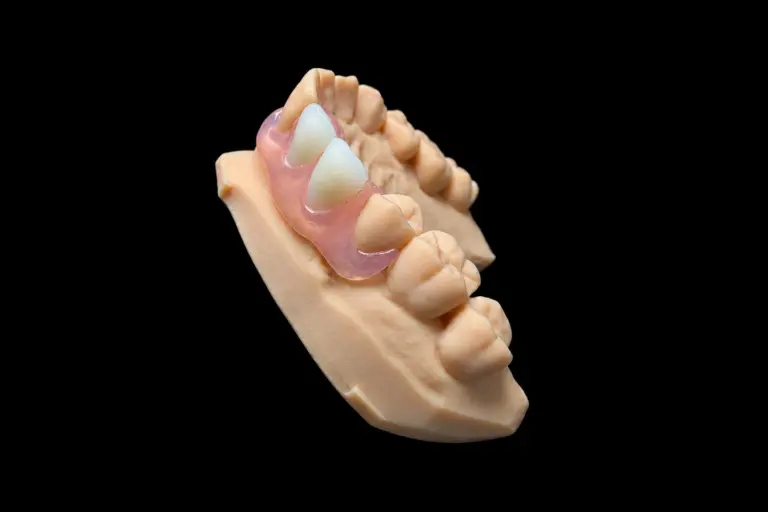
- Visible clasps in the smile zone are a problem for the patient. A flexible partial denture avoids metal clasps. It suits single or multiple missing teeth and patients with metal allergies. It’s a poor fit for heavy occlusal loads, large base coverage, or very deep undercuts, because it deforms more and is harder to reline and repair.
- The case calls for a non-branded alloy. Our cobalt-chromium partial denture goes through the same design and approval workflow.
We make all of these, so changing the material doesn’t mean changing labs.
Trade-Offs to Discuss With the Patient
- Abutment load. A rigid framework transmits force to the abutment teeth, so occlusion and abutment health should be checked at recall, especially on distal extensions as the ridge resorbs.
- Adjustment limits. Clasps can be adjusted chairside, but repeated bending fatigues the metal. A clasp that needs constant adjustment usually points to a design or undercut problem.
What to Send for a Vitallium Partial Denture Case
A framework can only be as accurate as the records and preparations behind it. Agreeing on who does what before the case starts keeps the design matched to what was actually prepared in the mouth.
Who Does What
| Your office | Istar Digital Dental Lab |
|---|---|
| Diagnosis, treatment plan, and material choice | Survey of the master model: path of insertion, survey lines, undercut depth |
| Mouth preparation: rest seats, guide planes, any recontouring | Framework design proposal for your approval |
| Final impression or scan, opposing arch, and bite record | Casting and finishing |
| Framework try-in, when staged | Teeth setup, processing, and polishing |
We can’t create rest seats or guide planes on the model if they aren’t in the mouth. Tell us on the Rx which teeth you prepared, so the design uses the preparations you actually made.
Records We Need
- Master impression or scan of the arch, with clear rest seats and abutment contours.
- Opposing arch.
- Bite record. Use a wax rim where too few teeth remain to hold a stable occlusion.
- Shade and tooth mold for finished partials, plus photos if anterior teeth are involved.
- Your design, if you have one. Mark it on the Rx or on the model: clasp type and position, rests, major connector, and the extent of the mesh.
For distal-extension cases, a border-molded final impression in a custom tray records the functional extent of the ridge, which a scan of the resting ridge doesn’t capture. Send a preliminary impression and we’ll make the custom tray.
Digital Files
We accept scans from 3Shape TRIOS, Medit, iTero, CEREC, Shining3D, and Planmeca, as long as the scanner can export an open format. STL, PLY, OBJ, DCM, and 3Shape .3oxz files all work, and we receive orders by email, WeTransfer, 3Shape Communicate, and Medit Link. Our digital dental laboratory page covers the full digital workflow.
Put each case in its own folder, zipped (not RAR), with one case ID across the files, the Rx, and the photos. We check incoming scans within one working day and tell you right away if a rescan is needed. Digital cases usually come back 1–2 days sooner overall, because no physical impression has to travel.
Design Approval Before Casting
Before any metal is cast, we can send you the framework design to approve, as a screenshot or file by email or in your case group chat. It shows:
- Clasp types and positions, such as I-bars and circumferential clasps
- Rest positions
- Major and minor connector dimensions
- Mesh coverage for the denture base
Complex framework partials, and combination cases with crowns or attachments, always go through this step. For any other case, just ask for it on the Rx.
Design approval adds 1–2 working days. Changes you request early in the approval stage don’t affect turnaround or the fee.
How We Cast and Finish the Framework
Vitallium is a casting alloy, so your framework is cast by the lost-wax method once the design is approved. Here’s how we handle the steps that most affect fit and strength:
- Controlled use of recycled metal. Recycled alloy makes up no more than half of a melt. The rest is new alloy, added to the manufacturer’s standard, and we check alloy composition periodically so the mechanical properties don’t drift.
- Separate handling by alloy. Vitallium has its own tools, sandblasting and polishing equipment, and recycling stream, so it never mixes with the other alloys we cast.
- Validated equipment. Melting and heat-treatment equipment goes through installation, operational, and performance qualification (IQ/OQ/PQ), with periodic requalification.
- Mechanical retention for the acrylic. The resin bond relies on retention mesh, beads, or grooves and a sandblasted, degreased surface. Primers support the bond but don’t replace mechanical retention.
Inspection Before the Framework Ships
Every framework is checked on the master model before it leaves the lab:
- Casting defects. We inspect visually and under magnification for porosity, cracks, and distortion.
- Seating. The framework must seat smoothly, without rocking.
- Clasps. We check clasp form and flexibility against the planned undercut.
- Rests. Rests must sit fully on their seats.
- Connectors. We confirm connector cross-sections and transitions.
- Occlusion. The framework must not interfere with the opposing arch.
Finished partials pass four checkpoints: the model, the wax setup, the tooth arrangement, and the final processed denture. The final check covers centric and excursive contacts, base extension and thickness, clasp retention, and a polish that leaves the tissue surface and borders unaltered. If we find bubbles, porous areas, poor adaptation, or an inaccurate bite, we remake the case before it ships.
Framework Try-In and Finishing
For a staged case, we ship the framework first. After the try-in, send it back with any notes on seating and a jaw relation record, and we’ll set the teeth. You can ask for a wax try-in before processing. After the wax try-in, shade, surface finish, minor contours, and contacts can still be adjusted.
We notify you when the design is finished, when production is finished, and when the case ships, with the tracking number.
Turnaround, Quotes and Shipping
| Case | In-lab time |
|---|---|
| Simple cases | 2–3 working days |
| Complex cases | 5–7 working days |
In-lab time counts working days from the day we receive complete records. Each stage of a staged case is scheduled separately, and time spent waiting for missing records or your replies, including design approval, doesn’t count. Weekends and Chinese public holidays aren’t production days, and international shipping and customs clearance aren’t part of in-lab time. When we review your case, we’ll tell you which category it falls into.
Rush service is free for clients who send 10 or more cases a month. On rush cases we guarantee the ship date, but not the arrival date, because customs clearance is outside our control.
Quotes are itemized to what you order, whether that’s framework only, a try-in, or a finished partial, rather than bundled into one price, and you can confirm the full cost before production starts. Request our removable price list for current fees. You pay to send impressions or models to us, and we pay to ship finished work back to you.
Warranty and Remakes
A Vitallium partial denture from Istar Digital carries a one-year warranty covering both the framework and the acrylic. We remake or adjust lab-caused problems free of charge, including:
- A partial that doesn’t seat
- Lifted borders
- A poorly placed clasp
- An inaccurate bite
- Unsatisfactory esthetics or acrylic color
We pay the return shipping on remakes. Sending the original appliance or new records back to us is at your cost.
Registrations and Material Documentation
Istar Digital Dental Lab is an FDA-registered establishment. Our Registration Number is 3039441248, and you can verify it in the FDA establishment registration database. Our device listings cover removable partial dentures. For clinics in the EU, custom-made dentures follow the MDR custom-made device procedure, with a statement for each case. Our labs operate under an ISO 13485 quality management system.
The American College of Prosthodontists recommends that labs tell the dentist which materials they used, including composition and manufacturer. For Vitallium cases, ask for the alloy’s batch and composition documentation and we’ll include it.
Why Clinics and Labs Send Us Their Vitallium Denture Cases
Istar Digital Dental Lab has made dental restorations since 2012. We have four labs in Shenzhen and Huizhou, China, and about 460 staff. Removable work has its own department of about 55 people, and a separate quality control department of about 25 checks work across all four labs. The removable line handles about 4,000 cases a month in a normal season and about 6,500 at peak. When a large order comes in, cases already scheduled keep their place.
Nothing is outsourced. Design, casting, finishing, setup, and processing all happen in our own labs. You can see the process for yourself on an on-site visit or a video tour of the factory.
Vitallium Partial Denture FAQs
Can you repair a Vitallium partial or add a tooth to it?
Yes. Send upper and lower models, the existing partial, and a wax bite. We repair with resin of the same type as the original, roughen and clean the old acrylic so the new resin bonds, and keep processing temperatures low enough not to damage the existing denture. Each repair is strength-tested before it ships.
Can you ship finished cases directly to my client's office?
Yes, we ship to any address you give us, so a dental lab can have finished partials sent straight to the prescribing clinic. The sender address on the waybill can’t be changed, though.
Can you keep each dentist's design preferences on file?
Yes. Our case system records design preferences separately for each dentist, which helps group practices and DSOs with several prescribers. Our four labs share largely the same materials but have separate technician teams, and if you prefer one team’s work, we’ll assign your cases to that team.
What are your office hours, and how fast do you reply?
Our customer service team works 9:30 a.m. to 6:00 p.m. China time (UTC+8), and stays available until midnight for special or urgent cases. During working hours, technical questions usually get an answer within an hour. Outside them, the time difference can stretch that to 7–8 hours, but never more than 12.
How does billing work?
We accept bank transfer and PayPal. Transfer fees are paid by the sender, at the exchange rate on the day of payment. Invoices are issued per batch, or as a monthly statement for some accounts, and show your case number, patient ID, or purchase order number. New clients can apply for one-month payment terms.
What happens if a case arrives damaged?
Within 24 hours of delivery, send us an unboxing video that shows the courier label, along with the damaged piece, and keep the original packaging. With that evidence, we remake the case free of charge. Damage that happens after delivery is remade at cost.
Start Your First Vitallium Denture Case
The quickest way to judge a framework lab is one case on your own patient. Single trial cases are welcome. Ongoing partnerships work best with a regular flow of cases.
- Digital case: send your scan files with a completed Rx form.
- Impression case: follow the how-to-send guide. We can send you a prepared shipping waybill, or you ship to our address and send us the tracking number.
- Not sure Vitallium is right for the case? Send the records and ask for a design and material recommendation before you commit.
Questions before your first case? Contact our removable team.