High Noble Full Cast Crowns, Made in the Alloy You Prescribe
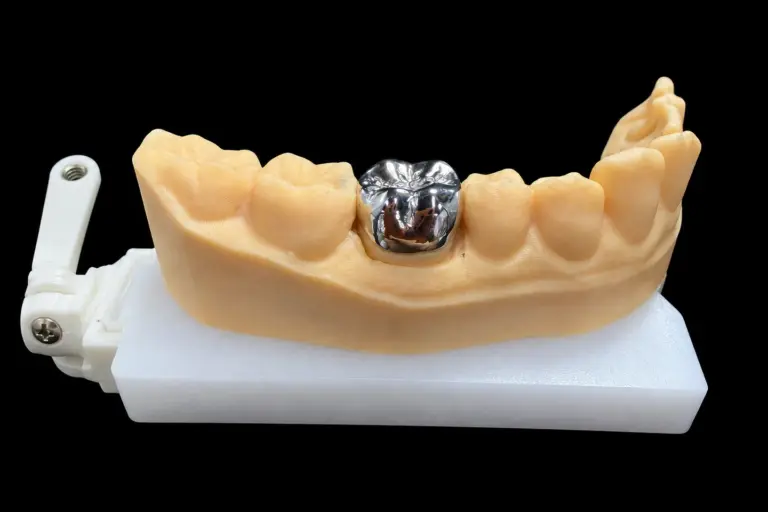
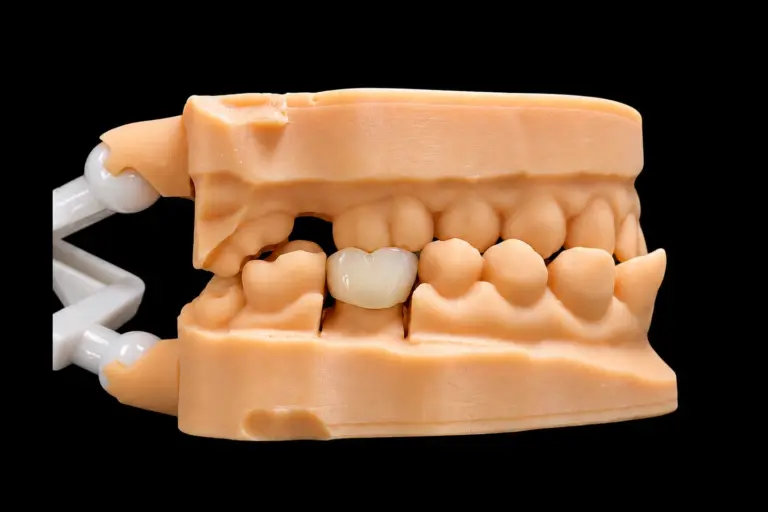
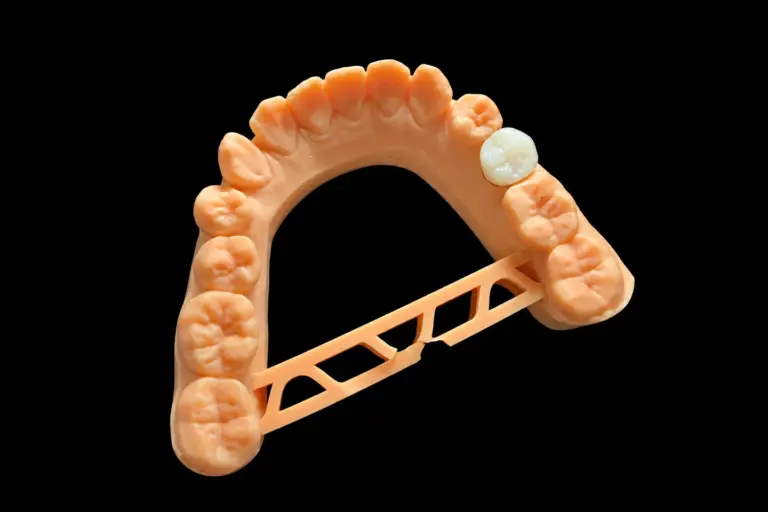
A high noble full cast crown is an all-metal crown, with no porcelain, cast in an alloy of the ADA’s high noble class. Istar Digital Dental Lab makes them for clinics and dental labs in the US and Europe, together with semi-precious full cast crowns in noble alloys for cases where a lower alloy class is the better fit.
What "High Noble" and "Semi-Precious" Actually Mean
The alloy class is a statement about composition, not color, brand name, or price. The ADA classification of dental casting alloys counts only gold and the platinum-group metals (platinum, palladium, rhodium, ruthenium, iridium, osmium) as noble. Silver is often a large share of a casting alloy, but it doesn’t count toward either threshold.
| Alloy class | Composition rule (by weight) | Full cast crown code |
|---|---|---|
| High noble | Gold + platinum-group metals ≥ 60%, and gold ≥ 40% | D2790 |
| Noble (“semi-precious”) | Gold + platinum-group metals ≥ 25%, but not high noble | D2792 |
| Predominantly base metal | Gold + platinum-group metals < 25% | D2791 |
“Semi-precious” isn’t an ADA class. It’s lab shorthand for the noble tier. You may also see the high noble tier called “high precious,” which means the same thing.
Five Alloys That Show Why the Label Matters
These are illustrative compositions, not specific products:
| Example alloy | Gold + PGM | Gold | Class |
|---|---|---|---|
| 40% gold, 20% palladium, balance silver and indium | 60% | 40% | High noble |
| 55% gold, 4% palladium, balance silver and copper | 59% | 55% | Noble. More gold than the first alloy, but one point short of 60% |
| 75% palladium, under 2% gold (a white alloy) | 77% | <2% | Noble. Plenty of noble metal, but the 40% gold rule fails |
| 27% palladium, 2% gold, about 58% silver | 29% | 2% | Noble. The silver adds nothing |
| 20% palladium, 2% gold, 70% silver | 22% | 2% | Predominantly base, despite being sold as a silver-palladium alloy |
A white alloy can be high noble if it carries enough gold alongside its palladium, so color alone won’t tell you the class. Near a threshold, the manufacturer’s stated composition decides, not the trade name.
High Noble or Semi-Precious Full Cast Crown: How to Choose
Both are full-coverage metal crowns with the same preparation and indications. The differences are in how the alloy behaves at the chair and what it costs.
| High noble | Semi-precious (noble) | |
|---|---|---|
| Typical alloy families | Gold-based alloys, yellow or white | Palladium-silver, palladium-rich, and reduced-gold alloys |
| Color | Yellow or white | White or gray |
| Chairside adjustment | Gold-based alloys are comparatively soft, so occlusal adjustment and repolishing go quickly | Varies widely by alloy |
| Cost driver | Gold content and the gold price | Palladium content and the palladium price |
Hardness affects adjustment and opposing wear
Most palladium-copper-gallium alloys have a yield strength around 1,000 MPa, which Odén and Herø described as too high for adequate margin adjustment and likely to promote wear of an opposing natural tooth. If you expect to adjust contacts at seating, or the crown opposes natural enamel, factor hardness into the alloy you prescribe. The manufacturer’s data sheet states it.
Fit is close, but not identical
In a comparison of complete cast crowns, Tjan and colleagues found that silver-palladium crowns had the best marginal accuracy of five alternative alloys. Their marginal discrepancy was still slightly higher than that of Type III high-gold crowns.
When a Full Cast Crown Suits the Case
A full cast crown is a strong choice for:
- Molars and premolars out of the esthetic zone, where a metal surface is acceptable to the patient.
- Limited occlusal clearance. With no porcelain to make room for, it needs the least reduction of any full-coverage crown.
- Cracked teeth that need full cuspal coverage.
- Heavy occlusal load where porcelain chipping is the worry. There’s no veneering ceramic to fracture.
Choose another restoration when the tooth shows in the smile, when the patient won’t accept metal, or when you need a tooth-colored surface over metal:
- Full-contour zirconia crowns and bridges give you a strong, tooth-colored posterior option.
- PFM crowns put porcelain over a metal substructure.
- CoCr full cast crowns cover the predominantly base metal class.
Preparation and Rx Details
The tooth preparation guidelines for complete-coverage metal crowns from the Foundation for Oral-facial Rehabilitation summarize the commonly taught values:
| Feature | Guideline |
|---|---|
| Occlusal clearance | 1.0–1.5 mm, following the developmental grooves |
| Margin | Chamfer, 0.3–0.5 mm deep |
| Total occlusal convergence | 10–20° |
You’ll sometimes see 0.5 mm quoted as the minimum occlusal clearance for a full cast crown. Read that as the thinnest metal a lab will accept, not as a preparation target. A crown cast to the minimum has no reserve for occlusal adjustment.
For gold alloys, a chamfer or a feather-edge margin both work. A feather edge can save tooth structure on a tipped molar.
On the Rx, include:
- The alloy class: high noble or semi-precious, plus a color preference if you have one.
- Margin design and location: chamfer or feather edge, supragingival or subgingival, and by how much. On a scan, trace the finish line yourself rather than relying on automatic detection.
- Contact tightness: light, normal, or tight.
- Limited space: write “occlusal space inadequate” and the clearance you measured.
- Bruxism or clenching, so we can design a thicker occlusal surface with even, flat contacts that spread the load.
If the Clearance Comes Up Short
Our technicians measure the occlusal space on the model before design. If it’s too tight for the crown you ordered, we contact you before going ahead. If you’d like, we’ll also pack a note with the finished crown naming the tooth and how many millimeters to adjust at seating. You can also ask to approve the design before casting. We send screenshots or files by email or in your case group chat, and approval adds 1–2 working days.
Alloy Documentation and Traceability
For any case, we can provide the brand, origin, and batch number of the alloy used, with its certificate and proof of its composition. Ask for it on the Rx or when you place the case. You’ll then have the alloy’s composition on file if a patient, a payer, or your own lab asks what the crown is made of.
Behind that document sits a traceable process:
- A unique case number ties each crown to the technicians, equipment, material batches, and inspection results behind it.
- Alloys are kept apart. Each alloy is processed in its own zone, with dedicated tools, separate sandblasting and polishing equipment, and sorted recycling, so each alloy keeps the composition on its certificate.
- Validated melting equipment. Melting and heat-treatment equipment goes through installation, operational, and performance qualification (IQ/OQ/PQ), covering temperature control, vacuum or protective atmosphere, and cast quality, with periodic requalification.
- No silent substitutions. If an alloy you prescribed is unavailable, we tell you first. Nothing changes without your consent, written or verbal.
Inspection Before Each Crown Ships
Final release is done by quality inspectors who don’t make restorations. They check each crown on the model against the approved Rx and design:
- Even marginal gap with no lifted or chipped edges
- Internal surface free of burrs and bumps
- Full, passive seating and contacts as prescribed
- Centric, protrusive, and lateral occlusion, with early contacts removed
- Metal free of porosity, cracks, and distortion, checked visually and under magnification
- Anatomy, contour, and polish
Inspectors work with microscopes, scan comparison, and digital measurement. Across our labs, 95% of restorations pass final inspection. Our overall remake rate, meaning cases clients send back, runs at 2–3%. Both figures cover all restoration types, not precious-alloy crowns alone.
Records and Digital Files
Send the prepared arch, the opposing arch, and a bite record, as physical impressions or an intraoral scan. For impressions, use a VPS bite registration rather than wax, because wax distorts with heat in international transit. A scanned opposing arch should cover the full occluding dentition back to the last molar, plus 2–3 teeth next to the preparation and the surrounding gingiva.
We accept scans from 3Shape TRIOS, Medit, iTero, CEREC, Shining3D, and Planmeca, in STL, PLY, OBJ, DCM, or 3Shape .3oxz, and we receive cases through 3Shape Communicate and Medit Link. We check incoming scans within one working day and tell you right away if a finish line, the bite, or the opposing arch needs a rescan. The digital dental laboratory page covers file preparation in detail.
Turnaround, Pricing, and Warranty
Turnaround
High noble and semi-precious full cast crowns take 5–7 working days in the lab, counted from the day we have complete records. Time spent waiting for missing records or design approval isn’t counted, and weekends and Chinese public holidays aren’t production days. Rush service is free for clients who send 10 or more cases a month. On a rush case we guarantee the ship date. The arrival date depends on international transit and customs.
Pricing
Quotes are itemized to what you order, and you can confirm the full cost before production starts. When metal prices move, we discuss any change in cost with you and give a week’s notice before prices change. You pay to send impressions or models to us, and we pay to ship finished work back, remakes included.
Warranty
Crowns carry a 3-year warranty. We remake or adjust lab-caused problems free of charge, including an open margin or contact, high occlusion, a crown that won’t seat, or visible defects. A remake is charged when you change the material or the case requirements, or when we made the case at your request from an impression we had flagged as unclear. For seating, margin, or bite problems, send a new scan, model, or impression with the crown, because the original records may be the cause.
Why Clinics and Labs Send Precious-Alloy Work to Istar Digital
Istar Digital Dental Lab has made dental restorations since 2012, for more than 50 dental labs, 100 clinics, and 400 dentists. We run four labs in Shenzhen and Huizhou, China, with about 460 staff, including a ceramic and metal department of about 70 people and an independent quality control team of about 25. No case is outsourced. Our crown and bridge dental laboratory page covers the rest of our fixed work.
Istar Digital Dental Lab is an FDA-registered establishment, Registration Number 3039441248, which you can verify in the FDA establishment registration database. Our device listings cover custom crowns and fixed bridges. For EU clinics, custom-made crowns follow the MDR custom-made device procedure, and our labs run an ISO 13485 quality management system.
High Noble Full Cast Crown FAQs
Is a high noble crown with porcelain still a D2790?
No. Once porcelain is fused to the metal, the crown is a porcelain-fused-to-metal restoration. On a high noble substructure, that’s generally reported as D2750. Coding and payer rules are the treating dentist’s decision.
Can you cast in a specific alloy brand I already use?
Yes. Name the alloy brand and product on the Rx, and we’ll confirm it before production.
My patient reports a metal allergy. What should I order?
Start from the patient’s history and choose the alloy by its documented composition. We can supply nickel-free and beryllium-free alloys and alloys for other specific allergy requirements. The ADA notes that 10–20% of the general population is nickel-sensitive, though oral reactions are rarer and milder.
Which cement works with a precious-alloy crown?
Conventional cements such as glass ionomer or zinc polycarboxylate work well, and so do resin cements. Follow the cement manufacturer’s instructions for surface treatment.
Can you ship finished crowns directly to my client's office?
Yes. We ship to any address you give us, so a dental lab can have finished work go straight to the prescribing clinic. The sender address on the waybill can’t be changed.
What are your hours, and how quickly do you reply?
Our customer service team works 9:30 a.m. to 6:00 p.m. China time (UTC+8) and stays available until midnight for special or urgent cases. During working hours, technical questions usually get an answer within an hour. Outside them, the time difference can stretch that to 7–8 hours, but never more than 12.
Send Your First High Noble Full Cast Crown Case
The quickest way to judge our precious-alloy work is one crown on one of your own patients. Single trial cases are welcome, and ongoing partnerships work best with a regular flow of cases.
- Digital case: email or upload your scans with a completed Rx form.
- Impression case: follow the how-to-send guide. We can send you a prepared shipping waybill, or you can ship to our address and send us the tracking number.
- Alloys and pricing: ask our crown and bridge team for the current list of high noble and semi-precious alloys with their compositions, and for the price list.
- Vetting us as a supplier: book a factory visit or a video tour of our production lines.