IPS e.max Inlays & Onlays: a lab-made ceramic restoration between a filling and a crown
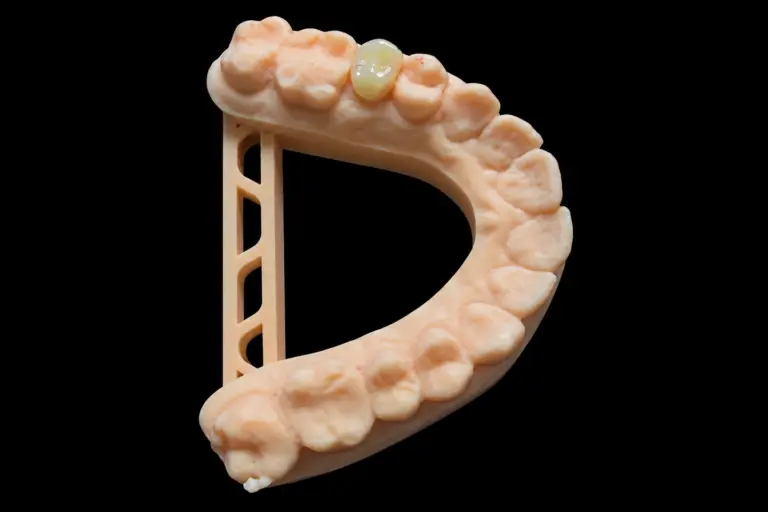
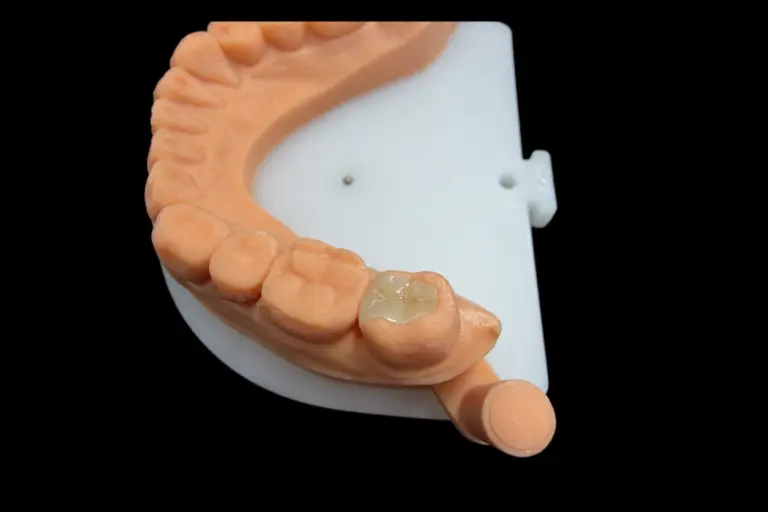
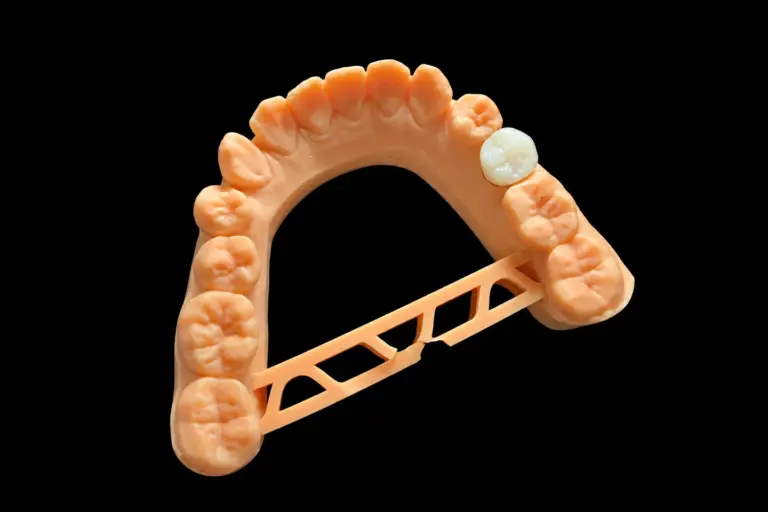
An e.max inlay is a lithium disilicate restoration we press or mill, crystallize, and finish to seat into a prepared cavity between the cusps. Choose an inlay when the defect is too big for direct composite but enough sound tooth is left that a full crown would be over-preparation. Choose an onlay instead the moment one cusp has to be covered.
We make these in our own facility in Shenzhen and Huizhou from Ivoclar lithium disilicate blocks and ingots, and ship worldwide to dentists, clinics, and partner labs.
Inlay, onlay, or overlay: decide before you prep
The three sit on the same spectrum, separated by how much of the occlusal surface the restoration carries:
| Restoration | What it covers | Typical indication | Prep character |
|---|---|---|---|
| Inlay | The cavity between the cusps only, no cusp coverage | Replacing a failing large composite or amalgam when all cusps are still intact and supported | Box form with a defined isthmus, no cusp reduction |
| Onlay | The cavity plus one or more cusps | Any time a cusp is undermined, cracked, or has lost >⅓ of its bulk | Box form plus a cusp bevel or capping; margins kept off centric contacts |
| Overlay | The entire occlusal table | Occlusal rebuild on a worn or heavily restored tooth, when a full crown would sacrifice healthy axial walls | Flat or lightly contoured occlusal reduction, margins moved supragingival where possible |
The reason this call matters in dollars and in longevity: a 10.9-year prospective study of 556 pressed and acid-etched monolithic lithium disilicate partial-coverage restorations recorded a cumulative 10-year survival of 95.6 percent overall. When inlays and onlays were analyzed separately, inlays reached 93.9 percent at 9.9 years and onlays reached 98.3 percent at 9.8 years, and the difference was statistically significant at P < .05 (Rauch et al., J Prosthet Dent 2021). More cusp coverage buys more survival. If a case is on the edge, send it as an onlay.
If you want us to make that call, note it on the Rx. We won’t extend coverage onto a cusp without your written instruction.
What "e.max" actually means
“IPS e.max” is an Ivoclar brand family, not a single material. Two different ceramics live under that name:
- IPS e.max CAD and IPS e.max Press are lithium disilicate glass-ceramics. This is what you’re thinking of when you say “e.max” for an inlay or veneer.
- IPS e.max ZirCAD is zirconium oxide, a different ceramic class with different bonding behavior and different translucency.
See Ivoclar’s own All-Ceramics overview and the IPS e.max CAD product page for the full product tree.
For an inlay or an onlay we work in lithium disilicate (CAD or Press). We do not substitute ZirCAD into an e.max inlay case without a prior conversation with you.
The strength numbers you'll see, and how to read them
Reported flexural strength for lithium disilicate runs from roughly 260 to 530 MPa. The spread is not a disagreement about the material. It is a disagreement about the test, and each figure means something different once you are holding a restoration in your hand:
| Figure | What the number actually describes |
|---|---|
| 530 MPa | Biaxial flexural strength, Ivoclar’s published figure for IPS e.max CAD |
| ~500 MPa | Three-point flexural strength on a bar specimen. Loading geometry and span differ from the biaxial test, so the two numbers cannot be read against each other |
| 260–440 MPa | What the literature reports when milled and pressed specimens are tested side by side. Pressed usually lands at the top of that band |
| “up to 400 MPa” | A ceiling figure that circulates for pressed material. Treat it as a floor to clear, not a target to design against |
| ~100 MPa | Where a bi-laminar restoration fails once feldspathic veneering porcelain goes over the core. The system is only as strong as its weakest layer |
Two consequences follow. A monolithic inlay in the posterior sits near the top of that range, while a layered one sits near the bottom, so the structural rules change the moment porcelain goes on top. If you want layering for anterior shade control, put it on the Rx: the design has to leave room for the porcelain from the first tool path, and cutting back a finished monolithic inlay to make that room would eat the wall thickness the case depends on.
Preparation ranges we work to
For lithium disilicate inlays and onlays, we design to the following envelope. These are targets, not minimums we will force a design through:
| Area | Inlay | Onlay |
|---|---|---|
| Occlusal depth over the pulpal floor | ≥ 1.5 mm | n/a (replaced by cusp coverage) |
| Isthmus width | ≥ 1.5 mm (aim 1.5–2.0 mm) | n/a |
| Proximal box, gingival floor width | 1.0–1.5 mm | 1.0–1.5 mm |
| Cusp coverage over functional cusps | not applicable | 1.5 mm minimum |
| Walls | Slightly divergent, around 6°, no undercuts, one path of insertion | Same |
| Internal line angles | Rounded, no sharp 90° corners | Rounded |
| Margins | Butt joint or round shoulder; no slice cuts, no feather edges; margins kept off centric contact | Same, with cusp bevels blended smoothly into the external walls |
A note on the Ivoclar documents, because dentists ask: the current IPS e.max instructions give 1.0 mm as a minimum, while earlier chairside guides from the same manufacturer recommended 1.5 mm. We work to the larger figures where the tooth allows, because a 1.0 mm isthmus in a wet pressed-ceramic workflow leaves very little room for the material to tolerate a seating error or a chairside adjustment.
If the prep scan comes in under that figure, or has undercuts the restoration can’t accommodate, we flag it in the WhatsApp or email thread before we design, with a screenshot of the problem area, and ask you whether to redesign, re-prep, or change material.
How a case moves through our lab
For a lithium disilicate inlay or onlay we run the whole thing in-house:
- Case intake. If the Rx is missing a working arch, an opposing arch, or a defined finish line, production pauses before design and your case coordinator messages you.
- CAD design. The design comes to you over WhatsApp or email for approval before anything is cut. Waiting on that approval adds roughly 1–2 days to turnaround.
- Press or mill. Pressed restorations come off a lost-wax workflow with Ivoclar ingots. CAD restorations come off a five-axis mill in pre-crystallized blocks and are then crystallized in a dedicated furnace.
- Stain, glaze, and polish. Inlays and onlays are finished monolithic unless you’ve asked for a cut-back and layering.
- QC passes. Nothing moves to the next stage until the stage before it clears inspection.
- Pack and ship. DHL, FedEx, UPS, or SPIDER (France). Tracking number sent the day the box leaves.
Milling and pressing are not interchangeable from the lab’s end. Milling preserves shape fidelity for subtle anatomy. Pressing gives better margin flow on thin inlay walls, so if your case is borderline on thickness we’ll usually press it.
Cementation and chairside adjustments, two places this restoration fails
e.max is a bonded ceramic. Treat it as a filling and it leaks. Treat it as a crown and it debonds. For an inlay or onlay we design around adhesive cementation, which means two things on your side:
- At cementation. Hydrofluoric acid etch the fitting surface at the time and concentration your cement system specifies, silanate, then cement with a resin cement. Variolink, RelyX Ultimate, and similar MDP-capable resin cements all work. Dual-cure gives you a safety net under thicker restorations where light penetration is weak.
- At chairside adjustment. Lithium disilicate wants a smooth finish: fine diamonds under water, then a dedicated glass-ceramic polishing kit. Zirconia is the opposite. Grinding introduces a transformed surface layer, so zirconia needs its own kit and a glass-ceramic polisher won’t clear it. If you’ve only ever adjusted zirconia, don’t reuse the same wheels on e.max; it tears the glaze.
If an adjustment is needed on an inlay or onlay before cementation, remove it from the tooth before you grind. The restoration is thin, and heat buildup in a seated piece can crack it.
Who should not get an e.max inlay, and what we recommend instead
We will push back on an e.max inlay in four situations:
- The isthmus is sub-1.0 mm or the pulpal floor is sub-1.0 mm after decay removal. The material cannot carry occlusal load at that thickness. We recommend widening to an onlay, or moving to a higher-flexural-strength option.
- A single cusp is undermined. Clinically this is already an onlay. Building it as an inlay means carrying occlusal load on the part of the tooth that has just lost its support.
- Documented bruxism without a planned nightguard. The system is bondable and strong, but it is still a glass-ceramic. We will quote a high-translucency monolithic zirconia alternative for the posterior if you’d prefer something more tolerant of bruxism.
- The patient is a known allergy case to one of the Ivoclar material components. We can supply batch and composition documentation and switch to a different system.
Preparing a case for us
For a standard crown-and-bridge-grade workflow, send:
- An intraoral scan (STL, PLY, OBJ, DCM, or 3Shape native) of the prepared arch, the opposing arch, and the bite, or a conventional PVS impression with a bite registration if you prefer analog.
- The Rx with clinic, dentist, patient reference, product, material, shade, and target delivery date.
- A preparation photo, ideally with a shade tab in frame. For an aesthetic case or a single anterior inlay, add a smile photo and the stump shade.
File formats we accept, and platforms we’re already set up on, cover most of the US and European market: Trios / 3Shape Communicate, iTero, Medit Link, Shining 3D, Dexis, Primescan, DS Core, Panda, Ori, plus WeTransfer and email for raw files. If you work with none of those, our standard intake takes the same files directly.
Two scanning details that save a redesign on an inlay case:
- Subgingival margin? Pack a cord before scanning. The lab cannot read a margin the scanner cannot see. The IOS reconstruction will interpolate, and the fit will be off even if the margin looks clear on screen.
- For wider cases and full-arch quadrants, keep each sweep continuous and single-direction, with at least 30 percent overlap between passes. We check incoming scans for stitching steps before design. If we find one, we’ll ask you to re-scan the affected quadrant rather than guess at the geometry.
Turnaround, revisions, and rush
- Standard lab turnaround for inlays, onlays, and single-unit crowns: 2–3 working days from the moment a complete case lands with us.
- Working-day basis. Weekends and Chinese public holidays don’t count, and design approval wait time doesn’t count either. The clock pauses while we wait for you to confirm.
- Rush cases are available on any case type at no premium. Give us a target seat date and we’ll quote back a feasible delivery.
- One design round plus two free revisions. A fourth revision, or a change of material, counts as a new case.
Shipping sits on top of lab turnaround and depends on carrier and clearance. We can’t influence what the destination customs decides to do with the box.
What we do before a case ships
Three QC gates, enforced before each stage change:
- Incoming data check: Rx completeness, scan hygiene, model and pour quality, bite record present, plus implant parts and batch numbers where applicable.
- In-process checks: margin reading at the CAD stage, fit on the printed or stone model after milling, visible defects before and after crystallization.
- Final release: an independent QC team member who does not produce the case inspects fit, margins, proximal contacts, occlusion, shade, and surface against the Rx. For glass-ceramic restorations the final pass uses a dedicated inspection lamp to catch chipping and micro-cracks that don’t show under ambient light.
Across all case types we ship, the customer-side acceptance rate sits around 95 percent on a rolling monthly basis. “Acceptance rate” means cases the client did not ask us to rework or adjust after receipt. In-house catches that we fixed before shipping are not counted toward that number. If you want QC photos before dispatch, write it in the Rx; it adds roughly half a day.
When something isn't right
- Report within 24 hours of receipt, with the patient reference, the product, and photos of the issue.
- We will remake, free of charge, cases that come back with an open margin, an open proximal contact, high occlusion, a non-seating fit, a shade miss against the Rx, a visible esthetic defect, or an incorrect anatomic form.
- We will not rework at no charge when the client has changed the shade or the material after approval, or when we were explicitly asked to do what we can with an impression we had already flagged as unclear.
- Remakes are expedited and typically run 3–5 working days, exclusive of shipping. Shipping isn’t covered under the remake.
- If a second remake still misses, the sales lead and the production manager jointly review the case, and we offer a refund or credit rather than keep iterating.
For e.max inlays specifically, the most common cause of a rework in our hands is isthmus thickness that measured thinner than the scan suggested. That is why the intake gate is a hard stop, not a courtesy.
Lab-to-lab and private-label partnerships
If you’re an outsourcing lab and you want to use us as a milling partner, a CAD-only partner, or an end-to-end partner, we work three ways:
- Design only: we return the CAD file (STL and native) within 24 hours for most single-unit cases.
- CAM only: send us a validated design and we mill, crystallize, finish, and ship. We flag the risks we can see in the design once, in writing. If you confirm “proceed as drawn”, responsibility for fit and occlusion sits on the design.
- Full-service: the same workflow we offer dentists.
White-label packaging is standard, since our cartons carry no logo. We’ll sign an NDA on request, and we don’t contact your end dentists. What we can’t do is redirect a shipment to an address that isn’t on the account.
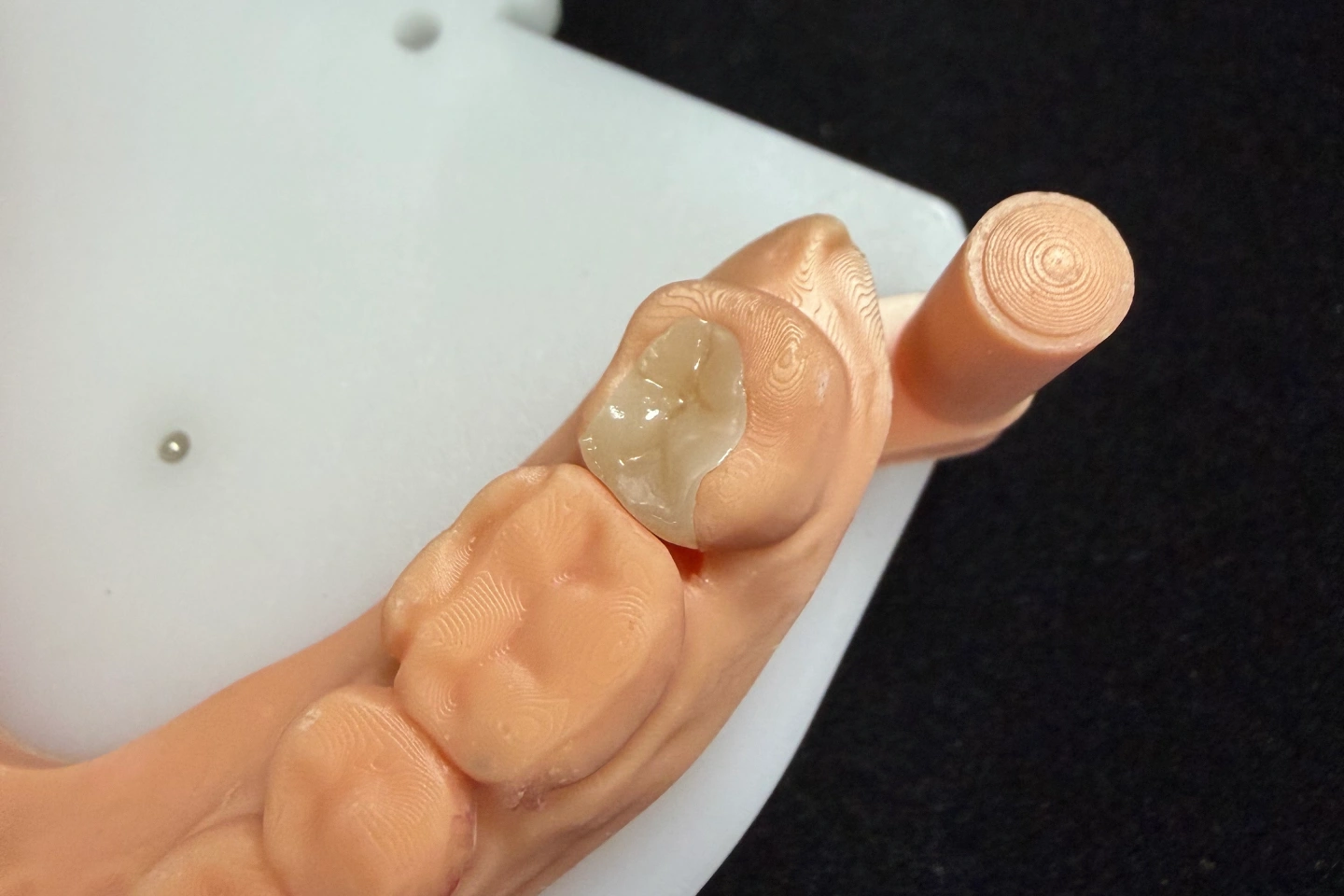
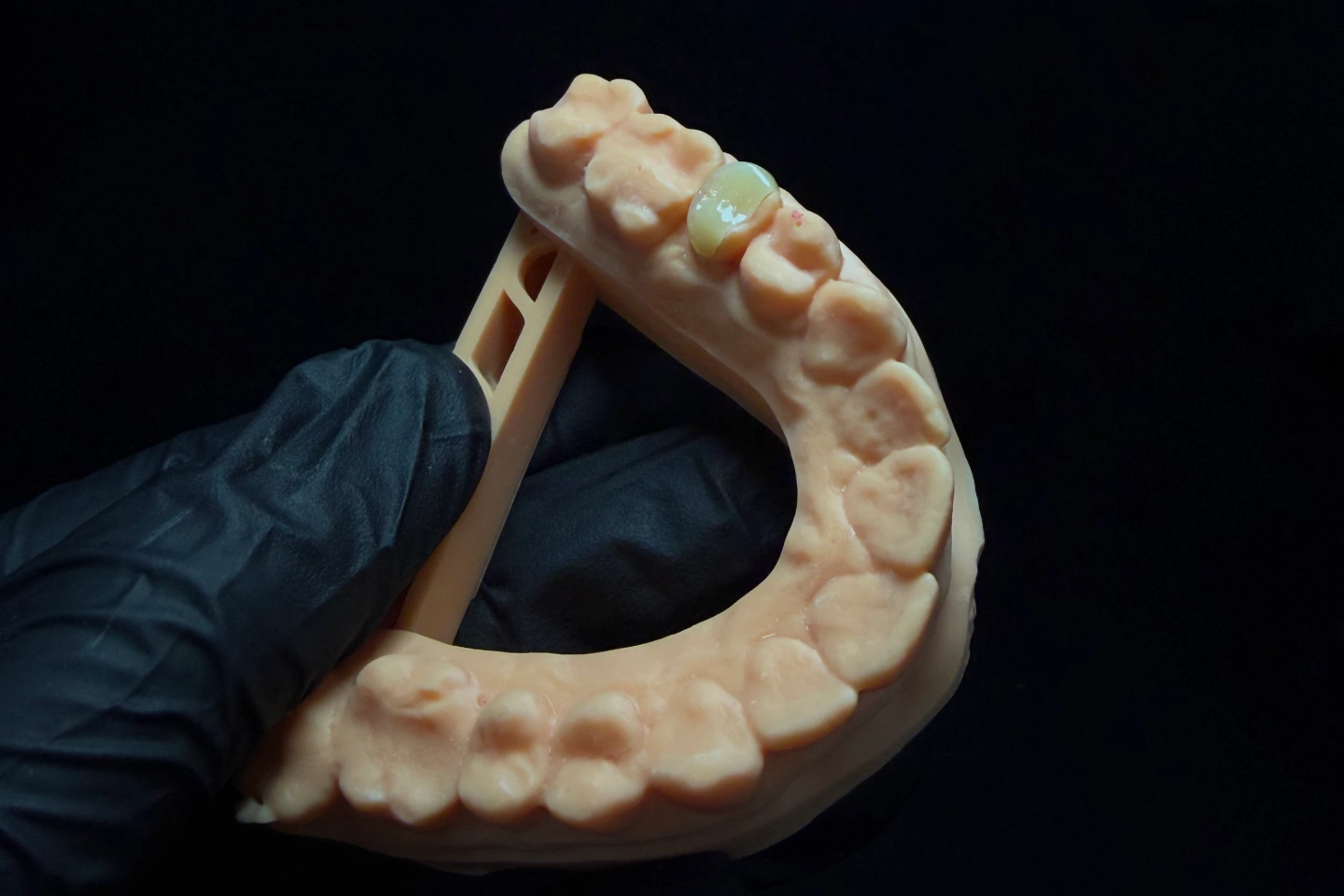
Cases from our lab
FAQ
Is an e.max inlay actually a long-term restoration, or will it fail in a few years?
A meta-analysis across 14 studies of ceramic inlays and onlays reported 5-year survival of 92 to 95 percent and 10-year survival of 91 percent, with chipping and bulk fracture as the leading failure modes (PMID 27287305). Both are mechanical failures, which is why they are worth designing against at the prep stage rather than discovering at try-in.
How is a lab fee calculated?
Unit count sets the base, material defines the base price, and implant components or complex design add on top. We don’t publish a price list online; a sales lead will send one against a short account profile. Quotes include design, model, parts, packaging, and outbound shipping. Duties and clearance fees sit with the receiver.
Do you make these for premolars and front teeth, or only molars?
Molars and premolars are routine. An anterior inlay is a different conversation: once the access is buccal or lingual and the remaining wall is thin, a veneer or a direct composite usually serves the tooth better than a box form. We still make them where the indication holds.
Can you supply the material documentation for the ingot or block?
Yes. Every case is made from material we can trace to a manufacturer batch, and we can send the composition sheet, the instructions for use, and the batch record with the case. If a clinic or a regulator wants the brand and lot on file, put it on the Rx and it ships in the box.
Send a case
If you want to test us on a single unit before anything bigger, send one e.max inlay or onlay through our case intake. It runs through the same workflow as every other case, and the full lab fee comes back to you once the Rx and scan are in.
For a price list, lab-to-lab terms, or a factory video walk-through, contact our sales team.