Porcelain Fused to High Noble Metal Crowns
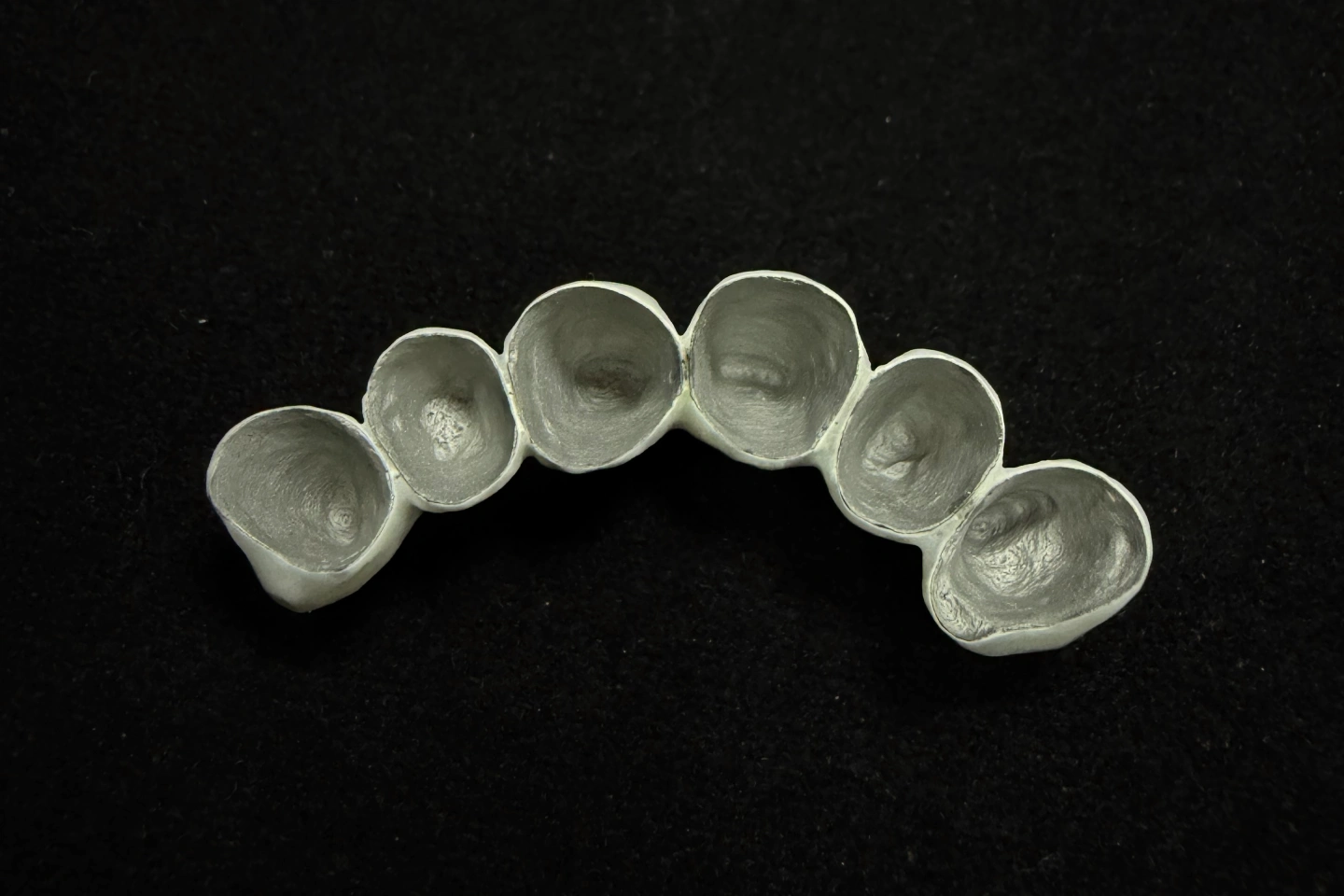
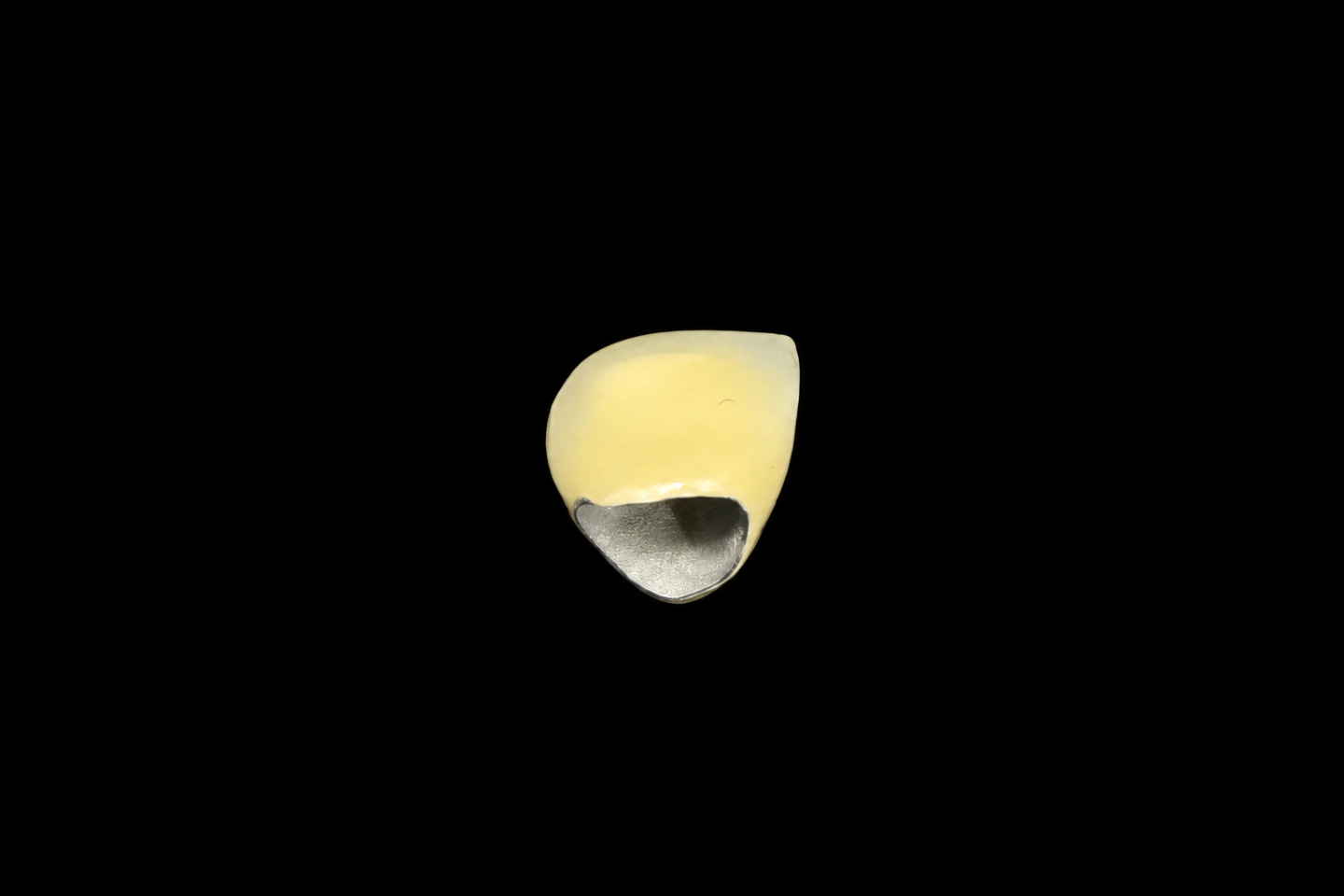
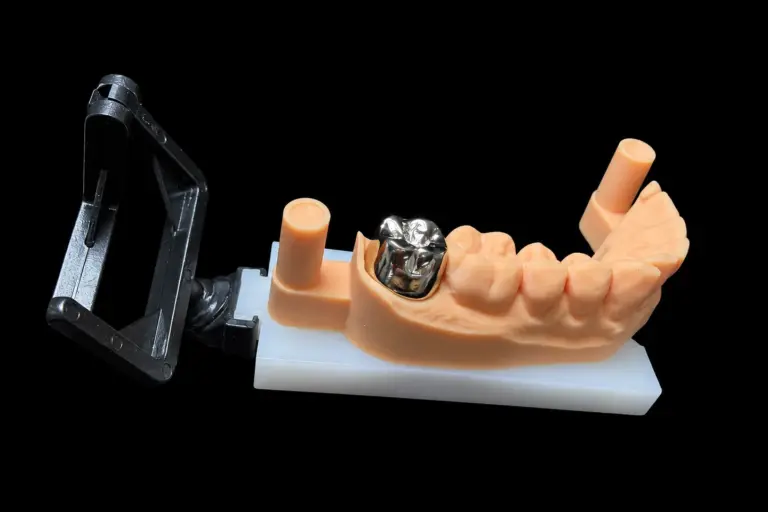
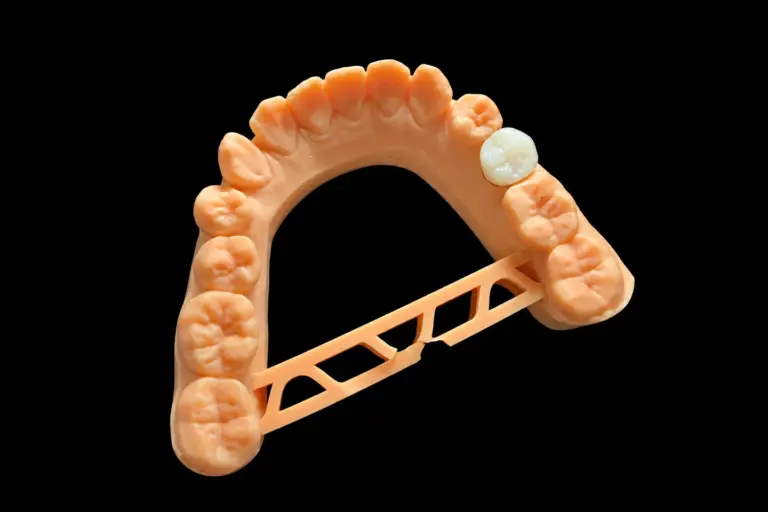
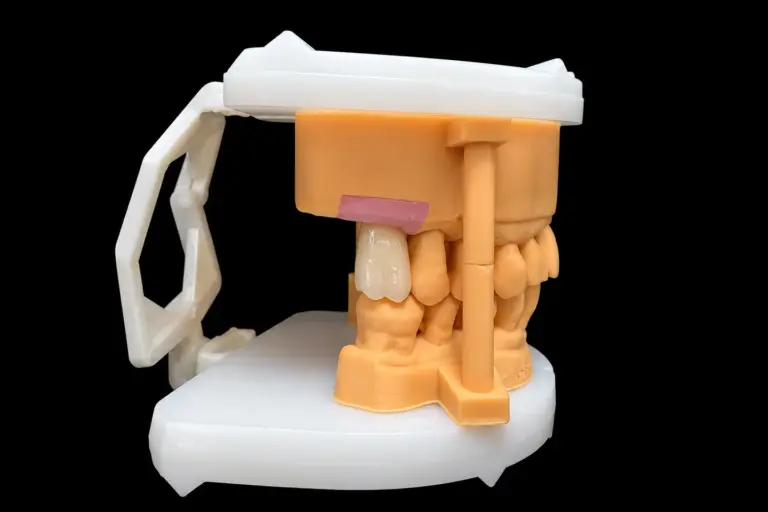
A porcelain fused to high noble metal crown is a two-layer restoration: a high noble alloy coping with hand-stacked feldspathic porcelain fired onto it. We cast and mill the copings, layer and glaze the porcelain, and ship every unit with the alloy documentation that a D2750 claim gets checked against.
The code you bill depends on the alloy, not the tooth
The CDT code follows the alloy family specified for the coping:
| CDT code | Descriptor | Alloy content |
|---|---|---|
| D2750 | Crown, porcelain fused to high noble metal | Noble metals ≥60% by weight, with gold ≥40% |
| D2751 | Crown, porcelain fused to predominantly base metal | Noble metals <25% |
| D2752 | Crown, porcelain fused to noble metal | Noble metals ≥25% |
| D2740 | Crown, porcelain/ceramic (all-ceramic) | No alloy coping |
Those thresholds are absolute and parallel, not nested: a high noble alloy clears 60% noble and 40% gold at the same time, and 25% is the floor for noble. Silver counts toward neither. 21 CFR 872.3060 lists gold, palladium, platinum, or silver among the noble metals when it describes the device, and sets no percentages at all, because that listing governs how the device is regulated, not how a case is coded. The percentages come from the ADA classification the IdentAlloy Council administers: high noble at 60% noble metal with 40% gold, noble at 25%. Its certificates report that category alongside brand and composition.
The two high noble families we quote
High noble alloys are quoted by color rather than by which precious metal leads: yellow or white. Both clear the same 60/40 threshold; what separates them is the gold-to-palladium ratio, and that ratio is what moves the alloy charge.
Yellow high noble
Gold-dominant, warm color, high density. Preferred where you want traditional gold characteristics and the easiest shade matching behind opaque porcelain. More gold by weight, which is reflected in the alloy charge on the invoice.
White high noble
Palladium-rich, lower gold content, still meeting the ≥60% noble plus ≥40% Au threshold. Lighter color under thin porcelain, generally priced lower per gram than yellow. Screening note: a small share of patients are palladium-sensitive, so confirm the medical history before specifying a high-Pd white.
We cast and mill the substructures in-house with industry-standard alloys. BEGO is one of the brands we work with. The specific brand and batch for your case appear on the IdentAlloy certificate shipped with the restoration, so you have the full composition in writing. For market pricing cross-checks, Pan-Am Dental publishes daily alloy prices per gram.
How the substructure is built, and how we judge it
Coping fabrication
We work from the client-approved CAD design, then produce the coping by casting or milling. Target wall thickness is 0.3–0.5 mm, measured with a thickness gauge and verified under magnification. Too thin and porcelain support fails. Too thick and you’ve eaten into the space the ceramist needs for shade.
Porcelain layering
Veneering porcelain is selected to match the alloy’s thermal expansion specification. We fire in sections, with controlled heating cycles and slow cooling. This is the step where chipping risk is earned or avoided, not at the design stage. Typical layered porcelain thickness is 1.0–1.5 mm anterior and 1.5–2.0 mm posterior. Opaque, dentin, enamel, and effect layers are logged per case with recipe, batch, and firing parameters, so a complaint can be traced back to a specific firing.
Glaze and the second check
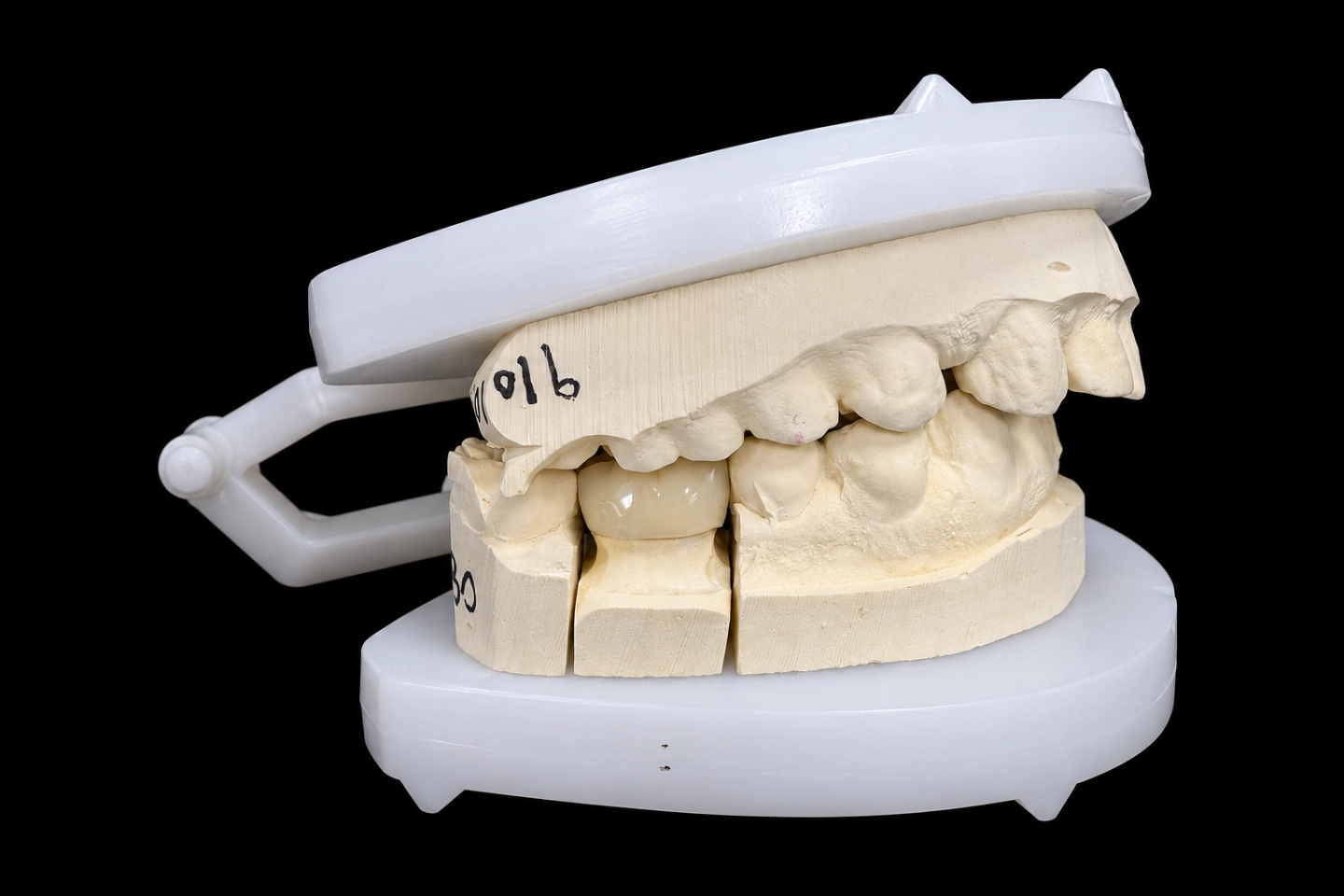
After glaze firing, every unit is re-checked for proximal contacts, occlusion, and marginal fit. Surface adjustments after glaze are polished or re-glazed depending on the size of the correction. This is where small dimensional shifts from the final firing get caught, before the case leaves the bench.
QC and release
Three inspection points: intake data check, in-process cross-check between departments, and final inspection by an independent QC team that doesn’t produce the case. Four items get a 100% check before anything ships: occlusion, margin seat, path of insertion, and overall contour. Case-level barcodes link every unit to the technician, machine, material batch, and inspection record on file.
Our internal remake rate across all fixed products runs 2–3%. That’s the number our lab manager tracks monthly from complaints, in-house catch-and-refix cases, and client-reported returns. If a case fails first-pass inspection, it goes back for correction before shipping; those aren’t counted as passes.
Preparation window and shade protocol
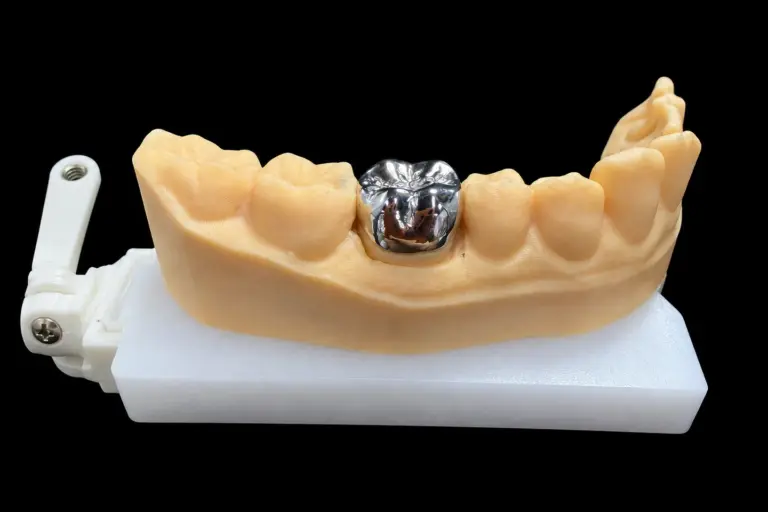
Preparation. For a PFM crown we expect about 2 mm occlusal, 1.5 mm axial, and 1.2 mm cervical reduction, with a defined shoulder or chamfer margin. Below ~1.5 mm occlusal clearance we’ll flag the case before production; a workable fallback is a metal occlusal surface, which happens to be gentler on the opposing dentition than porcelain. A knife-edge margin is risky with PFM because the porcelain-metal junction needs a defined finish line to end on.
Prep depth has a cost that lands on the invoice: the deeper the reduction, the more alloy volume the case commits, and the alloy charge moves with it. If a technician reports back with a specific concern about coping thickness, that’s a real signal, not a template objection.
Shade. Veneering porcelain is matched under a standardized light source, not phone-light shots. For anteriors we ask for two photos: one of the natural dentition with the shade tab in-frame, one of the preparation (or stump shade) with the shade tab in-frame. One property of PFM that zirconia and lithium disilicate don’t share: because the metal coping blocks the underlying substrate, the stump shade matters far less. You can place a PFM crown over a dark post-and-core and not see it in the final result.
Anterior cosmetic cases are built by senior technicians with 10+ years of layering experience. Layer recipes are logged against the signed-off case so the same crown can be reproduced on a replacement unit.
Turnaround, pricing structure, and documentation
Lab time
Typical in-lab production for a routine crown or bridge is 2–3 business days from the point we have complete case data. Approvals and anything we’re waiting on from the clinic don’t count against this window; they restart it. Rush requests are accommodated by case volume and current schedule.
What you'll see on a quote
Unit count is the base, alloy family sets the baseline price, and implant components and design complexity add on top. The quote covers design, model work, components, packaging, and shipping. We confirm the total before production starts.
What ships with the case
IdentAlloy certificate for the specific alloy batch, model and components, the signed work ticket, and photos on request. If your DSO workflow requires alloy composition on file, we can send the certificate ahead of shipment.
Regulatory
Istar Digital maintains active FDA establishment registration and device listing, EU MDR compliance, UK MHRA registration, and ISO 13485. The FDA registration is publicly searchable in the agency’s own database.
When PFM is the right call, and when we'll say so
PFM is a specific-case choice now, not a default.
Where it's still a strong choice
High occlusal load, posterior units, bruxism cases, long-span bridges, and any restoration that needs to interface with a metal removable framework. The metal-to-metal rest contact between a PFM crown and an RPD is more predictable than ceramic-to-metal. On durability specifically, Kang et al. 2015 (PMID 26376100) is a retrospective cohort comparing single zirconia with high-noble PFM in esthetic areas: overall survival 96.0% for PFM vs 93.3% for zirconia at ~2.5 years mean follow-up, with the difference not statistically significant (p=0.56). PFM isn’t losing on durability; it’s losing on esthetics in high-translucency anterior demand.
Where we'll push back
Documented metal allergy (nickel, cobalt, and in some cases palladium), occlusal clearance below ~1.5 mm, high-smile-line anterior cases where the patient will see the metal collar at the gingival margin, and cases adjacent to translucent all-ceramic restorations where the opacity contrast will show. For those we’ll suggest layered zirconia or lithium disilicate and quote accordingly.
Working with us on a case
Submission
Digital scan files, or a physical impression with bite registration shipped per our Rx and packing checklist. The Rx should specify alloy family (yellow or white high noble), margin design, finish line depth, shade, and notes on opposing dentition or parafunction. If anything’s missing or conflicting, we pause the case and come back with questions.
Design approval
One design pass with two free revisions. If you want to see the digital design before we cut or cast, say so on the Rx; it adds about a day and is the right call for complex anteriors.
Remakes
We cover lab-side issues: open margins, loose or tight contacts, high occlusion, shade mismatch outside acceptable range, and seat failures. Shade changes requested after approval, material swaps, and impressions flagged as problematic but requested to proceed don’t fall under free remake. Remakes run priority.
Factory visits
Clinics, DSOs, and labs working with us are welcome to visit the Shenzhen or Huizhou facilities, or request a video walkthrough if a physical visit isn’t practical.
FAQ
How do I verify your FDA registration before placing the first order?
Search the FDA’s Establishment Registration and Device Listing database directly. We’re listed by establishment name; the device listings cover crowns, bridges, inlays and onlays, veneers, custom abutments, and prosthetic appliances. No account or request needed.
Can we specify a particular alloy brand?
Yes, within what’s available from our approved suppliers. Raise it on the Rx and we’ll confirm availability on the quote.
Do you provide the IdentAlloy certificate automatically?
Yes, it ships with every PFM case, matched to the specific batch used. If you need it ahead of delivery for compliance filing, ask and we’ll send the digital copy earlier.
Yellow or white high noble for a posterior case?
Mostly the alloy price and the color under the margin if any metal shows. Yellow is traditional, denser, higher per gram. White is lighter, generally cheaper per gram. Mechanically, both exceed what a posterior PFM needs.
Will you tell me if a case shouldn't be a PFM?
Yes. We’d rather route the case to the material that will perform than take the order and have you replacing a chipped porcelain anterior six months later.
Send a case or ask a question
If you have a case for a quote, send the digital files or let us know a physical impression is on the way. We’ll confirm receipt, flag anything that needs clarification, and come back with a quote within one business day.
For new client setup, DSO sourcing, lab-to-lab outsourcing, or a factory visit, reach us at info@Istar Digitaldentallab.com or use the contact form.