PFM Crowns & Bridges
Istar Digital Dental Lab makes PFM crowns for dental clinics, DSOs and dental labs in the US and Europe. You choose the alloy, the margin and how much metal shows. Our ceramic and metal department builds the crown to that prescription, from framework to final glaze.
Prescribing one comes down to three choices: the alloy tier, the margin design and the metal coverage. Put all three on the Rx, send clean records, and we can start without putting the case on hold for questions. For multi-unit work, see our PFM bridges.
When a Porcelain Fused to Metal Crown Is Still the Right Call
Zirconia and lithium disilicate now cover most single-unit work. A porcelain fused to metal crown still earns its place in a few specific situations.
Dark Abutments and Metal Posts
The opaque layer over the metal hides whatever is underneath, so a discolored stump or cast post won’t change the final shade. Monolithic zirconia over a dark stump or an unmasked post can let that color show through.
Heavy Occlusal Load
Posterior teeth, bruxers and clenchers need strength more than translucency, and a metal framework gives you that.
Short Clinical Crowns and Tight Clearance
Where there isn’t room for porcelain over the whole occlusal surface, the crown can be made with a metal occlusal surface instead (see the design options below).
Cost-Sensitive Cases
A base-metal PFM keeps the lab bill down without giving up strength.
We’d usually suggest a different material when the crown sits next to highly translucent natural incisors, when thin tissue is likely to recede and expose a metal margin, or when the patient reports a metal sensitivity you’d rather not test. For those cases, look at our E.max crowns or full-contour zirconia.
The clinical record is long. The ADA’s summary of materials for indirect restorations cites 94.7% five-year survival for metal-ceramic single crowns in a 2015 systematic review, and a study in which 2.6% of PFM crowns chipped within five years. Chipping is the failure to design against, and framework support and porcelain thickness are where that starts.
PFM crown and bridge products
Alloy Options for PFM Crowns
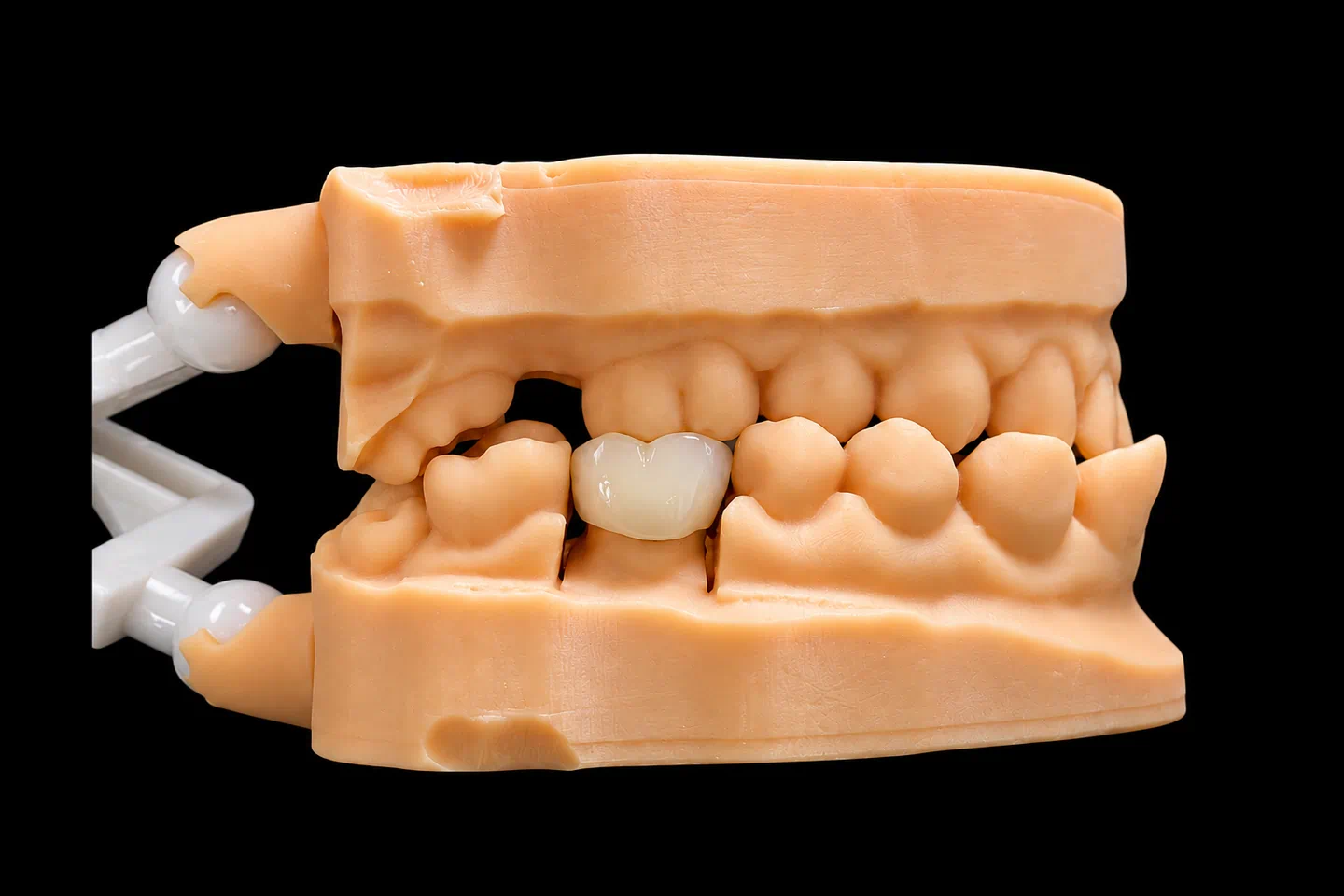
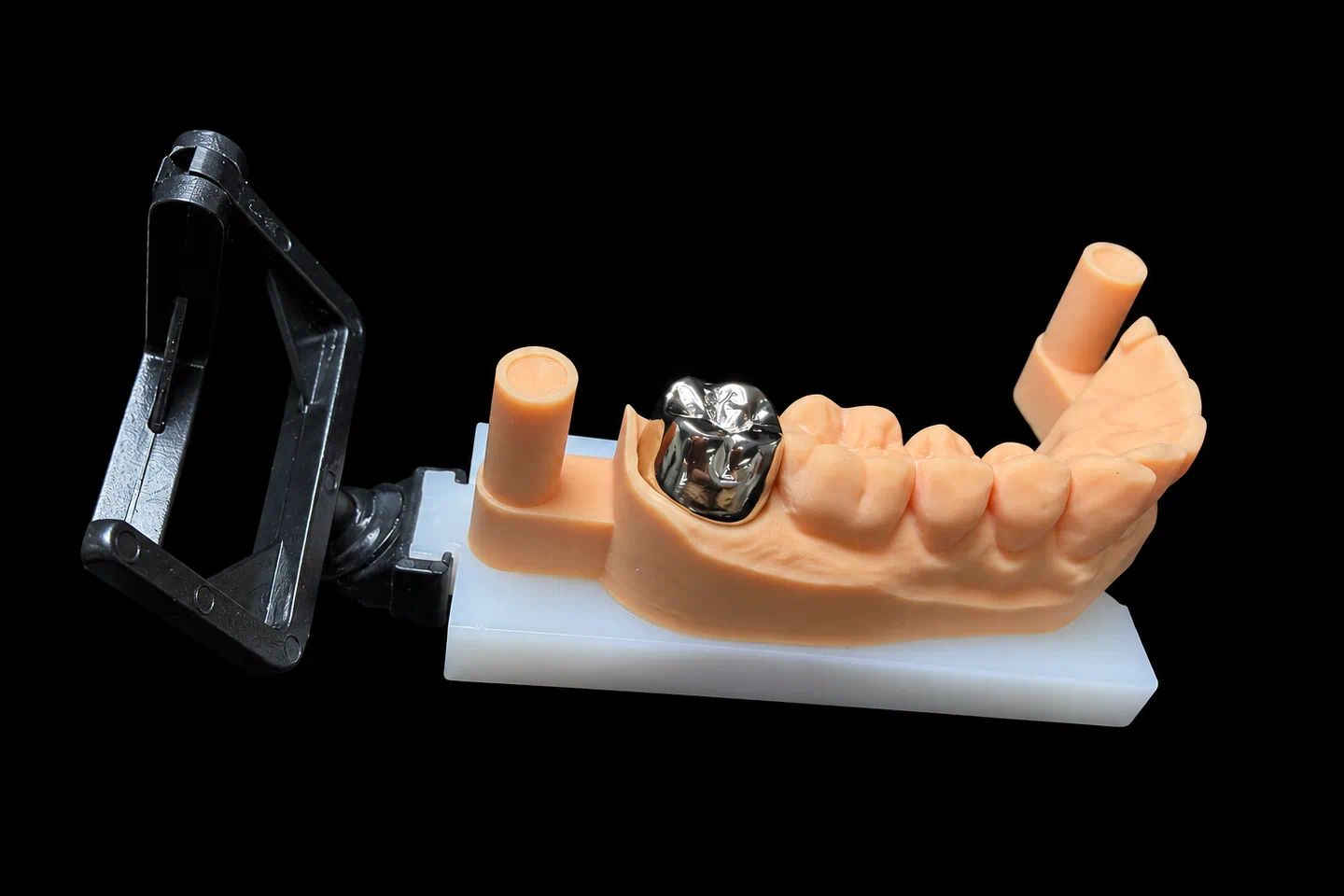
The alloy sets the cost, the metal color under the porcelain and whether the crown suits a patient with a reported sensitivity. The ADA classifies casting alloys by noble-metal content:
ADA Class
Composition
What labs often call it
High Noble
≥60% gold and platinum-group metals, with ≥40% gold
High noble, high gold
Noble
≥25% gold and platinum-group metals
Semi-precious
Predominantly Base Metal
<25% gold and platinum-group metals
Non-precious, e.g. cobalt-chromium
“Semi-precious” isn’t an ADA class. It’s trade shorthand, and labs don’t all mean the same alloy by it. Write the ADA class or the alloy brand on the Rx so the alloy you get matches the alloy you invoiced and coded.
For metal-ceramic work, Istar Digital uses cobalt-chromium, palladium-silver and gold alloys, including Bego alloys. What that means for your cases:
Nickel-Free and Beryllium-Free
Nickel-free and beryllium-free alloys are available. Note any sensitivity on the Rx and we’ll match the alloy to it.
Alloy Proof Per Case
Each case can ship with proof of the alloy: brand, origin, batch number and a composition certificate.
No Alloy Substitution
We don’t switch alloys on our own. If an alloy has to change, we ask you first, and nothing changes without your OK.
Prices differ by alloy tier. Ask your account manager for the current PFM price list, or see our high noble PFM crowns for that tier.
Margin and Metal Coverage
The second decision is where metal is allowed to show. Each option trades esthetics against strength, clearance or margin precision.
Collarless Facial Margin
No metal at the facial margin
Choose it when: The margin is in the esthetic zone or the tissue is thin
Trade-off: Needs a well-defined shoulder; a porcelain margin is less forgiving than metal if the margin is thin or overextended
Metal Collar
Choose it when: Subgingival or posterior margins where a metal finish line adds strength and precision
Trade-off: A gray band can show if the tissue recedes
Metal Lingual
Choose it when: Lingual clearance is limited, e.g. an anterior deep bite
Trade-off: Metal is visible from the lingual
Metal Occlusal
Choose it when: Occlusal clearance is short or the patient grinds
Trade-off: Metal is visible on the chewing surface
PFM Implant Crown
Choose it when: The crown goes on an implant
Note: Tell us the implant system and whether you want it screw- or cement-retained
Preparation and Space
For PFM, we work with a shoulder or chamfer margin, and we recommend a shoulder for cobalt-chromium PFM. Each finish line carries its own production risk:
Overly Wide Shoulder
Can leave the crown margin bulky and hurt the esthetics.
Deep Chamfer
Harder to capture accurately, so the margin is more likely to be misread.
Knife-Edge
Leaves no room for porcelain at the margin, and the porcelain there tends to chip.
When the scan or model shows less room than that, we tell you before production and flag the spot in the design preview. You can reduce further, adjust the opposing tooth or switch to a metal occlusal surface. If you’d rather we go ahead as is, we keep the framework at strength and thin the porcelain. That costs some translucency and incisal effect, and we’ll tell you so up front.
How We Keep Porcelain Bonded on PFM Crowns
Porcelain chips for three main reasons: the framework flexes, the porcelain is unsupported or uneven, or metal and porcelain shrink differently as they cool. Each control below targets one of those causes.
Coping
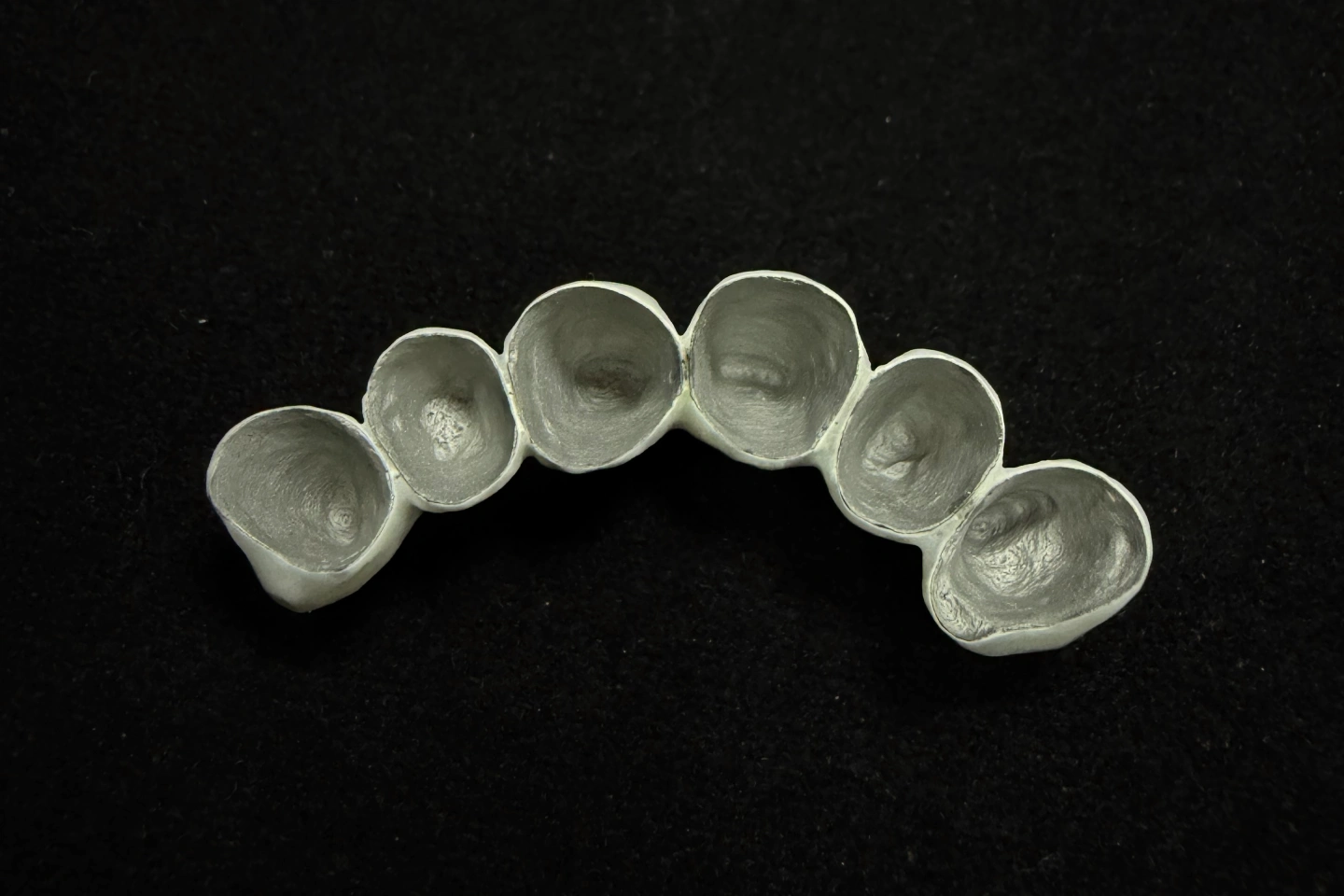
What we control: Cast or milled, then measured with a caliper or thickness gauge to 0.3–0.5 mm; margin checked under magnification; support form checked on the model
Why it matters: A thin coping flexes under load, and rigid porcelain on a flexing base cracks
Framework Design
What we control: Uniform porcelain thickness, with metal support built under cusps and other load-bearing areas
Why it matters: Thick, unsupported porcelain is the classic chip site
Metal Surface
What we control: Alumina blasting, ultrasonic cleaning, then pre-oxidation in vacuum or inert gas
Why it matters: The metal-ceramic bond depends on a clean, roughened, correctly oxidized surface
Thermal Match
What we control: Porcelain with a coefficient of thermal expansion slightly below the alloy’s, typically within 0.5–1.0 × 10⁻⁶/°C
Why it matters: After cooling, the porcelain sits in compression instead of tension
Firing
What we control: Usually no more than 3–4 firings, with staged heating, vacuum firing and slow cooling
Why it matters: Extra firings or fast cooling can distort the framework and shift the shade
Alloy Separation
What we control: Separate work zones, tools, blasting and polishing equipment for each alloy
Why it matters: Each alloy’s composition stays stable and traceable
After Glaze
What we control: Contacts, occlusion and margins checked again
Why it matters: Glaze firing can open a margin or change a contact
Porcelain, stains and glazes are logged by batch and expiry date and used first-in, first-out. For each case, the technician records the porcelain, proportion and thickness of every layer, so a shade or esthetic complaint can be traced back to the photos, the layering recipe, the material batch and the technician who built it. Every department checks the case before passing it to the next one.
Sending a PFM Case
Digital Scans
We accept scans from 3Shape TRIOS, Medit, iTero, CEREC/Primescan, Shining 3D, Planmeca and any scanner that exports open files. iTero and CEREC users should export STL or PLY rather than proprietary files.
Format: STL is enough for posterior crowns. Send PLY with color for anterior and esthetic cases.
Packaging: one ZIP per case, every file named with the same case ID, Latin characters only. Keep files under about 150 MB for STL and 300 MB for PLY.
Impressions and Bite Records
Check PVS impressions for bubbles, drags or tears at the margin before shipping. Any defect at the margin, contacts or occlusal areas means retaking the impression. For the bite, use a VPS bite registration, not wax. Wax softens and distorts in transit, and the crown comes back low.
Shade and Characterization
For anterior PFM, send two photos: the natural tooth with the shade tab, and the preparation with the shade tab. Add notes on incisal translucency, halo and surface texture. Our technicians can reproduce white spots, craze lines, translucent zones and surface texture from clear photos. Anterior esthetic cases go to technicians with more than ten years’ experience.
What to Put on the Rx
1. Alloy
ADA class or brand, plus any sensitivity
2. Margin Design
Collarless or metal collar, shoulder or chamfer, and margin location
3. Metal Coverage
Full porcelain, metal lingual or metal occlusal
4. Shade
Shade, stump shade and characterization notes
5. Contacts and Occlusion
Contact tightness (light, normal or tight) and occlusal requirements
Download the Istar Digital Rx form and follow How to Send for packaging and courier details.
Lead Time, Design Approval and After-Sales
Lab Time
Generally 5–7 working days from the day we have complete records. Time spent waiting for missing information or your design approval isn’t counted.
Free Rush for Regular Clients
Free for clients who send 10 or more cases a month. We guarantee the ship date. We can’t guarantee the arrival date, because customs clearance is outside our control.
Design Preview
We can send screenshots or the STL for approval by email or your case chat. That includes one design and two free revisions, and you have the final say.
Shipping
You pay to send physical impressions or models to us. We pay to ship finished crowns back, remakes included.
Warranty
PFM crowns carry a 3-year warranty. We adjust or remake free of charge for open margins, open contacts, high occlusion, a crown that won’t seat, a shade mismatch, visible flaws or poor form.
Not covered: shade or material changes you request, and cases we made on an unclear impression at your request after flagging the problem.
If Porcelain Chips
Photograph it and send the photos with the remake request. The photos help us find the cause.
Why Clinics and Labs Send PFM Work to Istar Digital
Istar Digital was founded in 2012 and runs four dental labs in Shenzhen and Huizhou, China, with about 460 employees. About 70 of them work in the ceramic and metal department, and porcelain work runs on its own line, separate from milling and resin. Every case is made in-house; we don’t outsource to other labs.
Quality You Can Measure
95% of cases pass final inspection at Istar Digital. That is a separate number from our overall remake rate of 2–3%, which counts cases clients send back.
Regulatory
Istar Digital is an FDA-registered establishment, Registration Number 3039441248. You can verify it in the FDA establishment registration database. For the EU, our crowns follow the MDR custom-made device procedure, and our labs work under an ISO 13485 quality management system.
For DSOs and Labs
We save each doctor’s contact, occlusion, form and shade preferences. Because all four labs use nearly the same materials, you can compare our technician teams and send your cases to the one you prefer.
See It Before You Commit
Book a visit to Shenzhen or Huizhou, or a live video tour of the ceramic and metal department.
Frequently Asked Questions
Do you accept a single trial case?
Yes. A single trial case is the best way to check our fit and shade against your current lab. Ongoing partnerships work best with a regular case flow, because that keeps international shipping cost-effective.
How are PFM crowns priced?
Quotes are itemized to your requirements, not one bundled price. The number of units is the base, the alloy sets the base price, and design complexity or implant components add to it. We confirm the full cost before production starts.
Can you use a specific alloy brand or batch?
Yes. Tell us the brand, and the batch if it matters to you, and we’ll produce with that material.
Should PFM crowns be bonded or cemented?
Conventional cementation suits PFM crowns. Adhesive bonding is mainly for E.max and veneers.
Can you produce from my lab's own design file?
Yes. We accept editable exocad and 3Shape designs. When we’re asked to produce to your design, we make it as designed. If we see an obvious problem, we tell you before production, and we proceed only once you confirm.
Do you handle porcelain add-ons and repairs, or single production steps?
Yes. Dental labs can send us individual steps: design, milling, porcelain layering, glazing, polishing, repairs and porcelain add-ons. If a restoration is badly damaged, we’ll recommend a new crown over a repair.
Which CDT code applies to a PFM crown?
It depends on the alloy class. D2750 covers porcelain fused to high noble metal, D2751 predominantly base metal and D2752 noble metal. Coding is the treating dentist’s decision.
Start With One PFM Case
Send us your next PFM crown with a completed Rx. You’ll see our margins, contacts and shade on your own case before you commit to more.