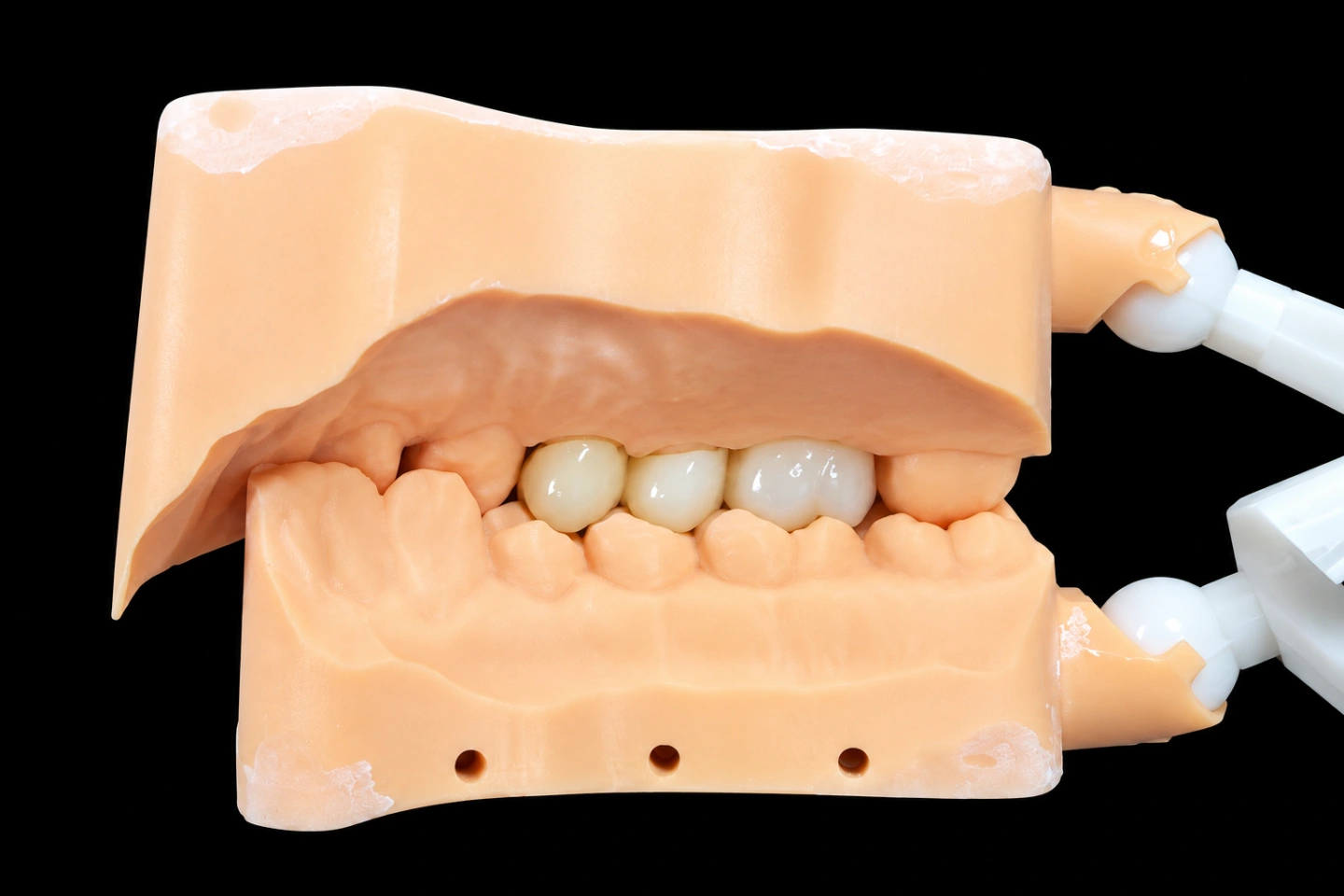
Patient Situation
Here’s what we knew going into this zirconia crown molar case, from the scans, the photos and the dentist’s notes :
What the Dentist Asked For
The Rx, in short :
Line 6 is why this case looks the way it does.
Why a zirconia crown for molar #19
The material was the dentist’s choice, and we’d have suggested the same. For a clencher’s first molar, monolithic zirconia is the strongest option we make, and it has no porcelain layer to chip.
A full crown after a root canal isn’t automatic. The AAE’s treatment standards paper says so plainly. Here, though, the cusps were gone, so full coverage was the dentist’s call.
The Technical Problem: Short Walls and a Wide Taper
We measured the prep on the scan, from the edge of the occlusal table down to the margin :
| Wall | Height | What it means |
|---|---|---|
| Buccal | 3.2 mm | Short |
| Lingual | 3.6 mm | Short |
| Mesial | 2.6 mm | Shortest, where the old filling’s box was |
| Distal | 3.0 mm | Short |
| Taper, buccal to lingual | About 26° total, roughly 13° per wall | Wide |
| Occlusal room | 1.3 mm at the tightest spot | Enough |
Room wasn’t the issue. Grip was.
Dentsply Sirona’s CEREC Zirconia clinical guideline asks for walls at least 4 mm high and a 6–10° taper when a zirconia crown goes on with a non-adhesive cement. Every wall on #19 came in under 4 mm, and the taper ran past that range.
With RMGI, this zirconia crown for molar #19 would rely on the cement for retention the prep wasn’t giving it. On a clencher, that’s the setup for a crown that comes loose.
The ferrule was thin on one side
The dentist’s notes said there was about 2 mm of sound dentin above the margin on the buccal, lingual and distal, and about 1 mm on the mesial . The AAE paper describes a 1.5–2 mm ferrule as clearly raising fracture resistance. The mesial didn’t have that.
That’s a risk to the tooth, not to the crown, and no crown design can add dentin. But it’s part of the picture, so we put it in the same message.
What the lab can change, and what it can't
| We can change in the lab | Only the dentist can change |
|---|---|
| How much sideways load the bite puts on the crown | Wall height and taper |
| How snug the inside of the crown fits | The ferrule |
| Thickness, contacts, margins and surface finish | The cement and how it’s applied |
| Whether it’s a crown at all |
So a better-fitting crown alone wasn’t going to fix this. The dentist needed the numbers.
The Options We Sent Before Milling
We posted the wall heights and a screenshot in the clinic’s WhatsApp group, with five ways forward for this zirconia crown molar case :
| Option | What it means | The trade-off |
|---|---|---|
| A. Go ahead as written | Crown with RMGI | No extra chairside work, but every wall is short and the taper is wide |
| B. Same crown, MDP resin cement | No re-prep. The dentist bonds the crown with an MDP resin cement | More chairside steps, and the lower molar has to stay dry while bonding |
| C. Refine the prep | The dentist makes the walls more parallel, adds a buccal groove and rescans | More tooth comes off a root-canal tooth that’s already short |
| D. Crown lengthening | Gum and bone surgery to gain height and ferrule | Gains the most, but means surgery and a wait before the final crown |
| E. Zirconia endocrown | A bonded zirconia endocrown that uses the pulp chamber for grip | A new prep, and the brand-new core comes out |
We laid out what each option meant for the crown. The clinical call was the dentist’s.
They picked B . The patient didn’t want surgery, and the core had just gone in. The dentist also asked us to keep the cusps low, so the bite would push the crown down rather than sideways .
We logged the change on the work order with the date, and the dentist confirmed it in writing.
How We Met the Rx on This Zirconia Crown for Molar #19
The zirconia
We milled this zirconia crown for molar #19 from monolithic 3Y zirconia . We also make multilayer zirconia, which goes from a solid neck to a more see-through top. See our posterior zirconia crown options for the range.
CAD design and approval
Our design team built the crown around the dentist’s two requests: bond it, and keep it from getting tipped. Here’s what that looked like :
We sent a preview with the wall heights, a thickness map and the contact points. The dentist approved it in writing the same day .
Milling and sintering
Our milling department cut the crown from the approved file. The software’s shrinkage setting follows the zirconia maker’s numbers, and we check it with test pieces on each new batch.
The crown sintered on a locked program, on a heat-proof support so it wouldn’t warp. We keep a temperature log for every furnace run.
The inside surface
We left the inside surface as it came out of sintering: no glaze and no polish . Air abrasion right before bonding was the dentist’s step, done to their cement’s instructions .
For reference, the 3M RelyX cements pretreatment guide lists sandblasting zirconia with 30–50 µm aluminum oxide at about 2 bar (30 psi). Zirconia doesn’t etch like glass ceramic does, so that air abrasion step matters.
Finishing and final checks
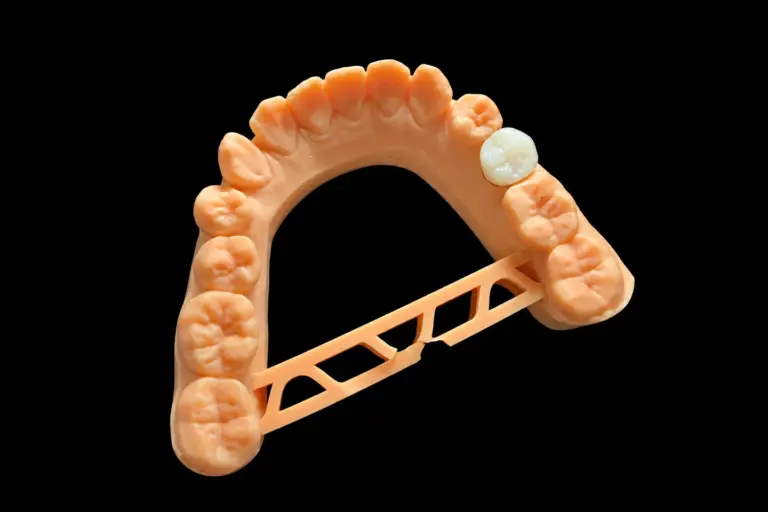
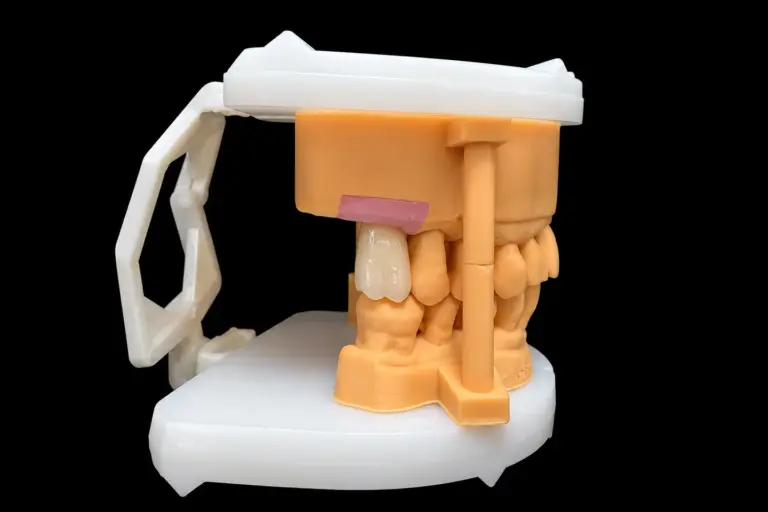
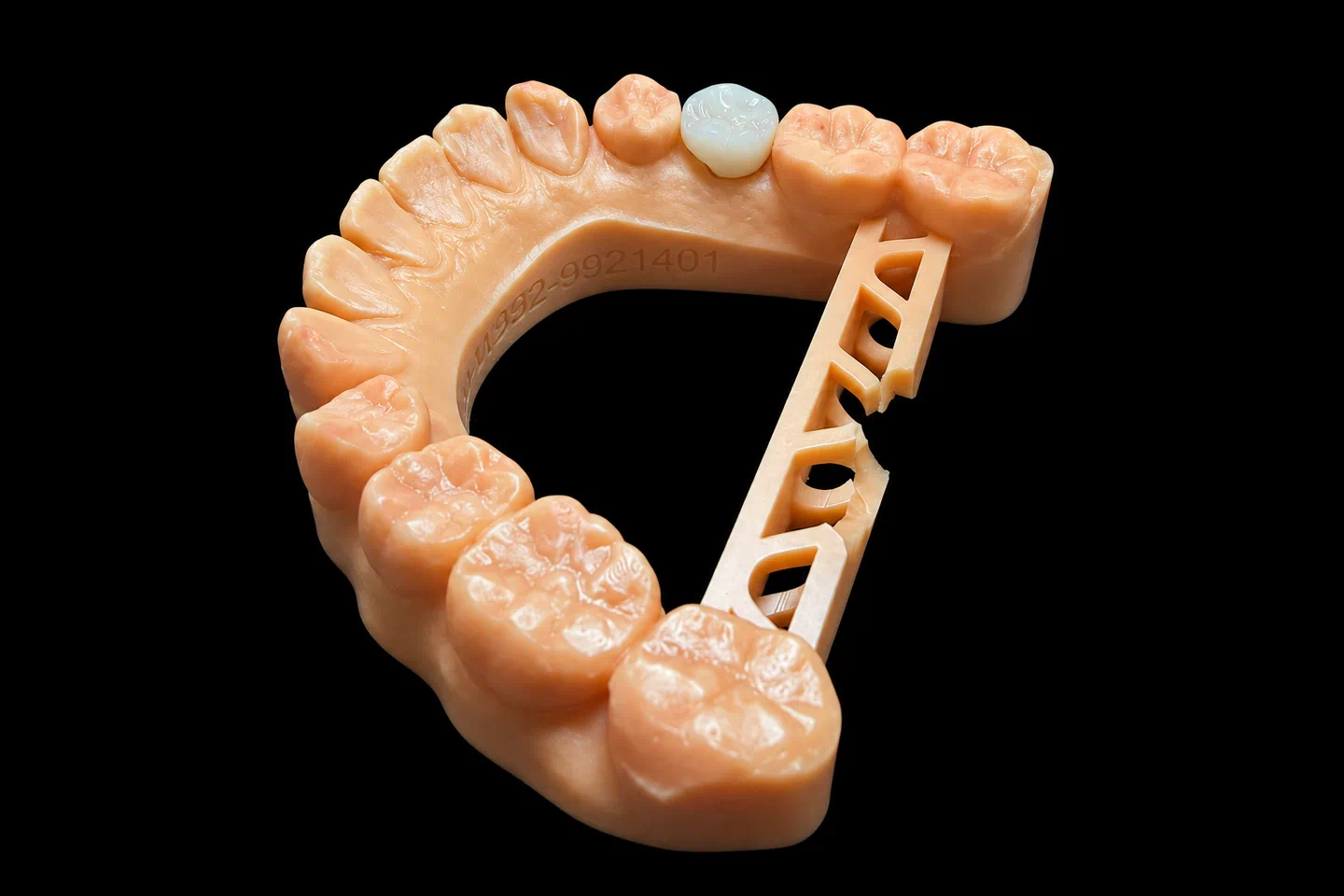
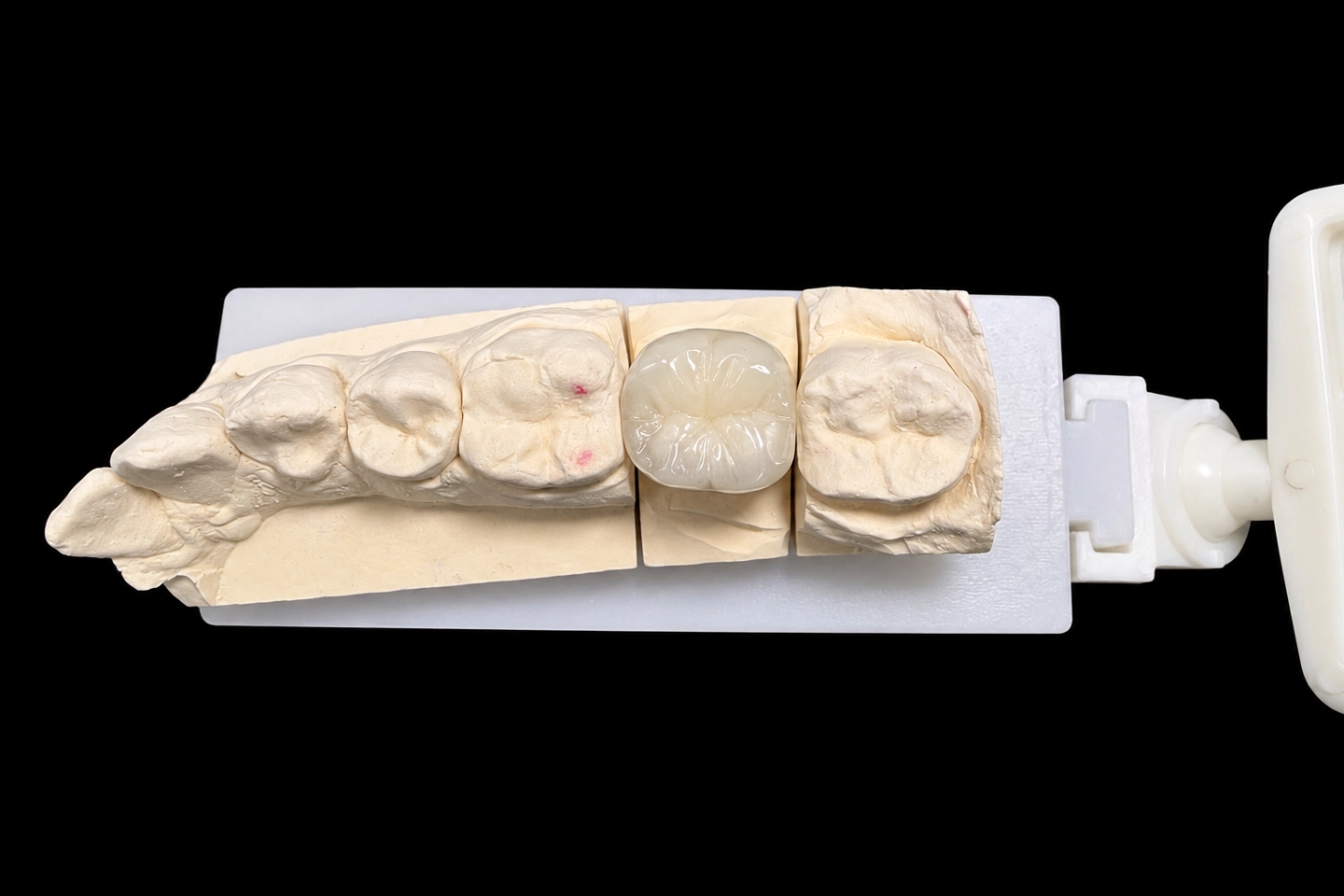
The technician seated the crown on the printed model and checked the contacts with #18 and #20. Then they checked the bite in the closed position and in side movements. The outer surfaces were polished step by step with a zirconia polishing kit .
Every case goes to our QC department before it’s packed. The QC technician checked the margins, the inside surface, the seat, both contacts, the bite, the shape and the polish, and looked for cracks, pits or chips. Everything was checked against the approved design and the updated Rx.
Finished Result of the Zirconia Crown Molar Case
Here’s how the finished zirconia crown for molar #19 measured up against the approved design :
| Check | Approved design | Finished crown |
|---|---|---|
| Thinnest occlusal point | 1.2 mm | 1.18 mm |
| Contact with #18 | Normal | Normal on the model |
| Contact with #20 | Normal | Normal on the model |
| Closed bite | Light, even, near the long axis | Matched the design |
| Side movements | No contact on #19 | No contact on the model |
| Inside surface | Unglazed | Unglazed |
Try-in feedback
The dentist: the crown seated with no margin or contact changes. They took a light touch off the distobuccal cusp, which was catching in a right side movement, and polished the spot again with a zirconia kit. Then they bonded it with the MDP resin cement .
The patient: glad it’s tooth-colored, and the bite felt normal after that one touch-up .
What we gave up
bonding a lower molar takes more steps and good moisture control. That’s the price of not re-prepping a short tooth .
the low cusp slopes make #19 flatter than a textbook molar. That was the dentist’s trade for less sideways load .
Sending a Similar Zirconia Crown Molar Case
Got a short or root-canal molar coming up? Here’s how to send it.
Everything happens in our own four labs in Shenzhen and Huizhou, China, with about 460 people, including about 100 in design, 70 in milling and 25 in QC. We make about 8,000 single zirconia crowns a month in the slow season and about 15,000 at peak, and we don’t outsource.
Istar is an FDA-registered establishment, Registration Number 3039441248, which you can look up in FDA’s establishment database. The lab runs under ISO 13485. You can also book a factory or video visit.
Have a short molar prep and not sure about the cement? Send us the scan and Rx. We’ll measure the walls and tell you what we see before we mill. Send your first case or talk to us.
FAQ
Can you save my default contacts, bite and fit settings?
Yes. Send them in writing, and we’ll file them under your account and use them on every case. If you want something different on one case, note it on that Rx. Verbal preferences don’t go on file.
Does waiting for my approval count toward the lead time?
No. Time spent waiting for approval, missing records or your reply doesn’t count. The lead time starts once we have everything we need and your go-ahead.
How many design changes are included?
One design plus two rounds of changes, at no extra charge.
Can I send just one test case?
Yes, single trial cases are welcome, and plenty of new clients start that way. Ongoing partnerships suit a regular case flow best, since international shipping is the big cost on one-off cases.
Do you take rush cases?
Yes, at no extra charge, for clients who send 10 or more cases a month. We guarantee the ship date. The arrival date depends on customs, so we can’t guarantee that.