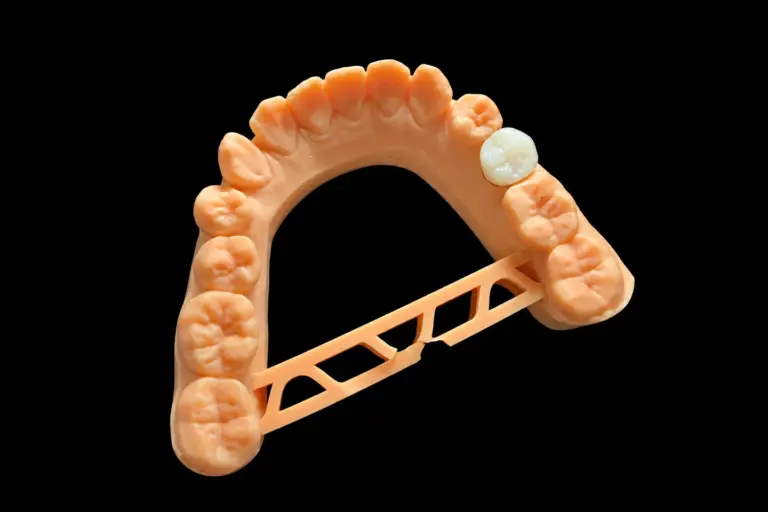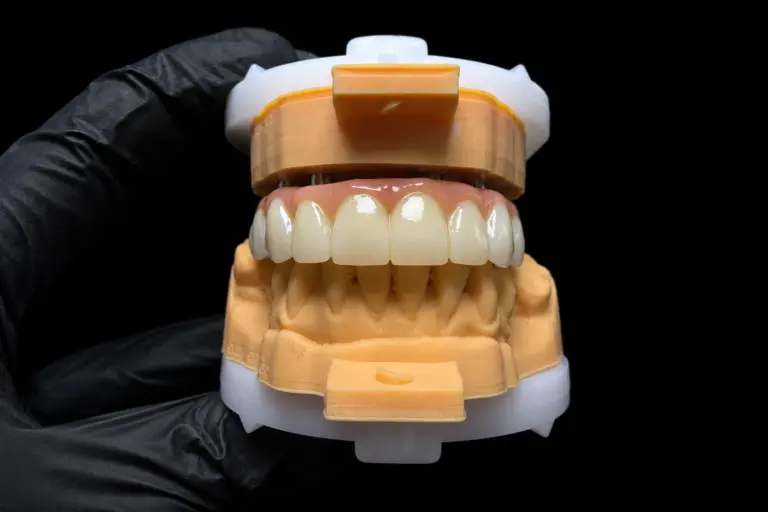
Glazing zirconia crowns gives them luster and carries the surface stains that make a monolithic crown look like a tooth. But a glaze is a thin layer of glass, and on the surfaces that chew, it wears away. Once it’s gone, the zirconia underneath is what meets the opposing tooth. So the useful question isn’t whether to glaze. It’s what surface sits under the glaze, and which parts of the crown should carry glaze at all.
At Istar Digital Dental Lab, every zirconia crown is polished first and then glazed, unless your prescription says otherwise. If you’d rather have polished-only contacts, or no glaze at all, we make it that way. Here’s what the evidence says about each choice, so you can decide case by case.
What a Glaze Does, and What It Doesn’t
A zirconia glaze is a low-fusing glass, applied as a powder and liquid, a paste or a spray, then fired onto the sintered crown at far lower temperatures than sintering. It flows into a thin glassy film. Glazing adds material. Polishing removes it: diamond instruments take the surface down to a smoother layer of the zirconia itself.
Glaze and stain are separate steps. Stains add color, such as cervical warmth, fissure detail or incisal effects. The glaze adds gloss and covers the stain. You can have one without the other.
Three things a glaze is not:
- Not wear protection. Zirconia is far harder and denser than any glaze. The glass is the part that wears, not a shield over the crown.
- Not part of the bond. The intaglio is the cementing surface, and glaze is kept off it. Routine zirconia bonding relies on air abrasion and an MDP primer, covered in our cementation protocol . Glazing the intaglio to make it etchable is an experimental approach, tested on zirconia slabs rather than crowns. The glaze layer measured about 75 µm before treatment, enough to raise questions about fit and cement space.
- Not the same as “self-glazed” zirconia. That term describes particular materials whose as-sintered surface is already very smooth. No glass layer is fired on, and adjusted areas still need polishing.
The Glaze Wears Off. The Surface Under It Stays.
Glaze layers are thin and uneven. In one study, Lawson and colleagues measured an average glaze thickness of about 98 µm, with a spread of about ±57 µm. On a contact that’s working every day, that’s not much material.
The wear shows up early. In a chewing-simulator study published in Dental Materials, glazed zirconia lost about 78 µm, most of it while the glass layer lasted. Polished zirconia barely wore, at about 2 µm.
The clinical studies summarized in the same paper reported maximum wear depths for glazed zirconia crowns of about 43 µm at six months and 60 µm at two years. The authors attributed most of that loss to the glaze. Those figures are maximums from particular studies, not a schedule every crown follows. They do show that on functional contacts, glaze is a short-term surface.
So what’s under the glaze matters. Lawson’s group also measured roughness after a simulated chairside adjustment:
- Adjusted zirconia: Ra about 2.73 µm
- Adjusted, then polished: about 1.11 µm
- Adjusted, then glazed: about 0.82 µm
Glazing gave the smoothest surface on day one, but it smoothed over a rough base. When that glaze wears through at a contact, the rough base is what’s left. That’s why we polish every crown before it’s glazed: when the glaze goes, the zirconia it leaves behind is already polished.
Glazed vs Polished Zirconia: What the Wear Studies Show
The question most clinicians ask is what happens to the opposing tooth. Here’s the evidence on glazed vs polished zirconia, with the type of study noted for each.
| Study | Design | What it found |
|---|---|---|
| Janyavula et al., 2013 | In vitro, 400,000 chewing cycles against enamel | Polished zirconia caused the least enamel wear (about 0.21 mm³). Glazed zirconia caused about 1.18 mm³, and zirconia polished and then glazed again about 0.88 mm³. Both glazed groups caused significant enamel wear. |
| Lawson et al., 2014 | In vitro, after simulated adjustment | Adjusted and polished zirconia caused about half the enamel loss of adjusted and glazed zirconia (0.33 vs 0.68 mm³). |
| Dondani et al., 2023 | Clinical, split-mouth, 30 patients, first molars | No difference at six months (42.8 vs 42.5 µm). At 12 months, glazed crowns had worn opposing enamel more (81.9 vs 71.4 µm). |
| Selvaraj et al., 2021 | Clinical pilot, split-mouth, one year | Both crown types wore, polished crowns less. Glazed crowns caused the most opposing enamel wear. |
| Two-year endocrown study | Clinical, 20 patients, zirconia endocrowns | No significant difference between glazed and adjusted-then-polished endocrowns at two years (p = 0.108). |
How to read it:
- In the lab, the direction is consistent. Polished zirconia is the most enamel-friendly surface tested. A glaze over polished zirconia still wore enamel more than polish alone in Janyavula’s study.
- In patients, the gap is smaller and shows up later. The clinical studies are small, ran one to two years, and didn’t all reach significance.
- “Polished” depends on the protocol. In a study of 300 monolithic zirconia specimens, a full coarse–medium–fine sequence gave the lowest roughness, and polishing systems differed in roughness, phase transformation and biofilm. A quick pass with one polisher isn’t the surface those studies tested.
The practical reading: where zirconia works against natural enamel, a well-polished contact is the surface the evidence favors. If the patient grinds or the contacts are heavy, ask for polished-only contacts. On lighter contacts, where the clinical differences have been small, polish under glaze is a reasonable default.
Glazing Zirconia Crowns Zone by Zone
A crown doesn’t need one finish all over. Each zone has its own job.
| Zone | Finish | Why |
|---|---|---|
| Occlusal and incisal contacts | Polished. Glaze over polish by default, or polished only on request | Glaze wears through here first, and polished zirconia is the most enamel-friendly surface |
| Visible, non-contacting surfaces (facial, buccal) | Stain and glaze | Characterization and luster, where the glaze isn’t under load |
| Proximal contacts | Thin glaze, or polished only | Glaze adds thickness, and a heavy coat can make contacts tight |
| Margins, emergence profile, subgingival areas | Polished; glaze left off on request | The smoothest possible surface next to the gingiva |
| Intaglio | No glaze | It’s the cementing surface |
| Chairside adjustments | Polish through the full sequence | The glaze on that spot is gone |
Near the gingiva, the goal is simply the smoothest surface you can get, whatever the finish. Early in vivo work by Scotti and colleagues found that glazed zirconia, which was rougher, tended to collect more early biofilm than polished zirconia. That study was small and short. A more recent in vitro study found a smaller biofilm-covered area on polished surfaces, but no significant difference in colony counts. The direction favors polish, but not strongly.
Front and back teeth also lean different ways. On molars and premolars, function comes first. Staining suits efficient, strong posterior work, and the contacts should be well polished. For bruxers, choose monolithic zirconia with polished contacts and protect the work with a night guard . On anterior crowns, appearance carries more weight. Stain and glaze on the facial surface give the gloss and detail patients notice. Lingual and incisal contacts can still be left polished.
Color: Built Into the Zirconia or Painted On
Color can go in two places, and where it goes decides what happens as the surface wears.
- In the body of the crown. Multilayer zirconia blanks carry a shade gradient from cervical to incisal. Coloring liquids applied before sintering soak into the porous zirconia. Either way, the color runs through the material.
- On the surface. Stains applied after sintering sit on top, under the glaze. Surface characterization can fade where the glaze wears.
So build the base shade into the zirconia, and use stain for characterization rather than for the whole shade. For anterior crowns, that usually means multilayer zirconia , or micro-layered zirconia when you need more depth than stain can give.
Our technicians add custom stains, surface micro-texture and incisal features by hand. Each case’s stain shades, dilutions and firing parameters are recorded, so a later crown can match. Shade is checked under standard lighting before and after firing. For anything stain can’t reach, see our porcelain layering and characterization options.
A translucent anterior crown also shows what’s beneath it. Send a stump shade with the case, especially over a dark tooth or a metal post. More on zirconia grades and translucency .
At the Bench: What Happens After the Glaze Firing
Glazing zirconia crowns adds a layer, and firing can move things slightly. Proximal contacts can come out tight, occlusion a little high, and margins can open. That’s why, after glaze firing, we check contacts, occlusion and margin fit again on the model, and correct anything that changed before the crown ships. Applying the glaze thin at contacts keeps those corrections small.
A few other controls behind the finish:
- Firing to the system. Glaze and stain firing temperatures vary widely by product. Published cycles range from about 730 °C to 1,000 °C, so each system is fired to its manufacturer’s instructions, never to a cycle borrowed from another product.
- Tracked materials. Stains and glazes are logged by batch and expiry date, used first in, first out, and never past date.
- Final inspection. Fit, contacts, occlusion, form, esthetics and surface finish are checked against your prescription before release.
Polishing Zirconia Crowns After You Adjust Them
Any spot you adjust has lost its glaze, permanently. A diamond leaves scratches and a transformed surface layer, which the studies above show is the roughest state the crown will ever be in. Polishing zirconia crowns after adjustment is the step that decides how that contact treats the opposing tooth.
- Use a zirconia polishing system. The softer kits made for glass ceramics don’t cut zirconia effectively.
- Work through the full sequence, coarse to medium to fine, until the bur scratches are gone. Skipping a grit leaves deeper scratches behind.
- Keep the pressure light and the instrument moving, so you don’t build heat in one spot.
- Stop at the gloss of the neighboring teeth. A mirror finish can look glassy next to natural enamel. Matching the adjacent teeth is the better endpoint.
Reglazing chairside needs a ceramic furnace, and a polished contact is what the evidence favors anyway. If a crown needs significant adjustment at try-in and hasn’t been cemented, you can send it back. We’ll reglaze a small area with glaze paste, or reglaze or repolish a larger one. A slightly high bite can be adjusted chairside. If a crown won’t seat, has an open margin or is cracked, stop and contact us rather than adjusting further.
How to Prescribe the Finish
Write the finish on the Rx, and we’ll make the crown that way:
- Polished, then glazed. Our default if the Rx doesn’t specify. Polished zirconia under a glaze for gloss and stain.
- Polished only. No glaze anywhere. Shade comes from the zirconia, and characterization is limited to what can go in before sintering.
- Glazed, with polished-only contacts. Stain and glaze where it shows, polished zirconia where it chews.
- Polished-only margins and emergence profile. Glaze kept away from the gingival areas.
It also helps to note the opposing dentition (natural enamel or a restoration), any bruxism or clenching, and the characterization you want. A photo of the adjacent tooth next to the shade tab says more than a written description.
For dental labs: if you mill zirconia in-house and need finishing capacity, send us the staining, glazing and polishing alone. The work goes out under your name, and we never contact your dentists.
Send a Zirconia Case With Your Finish on the Rx
Prescribe the finish you want on a single crown and judge the surface in your own hands. Single trial cases are welcome, and an ongoing partnership suits a regular flow of cases. For the price list, contact our sales manager.
- Crowns, bridges, ceramic veneers and implant restorations carry a 3-year warranty.
- Factory-side issues, including inaccurate shade and visible flaws that affect esthetics, are adjusted or remade free. We pay to ship finished work back to you, remakes included. Details are in our remake and warranty policy .
- Istar Digital is an FDA-registered establishment, Registration Number 3039441248, which you can verify in the FDA database.
Frequently Asked Questions
Does a worn glaze mean the crown needs replacing?
No. The glaze is a surface finish, not the structure. The zirconia underneath carries the load, and the glaze isn’t what decides how long a crown lasts. The ADA’s overview of indirect restoration materials cites five-year survival of 95.9% for tooth-supported zirconia-based crowns. If a worn contact feels rough, polish it intraorally with a zirconia system.
Can a chairside spray glaze stand in for polishing?
Spray glazes are glazes. They still need firing, and they wear from contacts the same way. Use them for esthetics where you have a furnace, but polish the functional contacts.
Will a polished-only anterior crown look flat?
It can look plainer than a stained and glazed crown, because surface characterization isn’t available. A multilayer zirconia with a built-in gradient closes much of that gap. When the case needs more, glazing the facial surface while leaving contacts polished keeps both the esthetics and the polished contacts.
Do implant crowns follow the same rules?
Yes. The occlusal and esthetic surfaces follow the same logic, and the subgingival part of an implant crown should be highly polished. You can request polished-only emergence surfaces on the Rx.