Flexible Removable Partial Dentures — Case Selection, QC, and Rework Terms from a Full-Service Lab
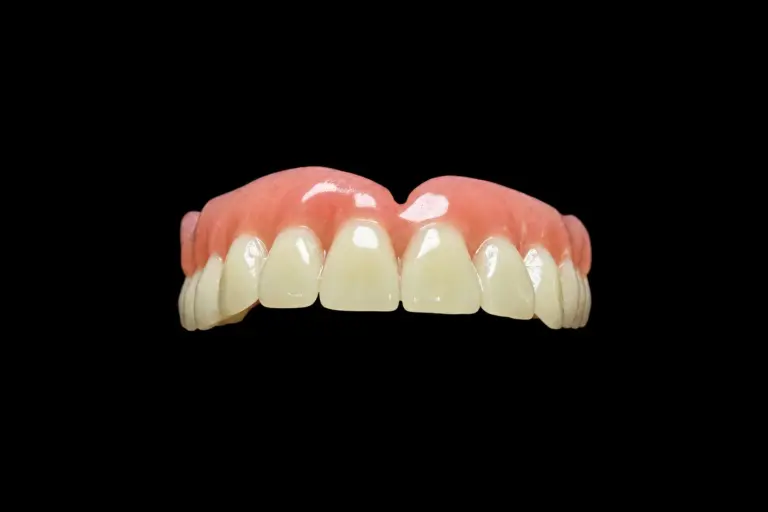
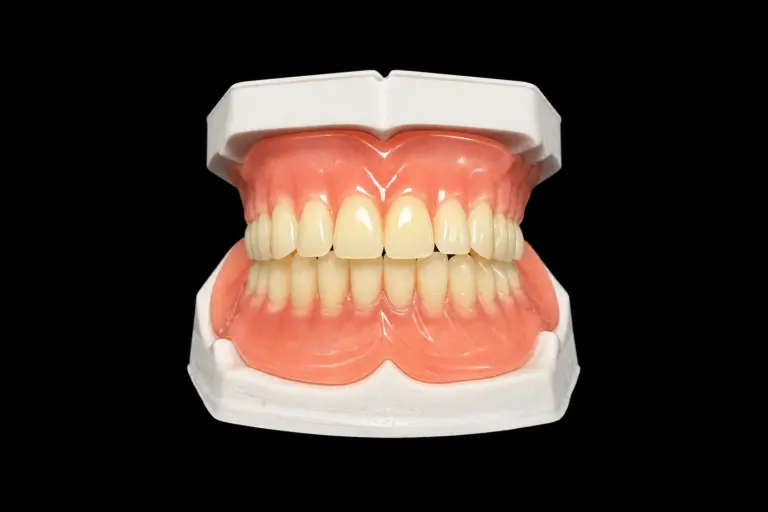
We build flexible removable partial dentures for dentists, clinics, and dental labs outside China. Thermoplastic base, resin clasps that engage the undercuts, no cast framework, no visible metal. It solves a specific set of problems well and makes others worse, and that line is thinner here than with a cast partial because the material gives you less room to correct a bad call.
Everything is made in our own facilities in Shenzhen and Huizhou and nothing is sent out. Removable work runs around 4,000 cases a month in a normal season, 6,500 at peak, and we’ve been building since 2012.
When a flexible partial denture is the right choice
The appliance replaces one or more missing teeth with a thermoplastic resin base and resin clasps. The tradeoff for the aesthetics and comfort is a different mechanical profile, because the base flexes under load. That flexion is what makes the design work in some mouths and fail in others.
The split follows the Japan Prosthodontic Society’s 2014 position on non-metal clasp dentures (Fueki et al., J Prosthodont Res 58:3–10).
Reasonable indications
- Single or short-span replacement where the clasps shouldn’t show
- Documented metal allergy or acrylic monomer sensitivity in a patient who still needs a removable option
- Interim appliance during implant integration, or transitional coverage while the definitive plan is a cast partial
- Arches where the remaining teeth and ridge can carry a resin-only design
Cases we won't build in flexible resin
- Heavy occlusal load, including bruxism. The base deforms progressively
- Wide edentulous spans that need broad palatal or lingual coverage
- Deep or severe undercuts on the abutments that block passive seating and overload the clasp
- Distal extension (Kennedy Class I, most Class II). The saddle rotates around a single terminal abutment and a rigid framework distributes that load better
- Any case where the patient’s plan depends on a service life nobody has measured. The Canadian rapid review on flexible dentures found no follow-up long enough to support a durability claim (Canada’s Drug Agency, RC1583)
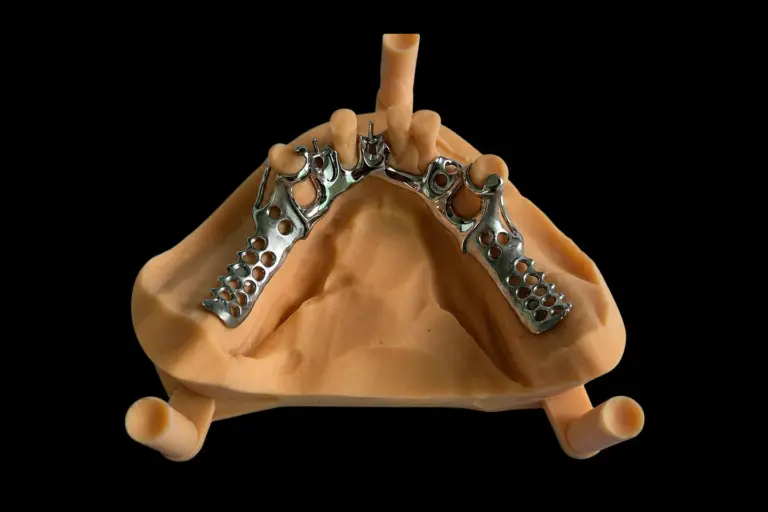
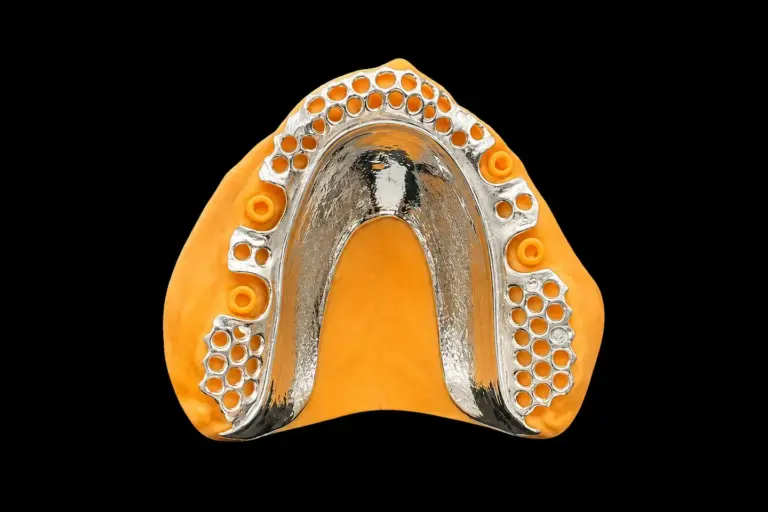
When a case sits on the line, send it for design review before anything is cut. Telling a dentist that a cast cobalt-chrome partial serves the patient better costs us a case and saves both of us a remake. The metal-framework alternative is on our Chromium Cobalt Denture page, and clasp design in general is covered under Dentures With Clasps.
How we build and check them
Flexible resins aren’t interchangeable. Polyamide, polyolefin, polyester, and acetal copolymer behave differently under load and respond differently to repair, and the polyamide family has documented weaknesses in flexural strength and fatigue resistance (Polyamide denture base review). This resin class is also what makes a removable option possible for patients with metal or monomer sensitivity (Cureus literature review).
Which resin family and brand goes into your case is settled with your account manager before production, because span, shade, and whether chairside reline is part of the plan all push the choice. If a specific brand matters, put it on the Rx. We build to client-specified brands and batches where stock allows, and supply certificates of analysis and material declarations on request.
Every case, flexible or not:
- In-house from CAD to carton. Design, model printing, resin processing, finishing, polish, and release all happen in Shenzhen or Huizhou. The removable department runs about 55 technicians. A 25-person QC team works separately from production and doesn’t build.
- Three QC stations, independent release. Incoming data and model check, in-process spot checks, and a final inspection by a QC technician who had no hand in making the appliance. Fail final and the case is remade before it can ship. Nothing leaves without a signature from someone who didn’t build it.
- Every removable case gets the same 100% checks: seating on the model, aesthetics, retention, occlusion. Base thickness is measured with calipers at multiple points, and a strong backlight through the base catches voids and inclusions that a visual pass walks past.
- Polish that doesn’t move the fit. Tissue surfaces are isolated before polishing, wheels stay off the free margin, and the appliance goes back on the model afterward for a seating recheck. This is where a large share of adjustment appointments originate.
On standards: denture base polymers are governed by ISO 20795-1. We don’t publish a compliance claim for a specific resin unless the supplier hands us a declaration of conformity for that grade. Ask for it and we’ll tell you what we have and what we don’t.
Turnaround, pricing, and warranty terms
Full-arch and complex implant work runs 5 to 7 working days. Straightforward removable work moves faster, and a flexible RPD gets its own date rather than a category average, because the schedule depends on span, how your records arrive, and whether a try-in stage is on the Rx. The date is confirmed in writing before the case enters production.
Quotes are case-specific. Units set the base, material sets the rate, and design complexity or attachment hardware adds on top. Current pricing goes to your account manager rather than onto a public page, and any quote is confirmed before production starts, so nothing appears on an invoice that wasn’t agreed first.
We work from a rework policy rather than a time-boxed warranty. If your procurement process requires warranty language as a line item, raise it during onboarding and we’ll put the exact terms in writing before the first case ships.
Sending the case
The impression decides the outcome. Resin clasps engage undercuts in soft tissue that an acrylic partial never loads the same way, so a slightly stretched or air-trapped impression doesn’t produce a loose appliance. It produces one that chairside adjustment can’t rescue.
Send VPS, polyether, or an intraoral scan. Don’t ship alginate. Alginate dehydrates and shrinks in transit, supports organic growth, and draws customs attention as a biological material. A local lab can pour it the same afternoon. We’re looking at it days later on another continent. If neither VPS nor polyether is in the office, scan it: we take STL, PLY, OBJ, and DCM, plus editable exocad and 3Shape files, and orders sent through 3Shape Communicate or Medit Link come straight into our queue without re-uploading.
What we’ll ask you to redo:
- Bubbles, drags, deformation, or a missing margin in the finish line, gingival margin, contact, or occlusal zone. Flaws sitting away from the restorative area are workable.
- Pre-poured stone models are fine. We want an intact base, no voids, no fracture, stable occlusion, and readable margins. If a model arrives short of that, it gets photographed, flagged to you the same day, and we ask how to proceed rather than improvise.
- Impressions have to be cleaned and disinfected at the clinic and labeled before packing. We log condition on receipt and disinfect again on our side, and clinic-side records are what keep a package out of a customs hold.
Your Rx needs the clinic, treating dentist, patient reference, product and material, shade, and the date you need the finished appliance. For a flexible RPD, add clasp positions, aesthetic priorities in the visible zone, whether a previous flexible appliance fractured, and any known allergies. When the Rx contradicts the records, the case pauses and you get a question instead of an assumption.
If you want to see the design before processing, we send a CAD preview and hold the case. Approving it also fixes the acceptance standard: what you sign off is what the QC release is measured against.
The digital route end to end, including scanner support and intake timing, sits on our Digital Dental Laboratory page.
Registrations, listings, and traceability
In regulated markets the buyer has to verify rather than take a sentence on trust, and that check happens before anyone discusses aesthetics.
- FDA. Establishment registration and device listing are on file for custom dental restorations, fixed and removable. The FDA establishment and device listing database is public and doesn’t need a login; search the establishment name to confirm current status. “FDA-approved materials” isn’t a thing for devices in this class. Registration and listing are what apply, and they’re what we hold.
- EU MDR. Removable prostheses, flexible partials included, sit in Class IIa as custom-made devices and follow Annex XIII. Custom-made devices don’t go through a notified body the way serial production does; what exists is the written Annex XIII statement plus the technical file, and our EU authorised representative handles the EUDAMED notifications.
- UK. MHRA registration on file.
- Quality management. ISO 13485.
Certificate copies go out on request. On materials, batch numbers, country of origin, supplier safety and biocompatibility declarations, and nickel-free or beryllium-free options are all available where the clinical plan calls for them. If a wrong material is written on the Rx and we build to it, the Rx carries that responsibility; where the Rx contradicts something in the records, you hear from us before processing rather than after.
Supplier questionnaires, facility audits in Shenzhen or Huizhou (in person or by video), and a company overview you can forward to a procurement team are all part of onboarding.
If a case comes back
Report it within 24 hours of receipt, with the case number, patient reference, product, the specific problem, and photos of the area. The written thread becomes the record.
Six removable-case problems are fixed or remade at no charge
- The appliance won’t seat on the model or in the mouth
- The base lifts at the margin
- Clasp retention is inadequate, or the clasp interferes with occlusion
- The aesthetic result compromises the smile: a clasp that reads visibly, or a flange contour that sits wrong
- Occlusion is inaccurate
- Gingival or base shade doesn’t match the selection you approved
Not covered
- A shade or material change made after the Rx was confirmed
- Rework on an impression we flagged as borderline at intake and you asked us to proceed with anyway
- Design changes that are a change of preference rather than a defect
A new impression, a new scan, a new design, or a material change starts a new case. Tell us if the teeth were reprepped: a case already in rework gets remade at no cost, anything else is quoted.
Reworks jump the queue. Re-completion typically takes 3 to 5 working days from arrival of the appliance, where returning the original is required, plus whatever new records the case needs. Freight in both directions and any implant components sit outside rework cost.
If a second attempt doesn’t resolve it, your account manager escalates to the production lead and the case gets discussed directly instead of over another round of photos. Where a case can’t be made right after repeated attempts, we refund it. Shipping the same appliance back and forth across the Pacific a third time serves nobody.
The wider removable workflow, including full dentures and guards, sits on our Removable Denture Lab page.
Can a flexible partial be relined, repaired, or added to?
Sometimes, and the answer turns on the resin family and the age of the appliance. Polyamide is difficult to bond new resin to; polyolefin and acetal are more forgiving but still behave differently from adding to an acrylic. We take additions and relines case by case, match material where we can, roughen and clean the bonding field, and test the bond before release. Occasionally the honest answer is that the structural result won’t hold and a new appliance is the safer spend, and you’ll hear that rather than receive a quiet rebuild that fails at the next recall.
Where maintainability matters on a given case, raise it before design. Some cases do better with a cast framework carrying the load and resin only where it shows; if that’s the direction you want, say so at design review and the geometry gets worked out before anything is cut.
Starting an account
One case is enough to start. There’s no minimum order. Most first-time dentists send a single flexible partial or a short-span case to watch the workflow end to end. Once you’re regular, we’d rather you batch to a weekly shipment, since international freight punishes single-case parcels and consolidating cuts your cost without touching production time.
Technical and account questions during China business hours (9:30 to 18:00, with managers reachable later for urgent cases) get answered inside an hour. Off-hours messages land the next business morning, and the outer limit on a technical reply is 12 hours. Case meetings and documentation in English are standard, including custom-made statements, material certificates, and product labels.
First-time accounts can request net 30. Quotes are confirmed before production, and invoicing runs per case, per batch, or monthly, whichever suits your bookkeeping. Clinic case numbers, patient references, or PO numbers can be printed on the invoice.
Nothing ships on an assumption. Material substitutions, design changes beyond the approved CAD, and anything the records don’t support all come back to you as a question first. A pause costs a day; a wrong appliance costs a month.
Patient-identifying photographs don’t go onto marketing pages without written authorization from the clinic and the patient. If you need examples to show your own team, we can assemble a de-identified set under a mutual NDA.
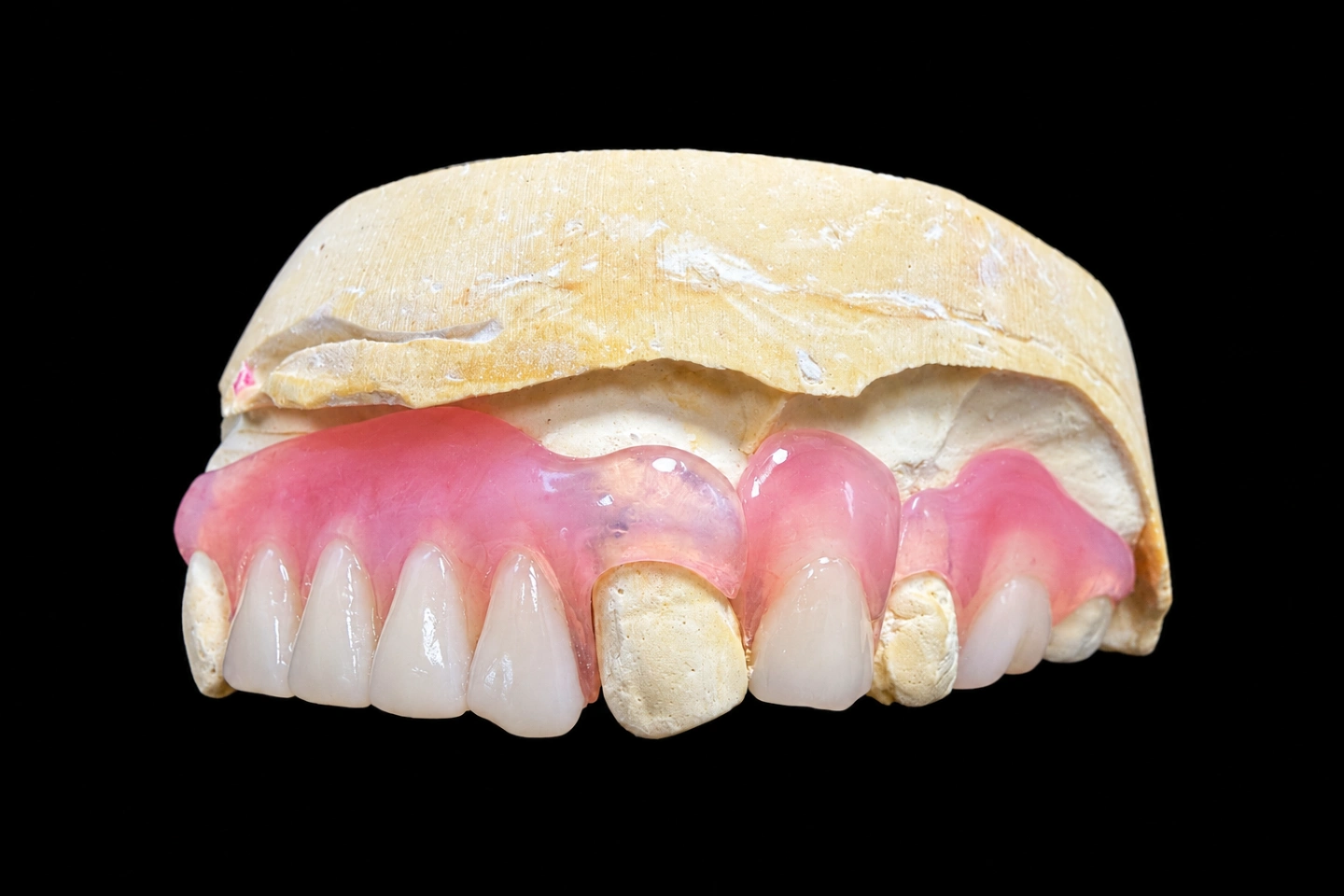
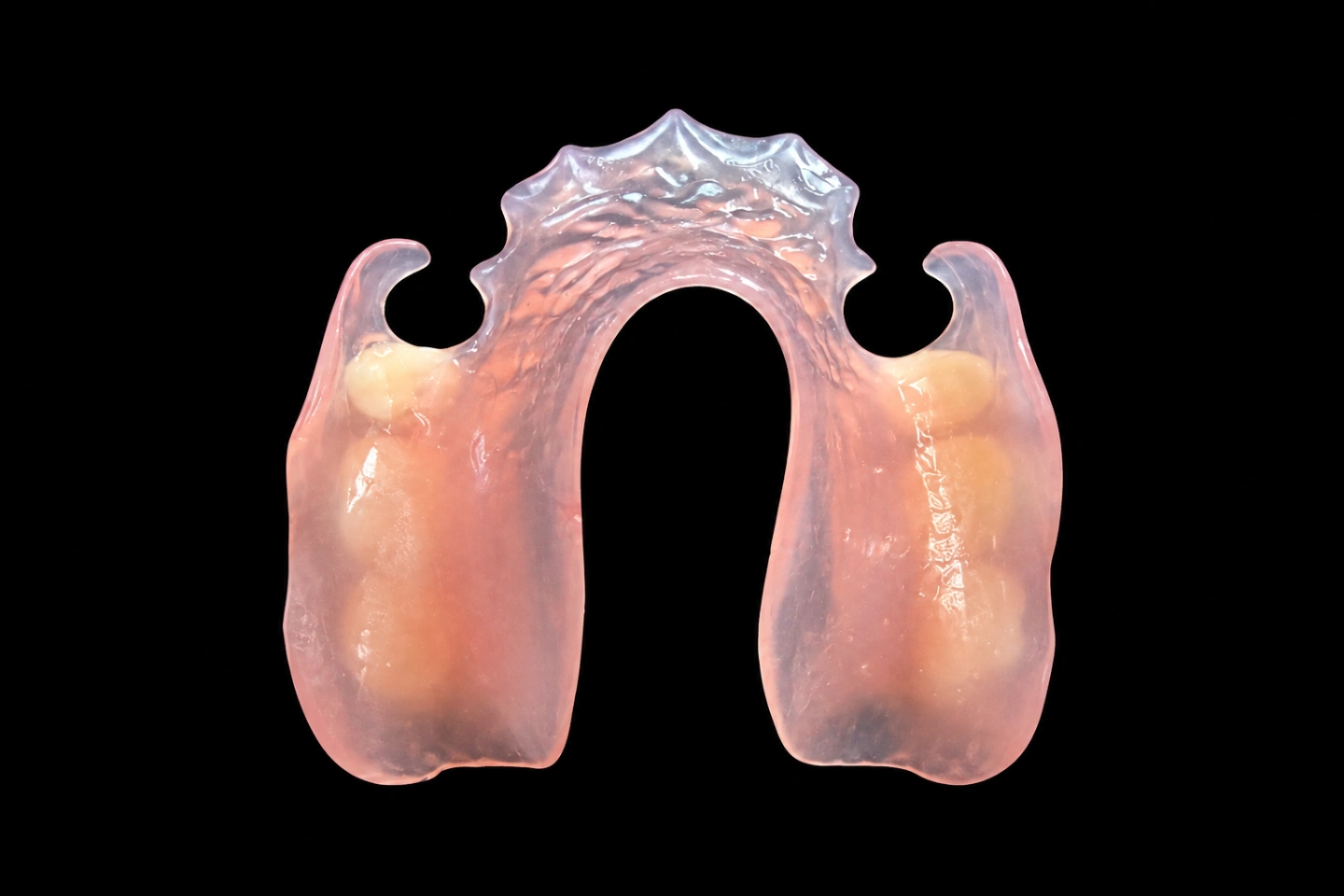
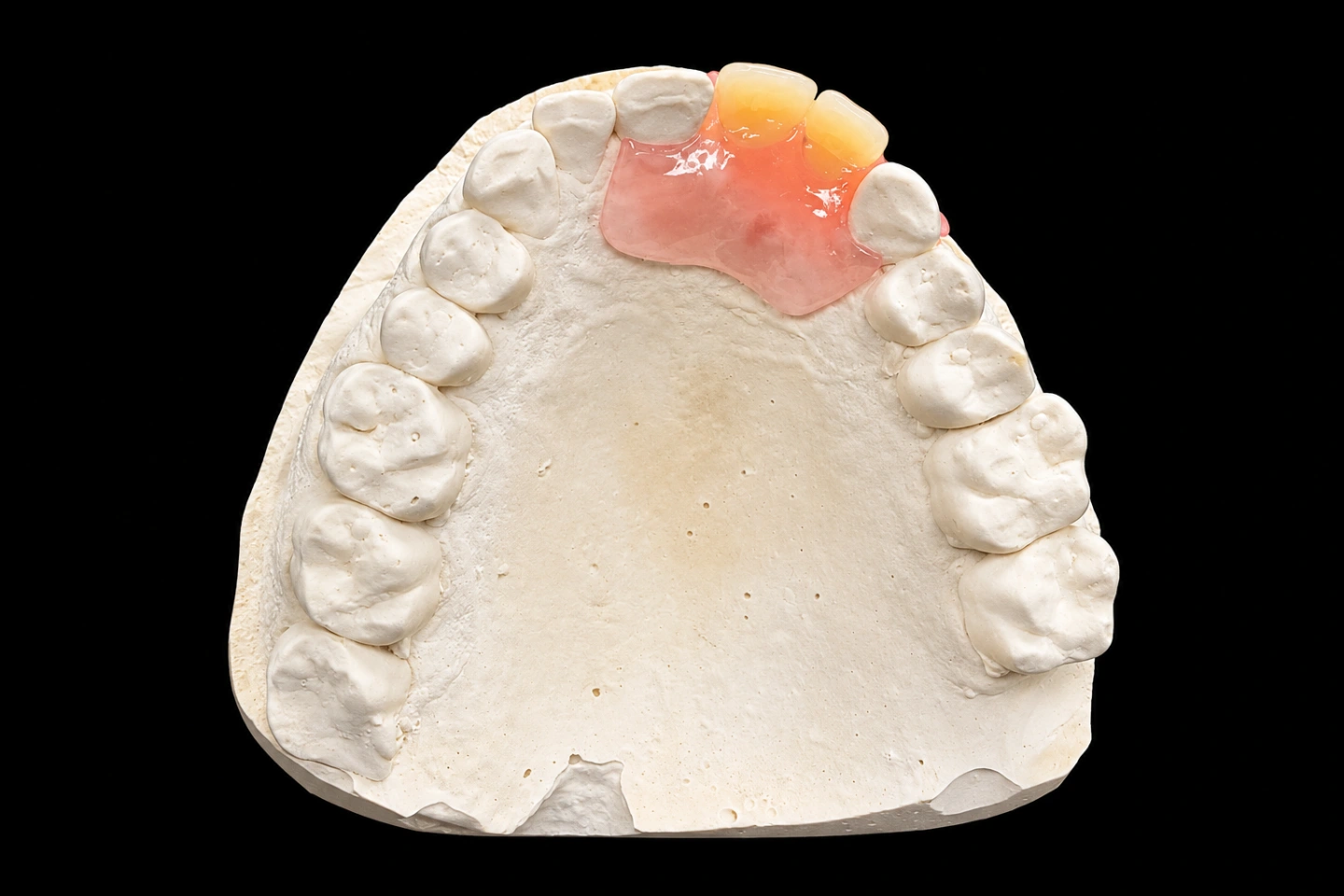
Cases from our lab
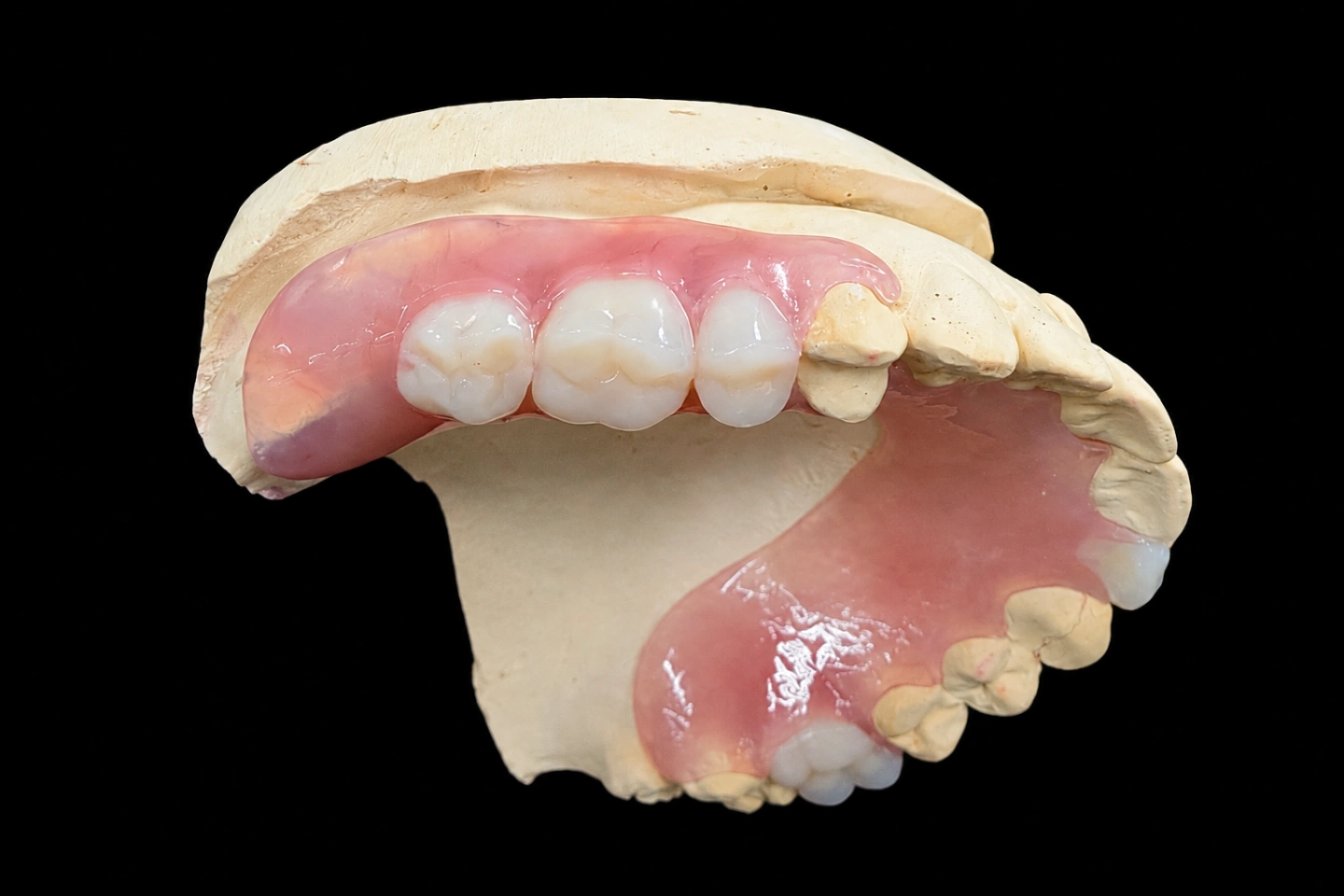
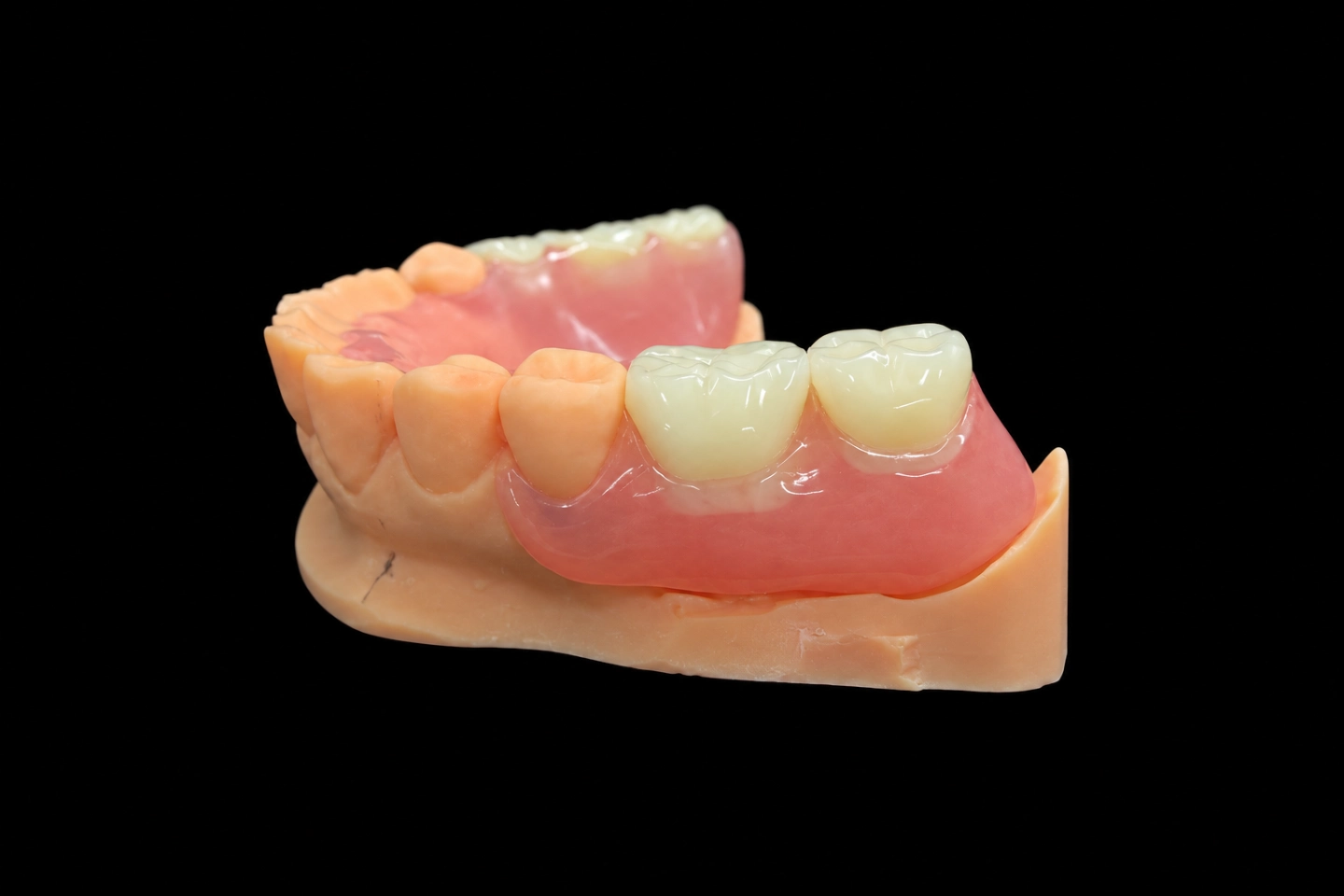
Before the first case: four questions we get
Do you take work from other dental labs, not only from clinics?
Yes. Labs are a large part of what we do, including labs that keep the clinical relationship and use us for production capacity. Roughly 50 labs and 100 clinics have sent cases, along with more than 400 dentists working directly.
Can I send design only, or processing only?
Both. We take CAD-only work, milling and sintering only, or the complete build. Send whichever stage you want us to own and we’ll quote that stage.
Can you copy a partial the patient is already wearing?
Usually. Send an impression or scan that captures the adjacent teeth so the form can be replicated, plus a bite registration for the vertical dimension and occlusion. The old appliance itself helps as a reference even when it’s worn.
Can you ship to more than one clinic location under a single account?
Yes, with a caveat on timing. The default is one consolidated parcel, and per-location packing and labelling can be arranged as a standing instruction. A delivery address can be changed any time before the parcel leaves; after that it’s between you and the carrier. Splitting a case into separate shipments has to happen before cutting starts, since once a case is milled or sintered the split adds labour and freight and needs approval.
Send the case
Open a case through the contact form, or send records by email or your scanner’s cloud platform using the details on that page. A first case gets reviewed before anything is cut, so you find out early whether we read the case the same way you do.