PFM Maryland Bridge | Dental Lab Fabrication
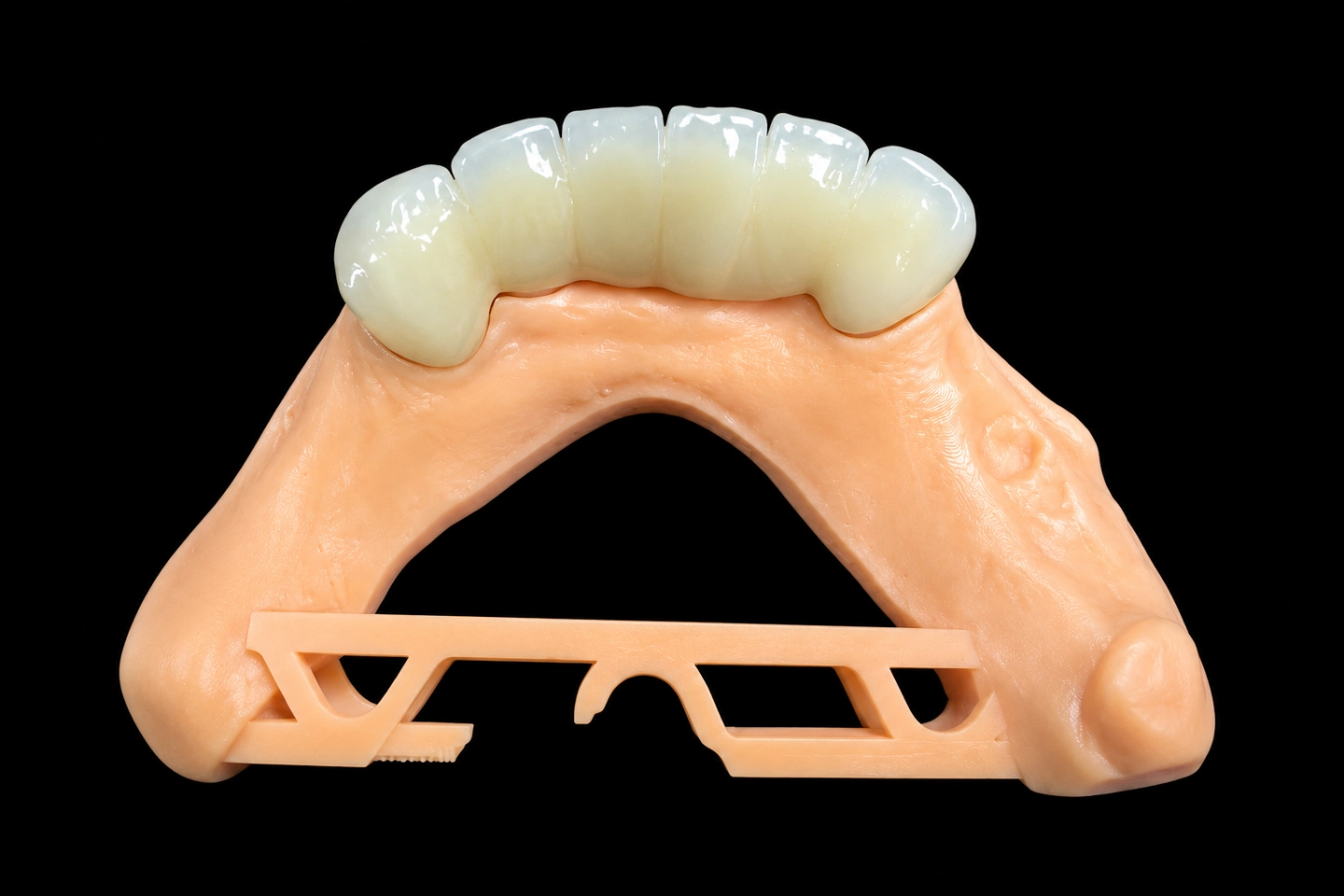
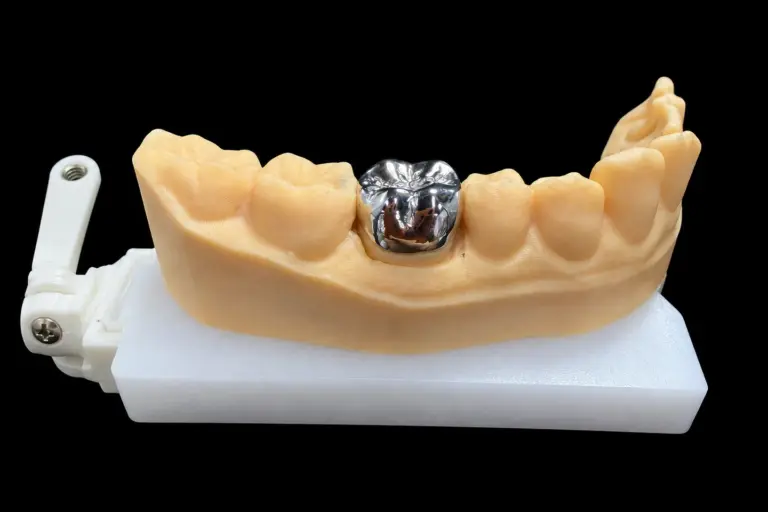
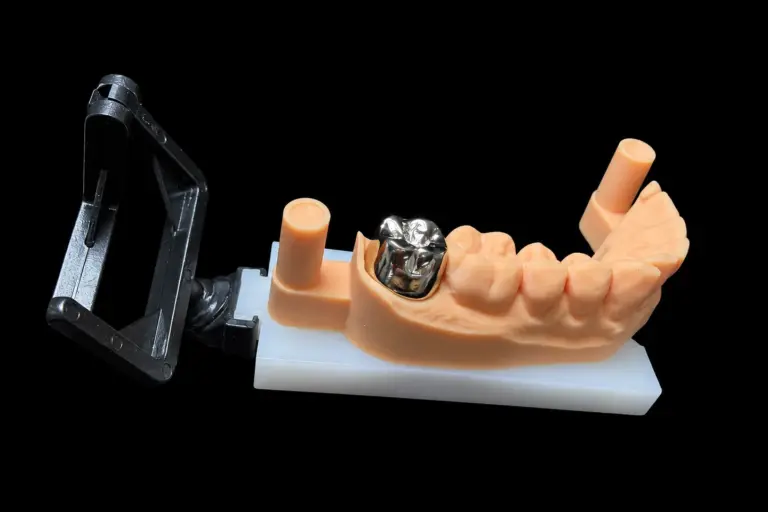
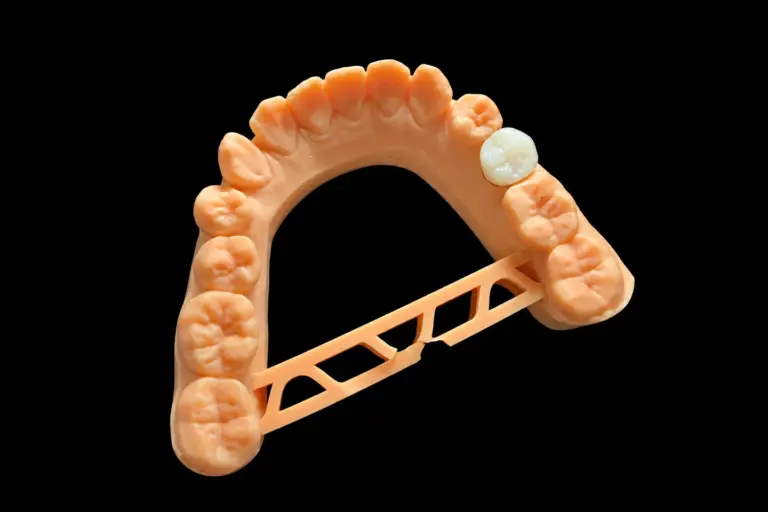
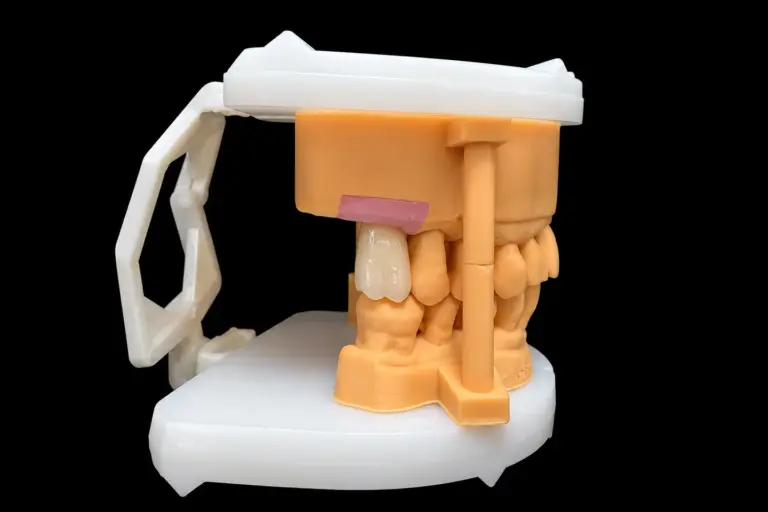
A PFM Maryland bridge — formally a porcelain-fused-to-metal resin-bonded fixed dental prosthesis (RBFDP) — bonds to enamel via one or two cast-metal wings rather than full-coverage crowns. Because preparation stays enamel-confined, the design is a reversible, tooth-conservative fixed option where case selection is right.
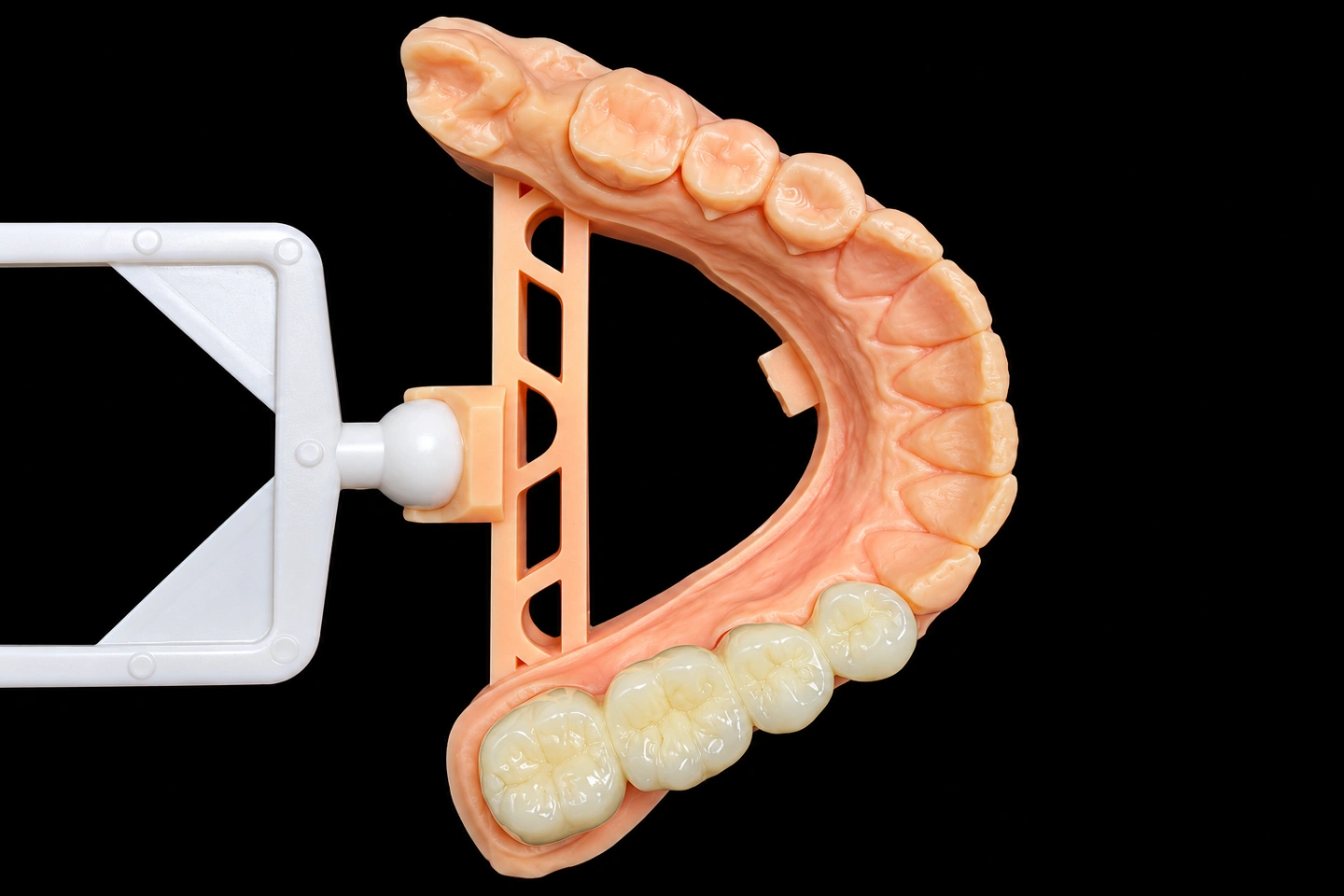
At Istar Digital Dental Lab, we fabricate PFM Maryland bridges in BEGO Co–Cr and Ni–Cr alloys with hand-layered feldspathic or pressed-ceramic veneers. Every case goes through three independent quality-control checkpoints before it ships.
What Makes a PFM Wing Fail — and How We Control Each Variable
Debonding is the dominant failure mode for resin-bonded bridges; pooled clinical evidence puts the five-year debonding rate around 15%, with outcomes improving in carefully selected anterior single-retainer cases (Thoma et al. 2017, systematic review of 2,300 RBBs). Most debonds trace back to flexure, inadequate bonding surface area, or a surface-treatment error — all of which originate in the laboratory.
We control four variables that determine whether a wing holds.
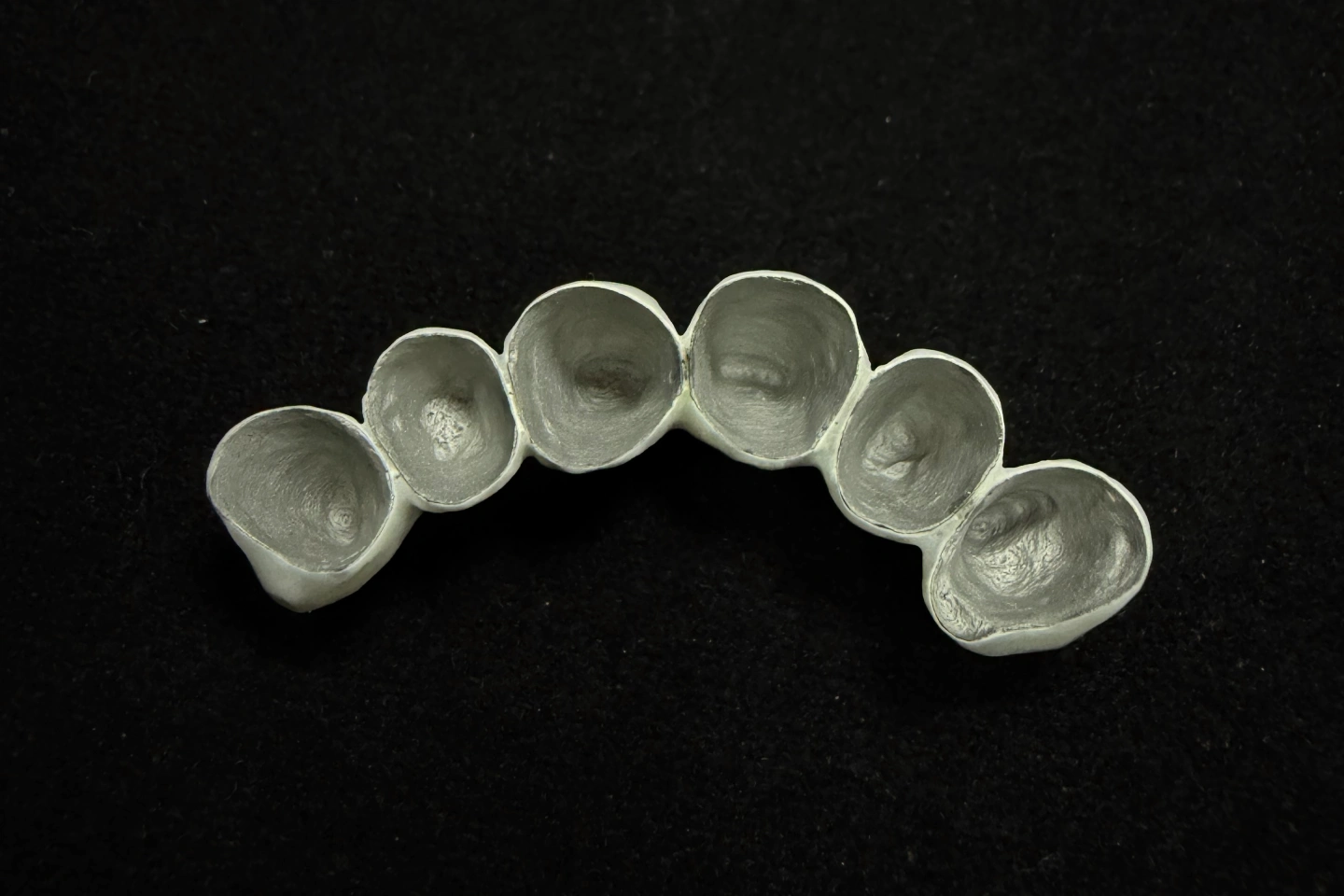
1. Metal Coping Thickness
Underthickness is the single most direct cause of wing flexure. We measure every coping with a calibrated gauge and hold the metal framework to 0.3–0.5 mm minimum throughout the wing body. The connector is fabricated to the clinician’s prescribed dimensions; where no dimension is specified, we target a minimum of 3 mm occluso-gingivally, consistent with current UK guidance recommending a 3-mm metal connector for rigidity (BDJ 2023; BSSPD RBFDP Guidance, March 2025).
2. Metal–Ceramic Thermal Compatibility
Mismatch between the alloy’s and porcelain’s coefficients of thermal expansion (CTE) is a root cause of porcelain fracture. We select veneering ceramics whose CTE is kept within 0.5–1.0 × 10⁻⁶/°C below the alloy’s CTE — the differential that keeps the porcelain layer in slight compression rather than tension during cooling.
For our Ni–Cr and Co–Cr frameworks, we work with Ivoclar (Ivoclar Vivadent) and Shofu feldspathic powders in conjunction with BEGO alloys. We do not mix alloy–ceramic pairs without verifying compatibility against ISO 9693, the current standard for metal–ceramic thermomechanical compatibility (ISO 9693:2026).
3. Porcelain Build-Up and Firing Protocol
Layer thickness and firing count are the two most controllable contributors to chipping risk. Our protocol:
- Veneer thickness: anterior cases 1.0–1.5 mm; posterior cases 1.5–2.0 mm, with adequate metal support through the connector and occlusal bearing areas.
- Firing count: no more than 3–4 firings per case. Additional firings alter grain structure and increase contamination risk. We use staged heating under vacuum and controlled slow cool-down to avoid residual stress.
4. Intaglio Surface Preparation
The intaglio (tissue-facing) surface of the wing is bonded to enamel with resin cement. It is a completely separate surface from the porcelain-facing side, and the two require entirely different preparation protocols.
For non-precious (Ni–Cr / Co–Cr) frameworks, we deliver the wing air-abraded with alumina, ultrasonically cleaned, and free of contamination. This creates a reactive oxide layer that is compatible with 10-MDP–containing resin cements (e.g., Panavia series), which is the protocol recommended by the BSSPD and supported by current evidence (BSSPD Guidance; Pocket Dentistry RBFDP chapter).
We do not routinely electrolytically etch non-precious wings. A comparative technical review found that electrolytic etching followed by Panavia did not improve tensile bonding over air-abraded base metal alone and may be slightly lower. The reproducibility of chairside air abrasion plus an MDP primer makes it the more consistent intraoperative workflow. If your protocol specifically requires electrolytic etching, note this on the prescription and we will confirm whether it is appropriate for the alloy specified.
Alloy Options
| Alloy Class | Framework Material | Beryllium | Typical Use |
|---|---|---|---|
| Predominantly base (Co–Cr) | BEGO Wirobond C | Nickel-free, beryllium-free | Default anterior wing; highest rigidity-to-thickness ratio |
| Predominantly base (Ni–Cr) | BEGO Wiron 99 | Beryllium-free | Alternative where cost is a priority; available in cobalt-chromium on request |
| Noble (Pd–Ag) | Palladium-silver alloy | None | Where patient or practice requires noble-metal framework |
| High noble (Au-based) | Gold alloy | None | Specified cases; confirm alloy class for pontic CDT code selection |
We can provide batch certificates and alloy composition documentation for any framework on request. If your patient has a documented nickel or base-metal sensitivity, specify this on the prescription and we will confirm the appropriate alloy before fabricating.
Metal Try-In Before Porcelain
For PFM Maryland bridges, we offer a metal coping try-in step before any porcelain is applied. The cast or milled framework is delivered to your practice to verify:
- seating and marginal fit on the abutment(s);
- occlusal clearance in MIP and lateral excursions;
- path of insertion and seating stability;
- connector dimensions and wing coverage.
Any clinical feedback at this stage is incorporated before firing begins. For cases where connector space is tight, the abutment preparation is unusual, or you are placing the first Maryland bridge from a new patient, the try-in step prevents the most expensive outcome: a completed porcelain unit that cannot be used. It also allows the clinician to verify that clearance is correct — a judgment that must come from the patient’s functional movements, not the laboratory model alone.
If you would like a metal try-in, note it on the prescription. The added turn-around time is typically 1–2 extra business days.
Case Submission Requirements
A complete Maryland bridge case requires:
Digital cases (intraoral scan)
- Full-arch upper and lower scans
- Occlusal bite registration scan
- Lingual/palatal scan of the abutment tooth — this is the surface the wing covers. Without a clean lingual scan, we cannot design the wing accurately and will contact you before proceeding.
- Shade photograph (see below) or VITA shade designation
- Completed prescription: patient ID, treating dentist, abutment tooth, pontic tooth, alloy preference, single- or two-wing design, and any specific coverage or clearance instructions
Physical impression cases
- Upper and lower impressions or poured models
- Bite registration
- Prescription as above
Shade photography
If you are sending photographs for color matching: use a ring or dual-macro flash at approximately 5500K, ISO 100, shutter 1/125–1/200s; oral photos at f/22. Include a VITA shade tab in-frame for reference.
What triggers a hold on production
If the prescription and scan data conflict (e.g., the designated abutment is not the tooth the scan shows), or if lingual/palatal coverage cannot be determined from the scan, we will pause the case and contact you — not make an assumption and proceed. Occlusal clearance issues that require re-preparation will also generate a contact before fabrication. These holds are logged in the case record so you have a written reference.
Quality Control
Every PFM Maryland bridge goes through three independent checkpoints:
Checkpoint 1 — Incoming case review
Before any fabrication begins: prescription versus scan consistency, completeness of bite and opposing data, and lingual scan quality. Cases with missing data are held and you are notified.
Checkpoint 2 — Post-coping check
After the metal framework is cast or milled: coping thickness (gauge-verified), marginal fit on the model, connector dimensions, and surface condition before porcelain application.
Checkpoint 3 — Final inspection before shipment
Performed by a dedicated QC technician who does not participate in fabrication. Items checked include marginal seal, occlusal contacts, proximal contacts, shade match, surface finish, and case-label accuracy. Cases that do not pass are automatically remade — not shipped with a note.
Our reported quality metric is a 95% client-acceptance pass rate, meaning 95% of cases are accepted by the dentist without any remake request. We state this as the client-acceptance figure, not an internal first-pass or inspection rate.
We can provide QC photographs on request prior to shipment.
Turnaround and Logistics
| Item | Detail |
|---|---|
| Standard production time | 2–3 business days from receipt of complete case data |
| Clock starts | On the day we receive a complete case (prescription + scan or impression). Design-approval holds and re-submission time are excluded. |
| Rush cases | Available at no additional charge for all case types. Provide a required delivery date on the prescription; we will confirm feasibility at case receipt. |
| International shipping | Published production times cover in-lab fabrication only. Shipping transit time, customs clearance, and remote-area surcharges are separate and vary by destination. |
| Holiday production | Standard Chinese public holidays and weekends are non-production days; cases received during these periods are queued in order and production restarts on the next working day. We announce upcoming holiday cut-off dates in advance. |
Remake and Adjustment Policy
Free remakes cover the following quality issues reported within 24 hours of case receipt:
- Open margin or marginal discrepancy
- Open or absent proximal contact
- Occlusal interference or over-height
- Framework non-seating
- Incorrect shade (versus the prescription shade or approved shade photograph)
- Visible esthetic defects affecting the restoration
- Incorrect pontic morphology
Not covered by free remake:
- Clinician-initiated shade or material change after production begins
- Cases submitted on substandard impressions where the clinician requested fabrication proceed regardless
- Shipping costs (return and re-send are at the client’s expense)
Responsibility for cases where the clinician has adjusted the restoration in the chair: if adjustment was performed and the case is returned, we will assess the reason for the problem before assigning responsibility. For structural failures (fracture, porcelain separation) after adjustment, we typically accept responsibility. For seating or fit failures after adjustment, we request documentation of the pre-adjustment state.
For cases where the client provides their own CAD design file for CAM production: pre-production, we do not redesign or validate the submitted geometry. Fit and occlusion issues that originate in the design are the client’s responsibility; fractures and porcelain failures during service are ours.
If repeated remakes do not resolve the issue, we offer a refund.
Regulatory and Compliance
Istar Digital Dental Lab holds active registrations covering custom dental restorations for the following markets:
- United States: FDA facility registration and device listing for custom dental restorations, including fixed prostheses.
- European Union: Compliance under EU MDR (2017/745) Annex XIII for custom-made devices. Our restorations are fabricated to individual prescription under the custom-made device pathway — they do not carry a CE mark in the same way as mass-produced devices, which is the correct regulatory status for laboratory-fabricated restorations.
- United Kingdom: MHRA registration.
- Quality system: ISO 13485 certified.
We can provide registration documentation and material certificates for customs, audit, or credentialing purposes. All cases are assigned a unique case number enabling full traceability to the technician, materials batch, and inspection records.
Fabrication is completed entirely at our own facilities in Shenzhen and Huizhou, China. No production is outsourced to third-party laboratories.
Frequently Asked Questions
Can I specify a single-wing (cantilever) design?
Yes. Note “single retainer, cantilever” on the prescription, and specify which abutment tooth the wing should bond to. Single-retainer designs are increasingly preferred for single anterior tooth replacement because independently moving abutments are less likely to load the wing into fatigue — and a debond is more readily noticed when only one wing is involved (BSSPD Guidance; Thoma et al. 2017). If the prescription does not specify, we will make the design with one wing unless the clinical record indicates otherwise.
What wing thickness will the laboratory target?
Our default target for a Ni–Cr or Co–Cr wing is a minimum of 0.7 mm, consistent with BSSPD/BDJ guidance for rigidity. Some clinical situations (limited clearance, small teeth) produce thinner geometries; we will flag cases where the design falls below 0.5 mm. The clinician must verify functional clearance from the patient, not from the model — the model cannot replicate eccentric movements.
Can you make a PFM Maryland bridge with a zirconia pontic and metal wings?
Yes. Specify “metal retainer wings, zirconia pontic” on the prescription. Code separately: D6545 for each metal wing, plus the appropriate ceramic pontic code for zirconia (D6245). The wing intaglio surface is prepared for resin bonding; the zirconia pontic is fabricated under a separate workflow and joined at the connector.
Does the case need an opposing arch scan?
Yes, always. Occlusal clearance for the wing cannot be verified without the opposing arch in occlusion. Cases submitted without an opposing scan or bite registration will be held at intake.
What if I want to review the design before porcelain is applied?
Request a metal try-in on the prescription. We send the finished coping before any ceramic work begins. This is particularly useful for cases with tight clearance, unusual abutment anatomy, or any case where you want to verify path of insertion and coverage before committing to the final porcelain.
Do you accommodate scanned cases from any intraoral scanner?
We accept STL and PLY files from all major intraoral scanner systems (3Shape Trios, Dentsply Sirona Primescan, Medit, iTero, and others). If you are unsure whether your export format is compatible, send us a test scan before submitting a case.
What happens if the case arrives damaged in transit?
Document the damage with photographs at receipt and contact us within 24 hours. We will arrange a priority remake at no charge and provide a prepaid return label for the damaged unit.
Work With Us
We work directly with dental practices, group practices, DSOs, and other dental laboratories. A signed prescription is required for all cases; we do not fabricate restorations without a clinical prescription.
To start a case or discuss a specific prescription, contact our case coordination team. For first-time clients, we can provide a sample prescription form, a full material and alloy specification sheet, and our standard turnaround schedule.
For urgent cases or complex prescriptions, reach our technical team directly — connector-space issues, unusual abutment geometries, and alloy substitution questions are best resolved before fabrication begins.