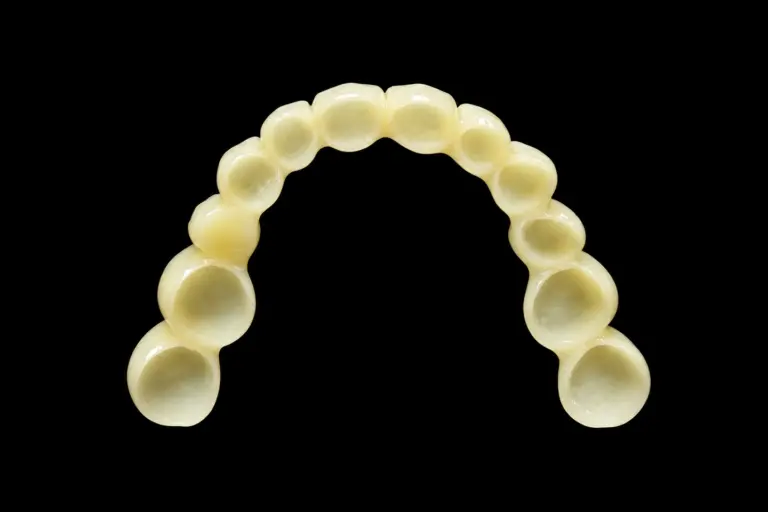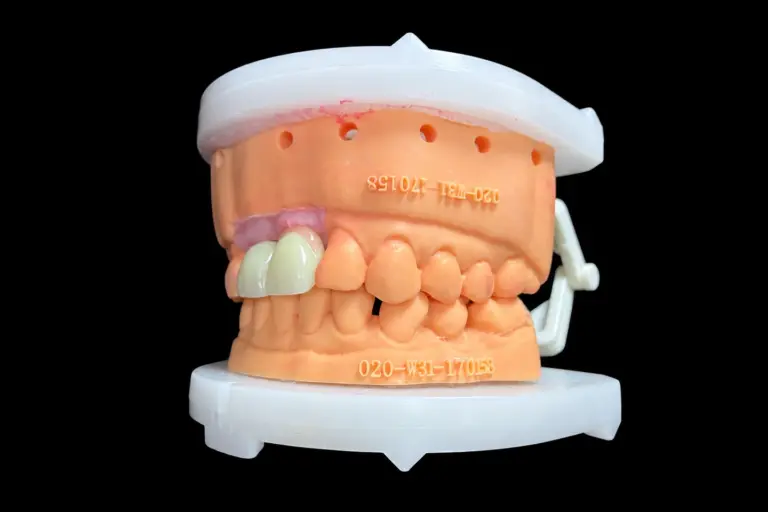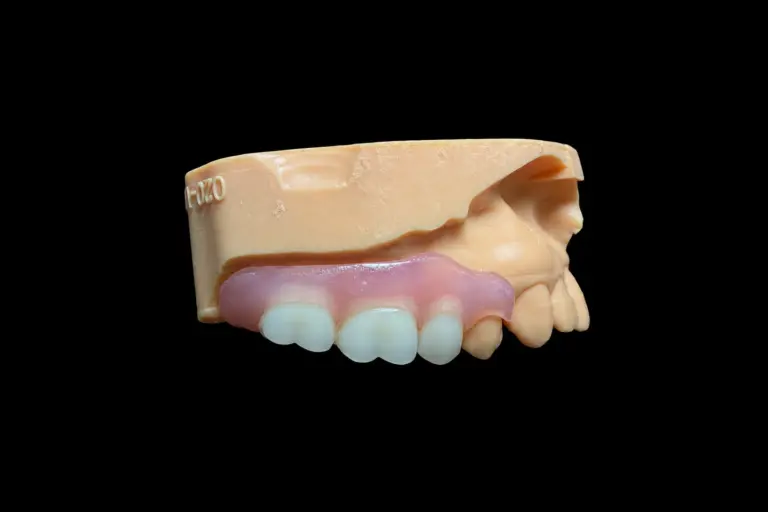
Temporary teeth carry a patient from a prep, an extraction or implant surgery to the final restoration. Patients call them temp teeth; prosthodontists call them interim or provisional prostheses. The Glossary of Prosthodontic Terms gives them two jobs: provide esthetics, stability and function for a limited time, and help work out the form and function of the definitive restoration. The second job is the one that most often goes to waste.
How well temporary teeth do either job depends mostly on a question worth asking before anything is made: how long does this one have to last? At Istar Digital Dental Lab, we make PMMA, printed and composite provisionals, implant provisionals, full-arch prototypes and immediate dentures in our four labs in Shenzhen and Huizhou. Our technicians see both what a provisional has to survive and what the final restoration can learn from it.
What Temporary Teeth Have to Do
A provisional is a working restoration with its own job list:
- Protect the prepared teeth. Cover exposed dentin, keep the pulp comfortable and keep the gingiva at the margin healthy.
- Hold the space and the bite. Stop neighboring teeth from drifting and opposing teeth from over-erupting before the final goes in.
- Shape soft tissue. Form the emergence profile around an implant, or the tissue under a pontic.
- Hold or test a jaw relationship. Keep the vertical dimension during staged care, or try a new one before it’s committed to ceramic.
- Preview the result. Show you and the patient the planned length, shape and bite while they can still change.
“Immediate” is a different idea. It describes timing, not lifespan: an immediate denture or an immediate-load bridge goes in the day the teeth come out or the implants go in. It may be transitional, but the word doesn’t make it so.
Chairside or Lab-Made?
A bis-acryl or composite crown made chairside from a matrix is the right tool for plenty of cases. Lab-made temporary teeth earn their place when the provisional has more to do than fill a gap for two weeks.
Usually Fine Chairside
Single crowns and short bridges with a stable bite, a wait of a few weeks for the final, and no planned change to tooth form or occlusion.
Worth Sending to the Lab
- Wear time of several months or more
- Longer spans
- Esthetic cases where the patient should approve shape and length before the final
- A new vertical dimension or occlusal scheme you want to test
- Implant provisionals, immediate-load full arches and immediate dentures
Types of Temporary Teeth, by How Long They’ll Be In
The word “temporary” sets no lifespan. A provisional might be in for two weeks while a crown is made, for months while a socket or an implant heals, or for a year or more in a staged full-mouth case. Plan the material and design for the longest realistic wear time, with some margin, because treatment plans slip.
Write the expected wear time on the prescription, so the material and design can be chosen for it.
Weeks: Until the Final Arrives
Provisional Crowns and Bridges
Tooth-borne provisionals protect the preps and hold contacts and occlusion until the final is seated. We make them in PMMA or composite, milled or 3D printed. On a bridge, the connectors carry the load, and provisional resin is far weaker than the zirconia or PFM that will replace it, so connector height and span deserve more attention on the provisional than on the final. → Crown and Bridge Dental Lab
Months: Through Healing
Implant Provisional Crowns
Hold the space and shape the emergence profile while the implant integrates, or from the day it’s loaded. Screw-retained designs let you refine the subgingival contour chairside and keep cement out of the tissue. → Implant Dental Laboratory
Immediate-Load Full-Arch Bridges
A one-piece PMMA bridge connected to the implants on the day of surgery. The ITI consensus on loading protocols for edentulous jaws rates the evidence for immediate loading with a fixed interim prosthesis as high, provided the case is selected for it, with primary stability at the center.
In a prospective, fully digital cohort of 56 patients with 72 milled PMMA immediate-load arches on 432 implants, two implants failed over three months, on a protocol that included a soft diet and reviews at 48 hours and three months. Three months is short follow-up, and the authors say so.
We make PMMA immediate-load bridges and can supply temporary cylinders, multi-unit abutments, screws and tools with the case, at extra cost. → Full Arch Dental Lab
Immediate Dentures
Made before the extractions and seated the day the teeth come out. The ridge remodels as it heals, so plan follow-up visits and a reline or a new denture; the American College of Prosthodontists likewise expects denture fit to need reassessment as tissues change. → Denture Lab
Flippers
“Flipper” is the informal name for an interim acrylic partial, usually replacing one or a few teeth, as this prosthodontics lecture on the interim RPD sets out. It’s light and quick to make, but it’s fragile and tissue-borne, so it loosens as the ridge heals. Over a fresh graft or implant site it needs relief so it doesn’t load the area, and it isn’t built for heavy chewing.
Essix Retainers With a Pontic
A clear vacuum-formed thermoplastic retainer with a tooth-colored pontic in the gap, often used for a missing anterior tooth, including before clear aligner therapy. It puts no load on the healing site, which is its main advantage. It covers the occlusal surfaces and isn’t meant for chewing, so patients usually take it out to eat.
A Year or More: Staged and Diagnostic Provisionals
Long-Term Provisional Restorations
When the final has to wait for periodontal, endodontic, orthodontic or staged implant treatment, the provisional becomes a restoration in its own right. Its material, thickness and luting are chosen for months of wear, not weeks.
Full-Arch Prototypes
A PMMA trial arch worn before the definitive zirconia or bar-supported arch, so the design is proven in the mouth before it’s made in the final material. It’s the clearest example of a provisional built to be copied.
Materials and How They’re Made
PMMA
The usual choice for lab-made fixed provisionals, implant provisionals and immediate-load arches. It’s processed conventionally or milled from a pre-polymerized blank.
Printed Resin
Built layer by layer from the design, so it suits complex shapes, staged sets and exact copies of an approved form. In our experience, it’s gentle on opposing natural teeth.
Composite and Bis-Acryl
The everyday chairside materials, also available from us as lab-made composite provisionals.
Heat- and Self-Cure Acrylic
The base material for flippers and immediate dentures. For removable work we can also inject or print the base, and set acrylic, composite or porcelain teeth.
Milled or Printed?
Bench studies don’t crown a winner. A systematic review and meta-analysis of provisional crown and bridge resins found mixed results across strength, wear, color and water sorption, and concluded that printed materials are a viable alternative to milled and conventional ones for longer-term provisionals.
Clinically, a retrospective study of 443 six-implant provisional full arches made chairside by milling or printing found no significant difference in survival: 92.4% for milled and 93% for printed at 180 days. The choice of material for the case matters more than the machine that shapes it.
Why Provisionals Fail, and Who Prevents It
Fracture
Thin sections, undersized connectors, long spans, cantilevers and bruxism.
Prevented by: section thickness and connector size on our side; adjusted excursions and a note about bruxism or clenching on yours.
Decementation
A retrospective study of 71 long-term provisional restorations milled from CAD/CAM composite, followed for a median of 362 days, found 14.1% failed by fracture and 18.1% decemented. Decementation was significantly more likely with temporary or self-adhesive luting than with adhesive luting, and the failure rates resembled those reported for PMMA long-term provisionals.
Prevented by: an accurate intaglio fit from us; for long wear, adhesive luting from you.
Staining and Wear
Color stability varies far more between resins than between ceramics, and the difference shows after months in the mouth.
Prevented by: smooth, polished surfaces from us; a check of the surface at each review.
Tissue Irritation
Pressure under a pontic or a flange, and plaque where the patient can’t clean.
Prevented by: pontic and flange form with cleaning access from us; hygiene instructions and reviews from you.
On implants, a failed provisional can cost more than a remake. In the full-arch study above, implant failure was more common where the provisional had failed, and the authors concluded that provisional survival may affect implant survival.
Before shipping, provisionals go through the same checks as our crowns and bridges: margins, seating, contacts, occlusion, form, polish, screw channels on implant cases, and no cracks, chips or bubbles.
Turning Temporary Teeth Into a Blueprint for the Final
A provisional that’s been adjusted and worn for a few weeks is the best record you’ll get of what works for that patient. Scan it, and the final starts from what’s already been proven in the mouth, not from a fresh guess.
1. Adjust It Until It’s Right
Every change you make chairside can carry into the final.
- Occlusion and anterior guidance
- Incisal length, midline and lip support
- Phonetics
Your part: Adjust it, then let the patient live with it before you record anything.
2. Send Us the Approved Provisional
We work from the version the patient approved, not the first draft.
- Intraoral scan of the provisional in place, with the opposing arch and the bite
- For implants, a scan of the provisional or the shaped tissue, or an impression that captures the emergence profile
- Wax-ups, old photos or sketches help too
Your part: Scan after the last adjustment, not before it.
3. We Carry Over What Works
The final keeps what’s been tested and rebuilds what has to be precise.
- Form copied or mirrored from the provisional, including its function and anterior guidance
- Emergence profiles designed as a smooth transition from the implant platform, shown to you for confirmation before the final is milled
- On full arches, the prototype scan is registered to the implant positions; occlusion, vertical dimension, esthetic contours and screw channels carry over, while the adjusted fitting surface is set aside and the connection side is rebuilt from the implant library
- The finished design is compared with the prototype before production
Your part: Tell us anything you want changed from the provisional.
4. Approve the Final Design
The cases with the most at stake are always previewed.
- Design previews by email or in your case chat, for any case on request
- Always previewed: full arches, implant bridges, custom abutments, bridges of four or more units, anterior esthetic cases and occlusal reconstructions
- A design approval adds 1–2 days to the case
Your part: Approve or comment. The final decision on any design is yours.
For complete dentures, the same idea applies to the jaw relation: we confirm it on a provisional or wax try-in before the denture is processed.
Ordering Temporary Teeth From Istar Digital
Lab time counts in working days from the day a complete case arrives. A diagnostic wax-up or surgical guide takes 2–3, a PMMA provisional try-in stage 2–4, and a final zirconia or layered restoration 3–5; complex full-arch cases take 5–7.
Transit and your try-in appointments come on top, so build the provisional phase into the schedule. Immediate-load bridges and immediate dentures need enough lead time to be on hand on surgery day.
If you send 10 or more cases a month, rush service is free for every case type. We guarantee a rush case’s ship date; the arrival date depends on international transit and customs. You pay to send physical impressions or models to us, and we pay to ship finished work back, remakes included. → Remake and Warranty Policy
Temporary crown and bridge resin is its own Class II device category under 21 CFR 872.3770. Istar Digital is an FDA-registered establishment, Registration Number 3039441248, and our device listings cover temporaries along with crowns, bridges, implant restorations and dentures. You can look us up in the FDA establishment registration and device listing database. As the FDA itself points out, registration and listing aren’t an FDA approval.
Quotes are itemized to what the case needs, such as material, units, prototype stages and implant components, rather than one bundled price. Ask your sales manager for the price list.
Frequently Asked Questions
Do veneer and resin-bonded bridge preps need temp teeth?
Often not. As Dental Update notes, minimally prepared teeth receiving adhesive restorations such as veneers or resin-bonded bridges don’t usually need temporization. A provisional or mock-up still helps when dentin is exposed or a gap would otherwise show. We make diagnostic wax-ups, mock-ups and veneer provisionals. → Veneers
Can we prescribe a specific PMMA or resin brand?
Yes. Our standard PMMA comes from Upcera and Ivoclar, and our resins from Ivoclar and Shofu. If you prescribe a different brand, that’s what we use, and we never substitute a material without your consent, given in writing or verbally.
A patient asked about a DIY temporary tooth kit. What should we tell them?
Moldable-bead teeth bought online are shaped by the patient at home, not designed or fitted by a clinician.
The FDA regulates specific over-the-counter categories, such as denture repair kits and reliners, and a toxicology study of moldable plastics notes that the products it examined were neither cleared nor listed as medical devices. They aren’t designed to protect a socket or hold the bite.
Planning a Case With a Long Provisional Phase?
Send the details below, and a technician will suggest a material and design for the case and flag anything in the records that could cause trouble later.
What to send:
- Intraoral scan or impression of the preparation or implant sites, the opposing arch and the bite
- Implant system, platform and scan-body details for implant cases
- A pre-op scan, wax-up or photos if the provisional should copy an existing form
- Expected wear time, number of units and shade
- Whether the bite or vertical dimension will change, and whether the provisional is the template for the final