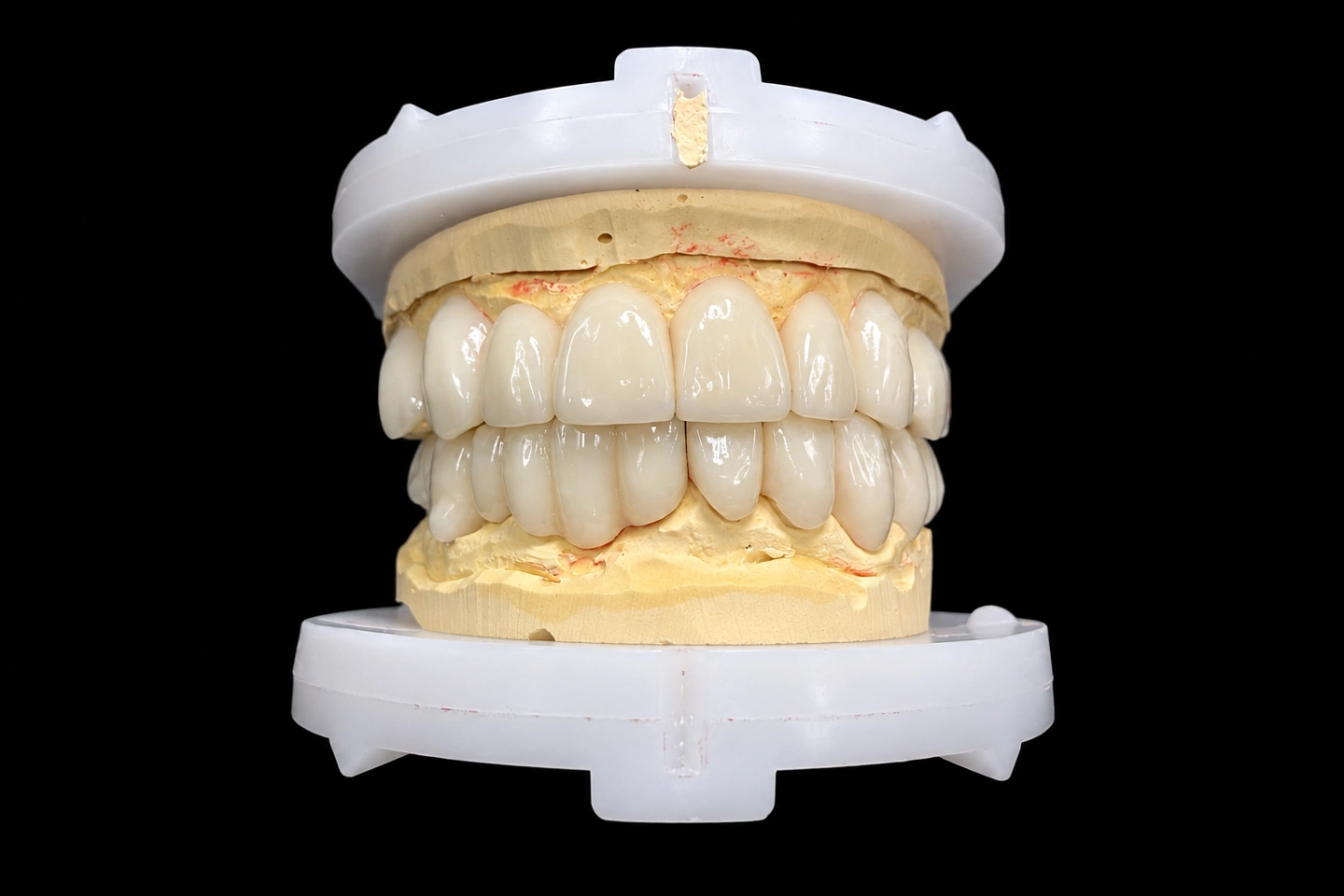
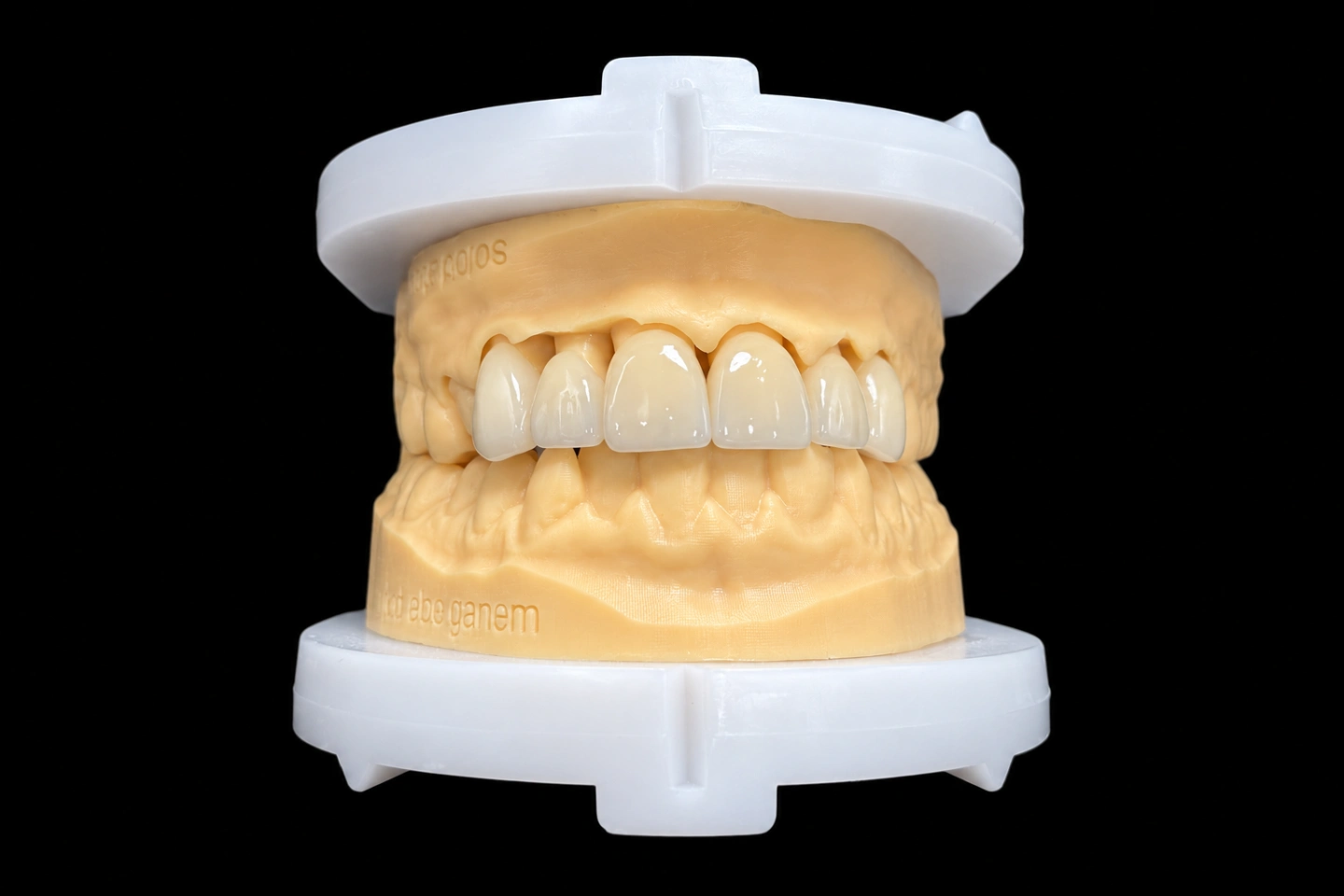
The Patient
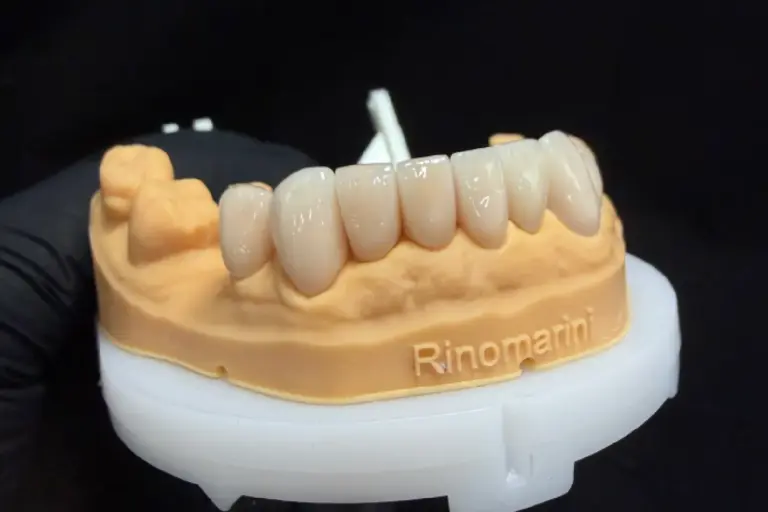
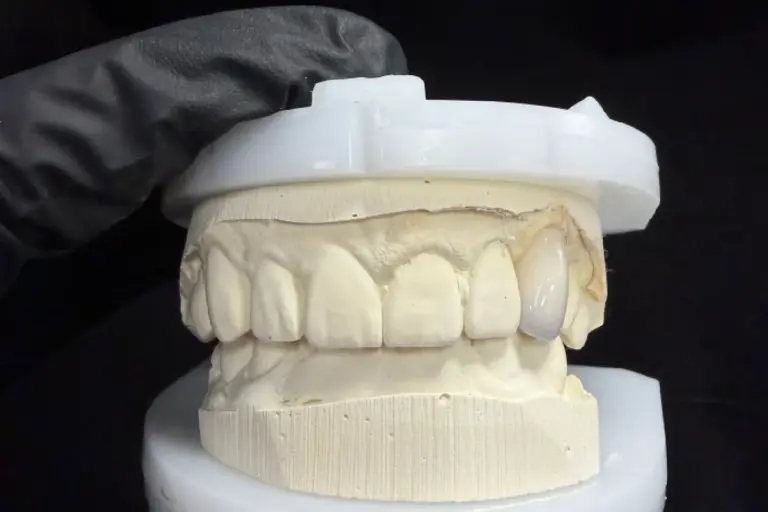
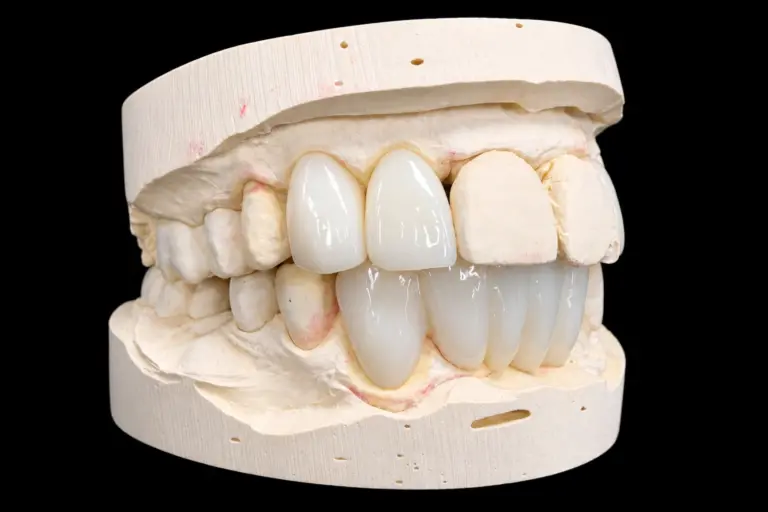
The patient is an adult in their 30s with healthy upper teeth and no restorations on the upper front teeth . The lower incisors were why the patient asked about lower teeth veneers :
The gums were healthy and there was no decay, which the dentist confirmed before anything else. The ADA says decay and gum disease have to be dealt with before veneers. All four teeth were vital .
The bite : about 3 mm of overbite, normal canine guidance, and no wear facets, grinding history or jaw complaints. Protrusive ran over the upper centrals.
What the Dentist Asked For
From the Rx and our WhatsApp thread :
Why Lower Veneers Sit in the Path of the Upper Teeth
On an upper veneer, the lower teeth meet the palatal surface, which the veneer usually doesn’t cover. Lower veneers are different. The facial surface you’re covering is the one the upper incisors close onto and slide over. So every 0.1 mm the facial surface moves forward is 0.1 mm closer to the upper teeth.
That goes for length too. One clinical article on mandibular anterior veneers warns that longer lower incisors can run into the uppers in protrusive and says to plan guidance early. In this case the length stayed the same, so the question was all about facial thickness.
And the room is tight at the other end too. A review of minimally invasive veneers cites enamel of only about 0.3–0.4 mm at the gum third of incisors, and lower incisors are the smallest teeth in the mouth.
Our Bite Check on the Lower Teeth Veneers Plan
Our CAD team built the design to the Rx first: 0.3 mm facial prep everywhere, and ceramic at 0.4 mm at the gum third, 0.6 mm in the middle and 0.7 mm at the incisal third . Then we laid it over the bite scan in the closed position and over the protrusive record, and measured the gap between each lower tooth and the upper teeth at the incisal third.
| Incisal third (mm) | #23 | #24 | #25 | #26 |
|---|---|---|---|---|
| Gap to the upper teeth today | 0.4 | 0.0 | 0.0 | 0.3 |
| Facial surface moves forward (0.7 ceramic − 0.3 prep) | 0.4 | 0.4 | 0.4 | 0.4 |
| Gap with the Rx design | 0.0 | −0.4 | −0.4 | −0.1 |
A minus sign means the design runs into the upper teeth.
On #24 and #25, the upper centrals already touched the facial incisal third. Built to the Rx, both veneers would hit 0.4 mm early, on the protrusive path too. #26 would graze, and #23 would end up just touching.
That’s a problem for the bite, and a problem for the ceramic, because the first contact would land on the thin incisal edge of each veneer. Fracture is the most common complication with veneers, followed by debonding, according to a systematic review of 25 studies and about 6,500 veneers. Starting a veneer life with a heavy contact on its edge isn’t a good bet.
Four Options We Sent the Dentist
We sent the overlay with four options over WhatsApp, each marked on a screenshot :
| Option | What changes | Cost |
|---|---|---|
| A. Build to the Rx and adjust the uppers | Upper central palatal surfaces reduced about 0.4 mm | Grinds two healthy teeth the Rx said to leave alone |
| B. Take the room from the lower incisal third, and wrap the edge | Deeper facial prep toward the edge, none extra at the gum. Ceramic covers the edge, joint on the lingual. | More tooth removed at the incisal third |
| C. Keep 0.3 mm prep and thin the incisal ceramic to 0.3 mm | No extra prep | Ceramic at 0.3 mm on the edge |
| D. Composite on the corners, no veneers | No prep | Chips sorted, color doesn’t change |
How much to prep for lower veneers, and whether to touch the uppers, is the dentist’s call. Our job was to show what each choice does to the bite and to the ceramic.
The dentist chose B, because the incisal third is where these teeth had the most tooth to work with .
Why Wrapping the Edge Fits Lower Veneers
In this bite, the lingual side of the lower incisal edges didn’t meet anything but the tongue . So with an edge wrap, the joint between ceramic and tooth sits on the lingual, out of the way of the upper teeth, and the contact lands on full-thickness ceramic. The same review also found fewer failures with incisal coverage than without it.
The approved design :
| Approved design (mm) | Gum third | Middle third | Incisal third |
|---|---|---|---|
| Facial prep | 0.3 | 0.5 | 0.7 |
| Ceramic thickness | 0.4 | 0.6 | 0.7 |
| Facial surface moves forward | 0.1 | 0.1 | 0.0 |
| Edge reduction, rebuilt to the same length | – | – | 0.7 |
The dentist approved the lower teeth veneers design in writing, and the approved contours went on file.
Reduction Guide and Prep Check for the Lower Veneers
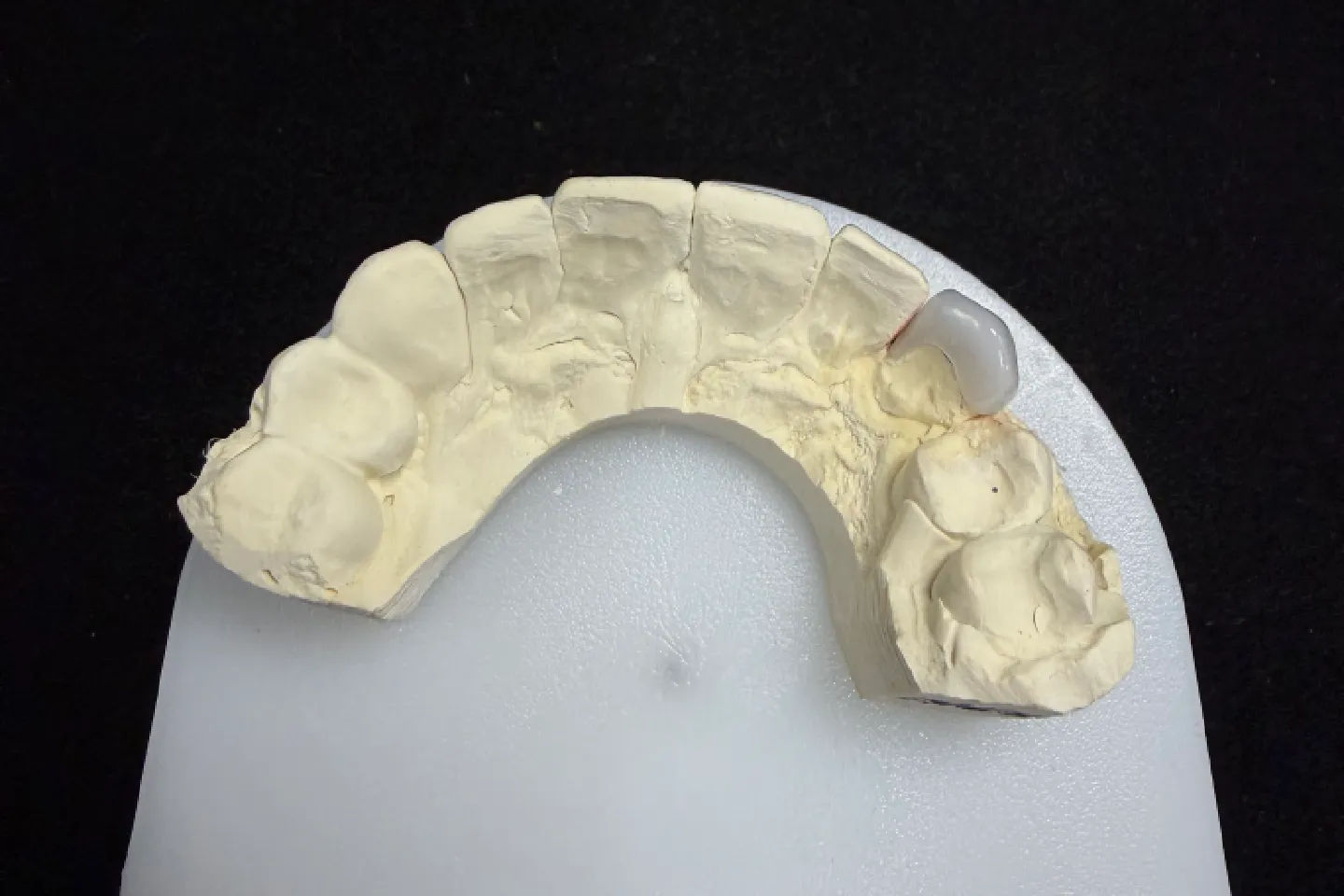
From the approved design, we made a silicone reduction guide cut in sections . Lay it on the tooth and you can see the room left at each third, so the dentist knows when the incisal third has reached 0.7 mm without going deeper at the gum.
When the prep scan came in, we checked it against the lower veneers design before pressing :
The dentist’s notes : enamel all round on every tooth, apart from small dentin dots at the chipped corners of #24 and #25. They showed up once the old composite came off, before any prep.
That’s worth tracking on lower teeth veneers. In a study of 580 porcelain veneers followed for up to 12 years, veneers bonded to dentin or with dentin margins were about ten times more likely to fail than those bonded to enamel. A later meta-analysis of veneers on different substrates found the same trend.
Making the Four Lower Teeth Veneers
Color through thin ceramic
At the gum third, these lower teeth veneers are 0.4 mm of ceramic over an A3 tooth, so the tooth underneath counts. We planned the shade from the stump color, not from the tab alone. Going from A3 to A2 through that thickness needed a less translucent ingot at the gum third . We kept the edge translucency light, since a strong gray edge reads as “thin.”
Edge and contact zone
In production
Design approval took 1 working day before prep . From the prep scan to shipping took 6 working days .
Finished Lower Teeth Veneers: Try-In Results
The dentist tried in all four lower teeth veneers with try-in paste, then bonded them with resin cement at the same visit, following Ivoclar’s instructions .
| Design goal | How it was checked | Result at try-in |
|---|---|---|
| Bite unchanged | Articulating paper in the closed position, against the pre-op bite scan | Marks on #24 and #25 in the same spots as before, now on ceramic. No new marks on #23 or #26 |
| No early hit in protrusive | Protrusive glide with articulating paper | Upper centrals slid over #24 and #25 with no catch. No adjustment |
| Same length, neat corners | Pre-op scan against the design | Length unchanged, corners squared on #24 and #25 |
| A2, no gray edge | Photos with a shade tab, speech view | About A2, edges read natural when talking |
| Clean margins | Dentist’s check at bonding | No ledge at any margin |
Lower veneers in pressed ceramic hold up about as well as upper ones. A study of 130 pressed veneers in both jaws found comparable results in the two arches, with more interventions where over half the prep was in dentin.
Over the long run, a study following porcelain veneers for up to 20 years estimated survival at 93.5% at 10 years and 82.93% at 20, with a higher failure risk on nonvital teeth. Those are group numbers, not a promise for one patient.
Try-In Feedback from the Dentist and Patient
The dentist
With the overlay in hand, the prep visit had no surprises for the patient .
Check the contacts on #24 and #25 at each visit .
The patient
Nothing to get used to. The tongue doesn’t find the lingual edge .
Nobody’s guessed they’re veneers .
What to Send for Lower Veneers
Upload scans through our digital case submission . Lower veneers generally take 5–7 working days, simple cases 2–3, plus 1–2 days when you ask to approve the design first.
Who Made It
These four lower veneers went through our CAD design team (about 100 people), our ceramic and metal department (about 70) and a separate QC team of about 25. They’re part of Istar Digital Dental Lab’s four labs in Shenzhen and Huizhou, China. We’ve been running since 2012, with about 460 staff and no outsourcing.
Istar Digital Dental Lab is an FDA-registered establishment (Registration Number 3039441248), which you can look up in the FDA establishment registration database. Our labs run an ISO 13485 quality management system.
Lower Teeth Veneers FAQ
If the upper teeth get veneers later, can you match them to these?
Yes. We keep the design files and contours of every multi-unit case on record, so a later case can be built from the same plan.
What if my patient grinds?
Tell us on the Rx. For heavy bite forces, we’d talk through zirconia veneers, which are stronger and wear better than glass ceramic. We also make night guards to your prescription.
Can you make provisionals or a mock-up first?
Yes. We make diagnostic wax-ups, mock-ups and provisionals in composite or PMMA, milled or printed. Want to keep a shape the patient has already tested? Scan the provisionals and we’ll copy them.
What else do you make veneers in?
Besides pressed e.max veneers, we make lab-made composite veneers. See what else our e.max lab makes. We won’t swap a material without your OK.
What if I want a design you think is risky?
We’ll tell you why, then make it to your Rx with no sign-off form. A remake caused by that design isn’t on us, though.
What's free to redo, and what isn't?
Open margins, open contacts, high bite, a veneer that won’t seat, inaccurate color, visible flaws and poor shape are ours to fix for free. Changing the shade or material afterward isn’t free. Neither is a case you asked us to make from an impression or scan we’d already flagged as poor.
What about warranty and shipping?
Veneers carry our 3-year warranty. You pay to send a case in, and we pay to ship finished work back, remakes included.
Can you rush a veneer case?
Rush service is free for clients who send us 10 or more cases a month. We guarantee the ship date, but not the arrival date, because customs times vary.
How is pricing handled?
We don’t publish prices on the website. Ask for our price list, and we’ll quote each case item by item to your requirements.
Send Us Your Next Lower Veneers Case
Got a patient who wants lower teeth veneers? Single trial cases are welcome, and you can see our labs on a factory visit or a video tour.