Patient Situation
Here’s what the dentist’s notes, scans and photos showed before we planned the 24 zirconia crowns:
What the Dentist Asked For
The Rx, condensed :
The records came with it: STL and PLY scans of both arches, a facebow record, a VPS bite at the planned vertical, photos and shade tabs held next to the second molars .
The Problem We Found at the New Vertical
Mounting the case
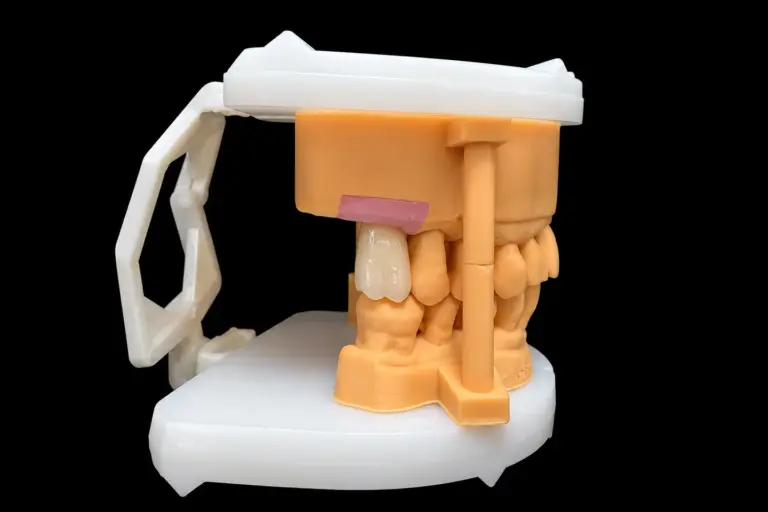
A full-mouth bite change gets a facebow record and a semi-adjustable articulator, so we mounted the casts that way . Then we opened the pin 3.0 mm and looked at the back of the mouth.
The jaw opens on a hinge, so a raise at the incisors gets smaller toward the back. Here’s what we measured :
| Where | Gap at the new vertical |
|---|---|
| Incisal pin | 3.0 mm (the Rx) |
| First molars, #3/#30 and #14/#19 | 1.6–1.8 mm, filled by the new crowns |
| Second molars, #2/#31 | 1.2 mm, nothing to fill it |
| Second molars, #15/#18 | 1.1 mm, nothing to fill it |
Four ways forward
We paused the 24 zirconia crowns before any design work and sent the dentist the measurements, side views of the mounted casts and four options :
| Option | What it does | The catch | Dentist’s call |
|---|---|---|---|
| 1. Make it as prescribed | No change to the Rx | Four second molars out of contact, with the first molar crowns carrying the full back load | No |
| 2. Crown the second molars too | Every tooth touches at the new vertical | 28 units instead of 24, and four sound teeth prepped | No |
| 3. Raise the bite less | Smaller gap at the back | The second molars still open, only less, and the front teeth would need more reduction | No |
| 4. Build the second molars up in composite chairside | Gives them contact at the new vertical with no prep | One more chairside step, and the composite needs checking at recalls | Yes |
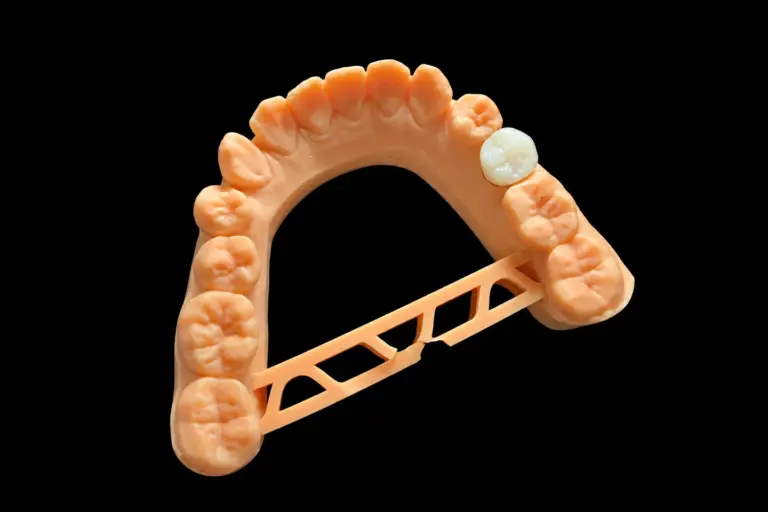
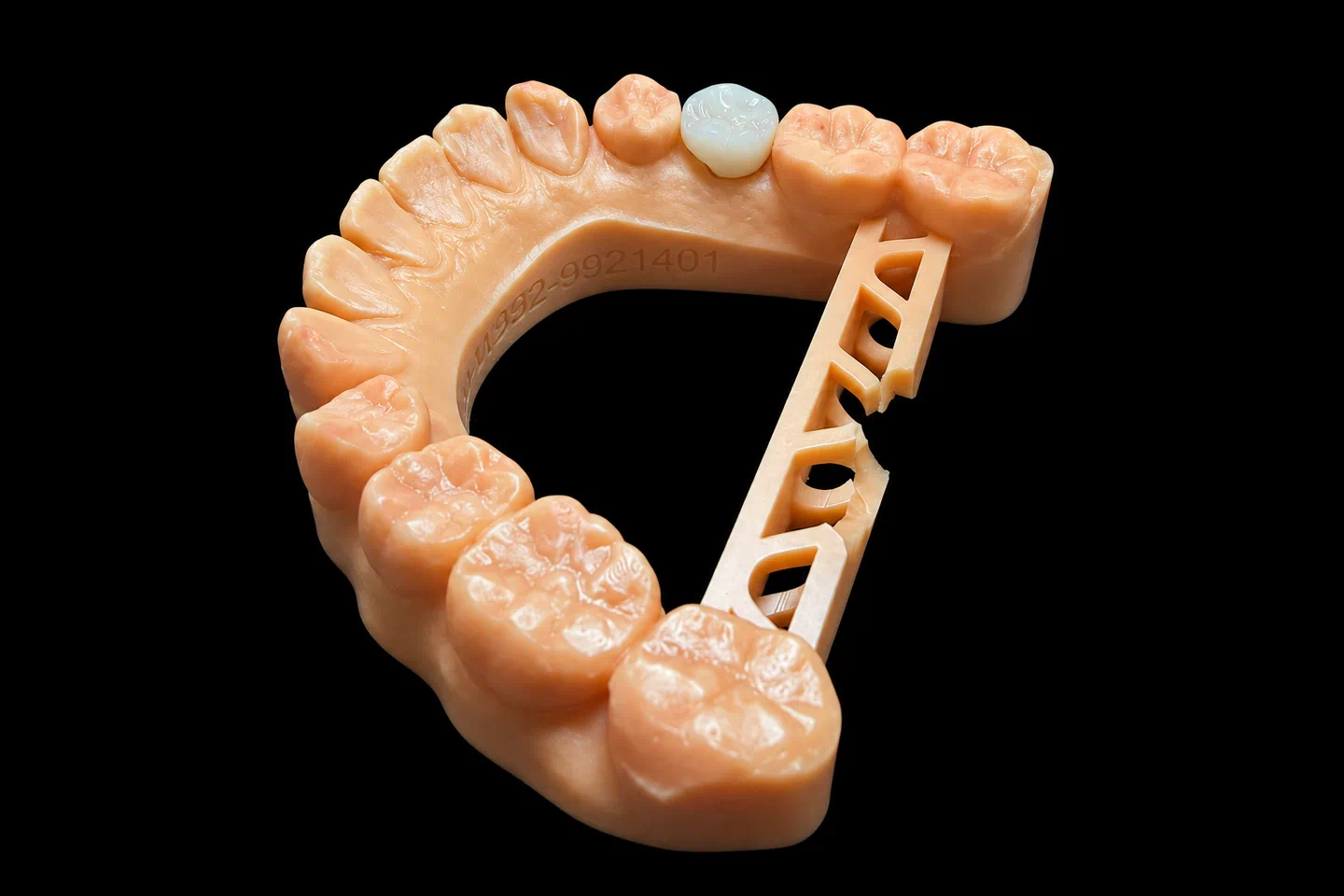
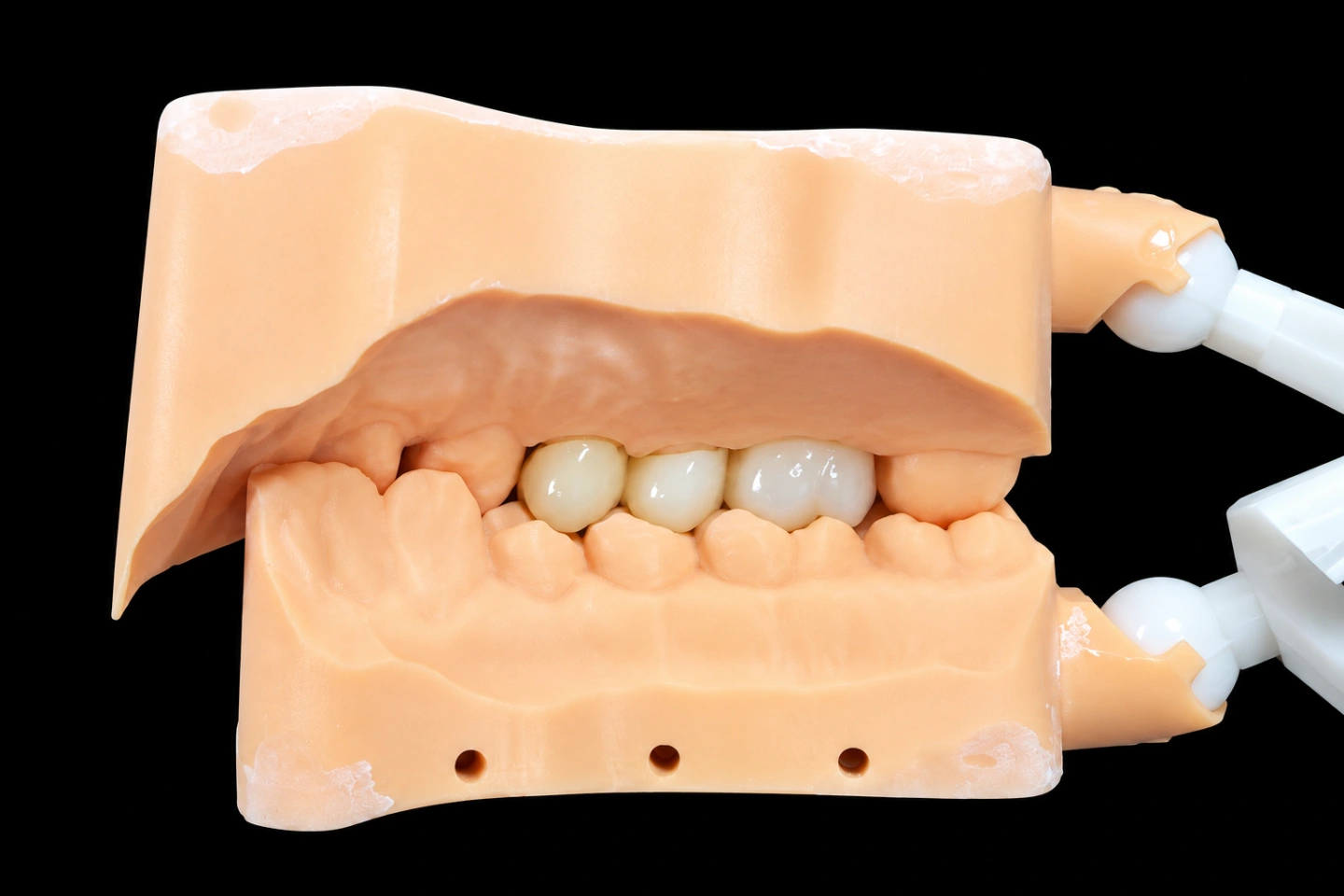
The dentist picked option 4 . Composite on the second molars is the dentist’s work, not ours. What we could do was give them a target. We added the second molar build-ups to the wax-up and printed a model of it, so the dentist could see exactly how much height each one needed .
How We Built Zirconia Crowns at a Raised Bite
Wax-up and provisionals
The digital wax-up covered all 24 zirconia crowns plus the four composite targets on the second molars :
We milled the provisionals from the approved wax-up in PMMA . The dentist built the second molars up in composite and placed the provisionals in the same visit . The patient wore them for eight weeks .
What came back after eight weeks :
| What showed up | What the dentist did |
|---|---|
| Jaw muscles felt tired the first week, then settled | Nothing. The vertical stayed at 3.0 mm |
| #15’s build-up was the first thing to hit on closing | Trimmed it 0.2 mm |
| Patient wanted #8 and #9 a touch shorter | Took 0.3 mm off both edges, so they gained 1.2 mm in the end |
The records that held the bite
Once the provisionals came off for the final records, 24 prepared teeth were out of contact. Only the four composite-built second molars still held the new vertical, so the bite scan took its height from them .
| Record | What it controlled |
|---|---|
| Scan of the adjusted provisionals in the mouth | Tooth length, edge position, outer shape |
| Palatal surfaces of the provisional canines | Guidance |
| Prep scans | Margins and inner surfaces |
| Second VPS bite, on the prepped teeth | Cross-check on the bite scan. VPS holds its shape in transit, and wax doesn’t |
| PLY scans, photos, shade tabs | Gum levels, shade, surface detail |
All scans went through our digital workflow. We lined up the provisional scan and the prep scan using the second molars and the palate as shared references, then copied the outer shape onto each crown .
The Technical Problem in This 24 Unit Zirconia Crowns Case
One side movement that didn't clear
We set up the virtual articulator from the same facebow record. Every side movement separated the back teeth except one. In left lateral, #2’s composite touched #31 on the non-working side, and that pulled the canine off the job .
We had two fixes. One was steeper guidance on #11 and #22, which would have changed shapes the patient had already worn for eight weeks. The other was to take 0.2 mm off the distal slope of #2’s composite . We sent both. The dentist trimmed the composite and sent a new bite scan of the second molars. Nothing else changed, and we left the approved guidance alone .
Design approval
The preview for the 24 unit zirconia crowns went out with occlusal, facial and lingual views of both arches, contact points, and the excursions shown against the second molars . The dentist asked for slightly wider embrasures between #12 and #13 for flossing, then approved it in writing. The final crowns shipped 6 working days after approval .
Discs, sintering and color
The 24 zirconia crowns came from two discs of one material lot, upper arch in one, lower in the other . Front teeth sat with their incisal thirds in the more translucent zone. The first molars sat lower in the gradient, where strength matters more than translucency .
With 24 unit zirconia crowns, a small drift in color shows. So we fixed the sintering program, used the same shade reference and photos for every crown, and fired a reference piece with each batch so QC could compare color, translucency and form across both arches .
Stain on the 24 zirconia crowns followed the Rx. The first molars got a bit more chroma at the neck . Every stain and firing went on the case file.
Finish
The finish on the 24 zirconia crowns was split by zone :
The reason is where the crowns land. #3, #14, #19 and #30 all touch a second molar, and a second molar is natural enamel plus composite . An umbrella review on opposing enamel wear found polished zirconia wears enamel less than glazed zirconia, though only four studies made it in. With a night grinder, we didn’t want glaze on any of those contacts.
Final checks
A QC technician who didn’t make the 24 zirconia crowns ran final inspection :
QC photos went to the dentist before shipping .
The Finished 24 Zirconia Crowns
The dentist seated the 24 zirconia crowns one arch at a time, upper first . Seating order and cement were their choice.
The one remake
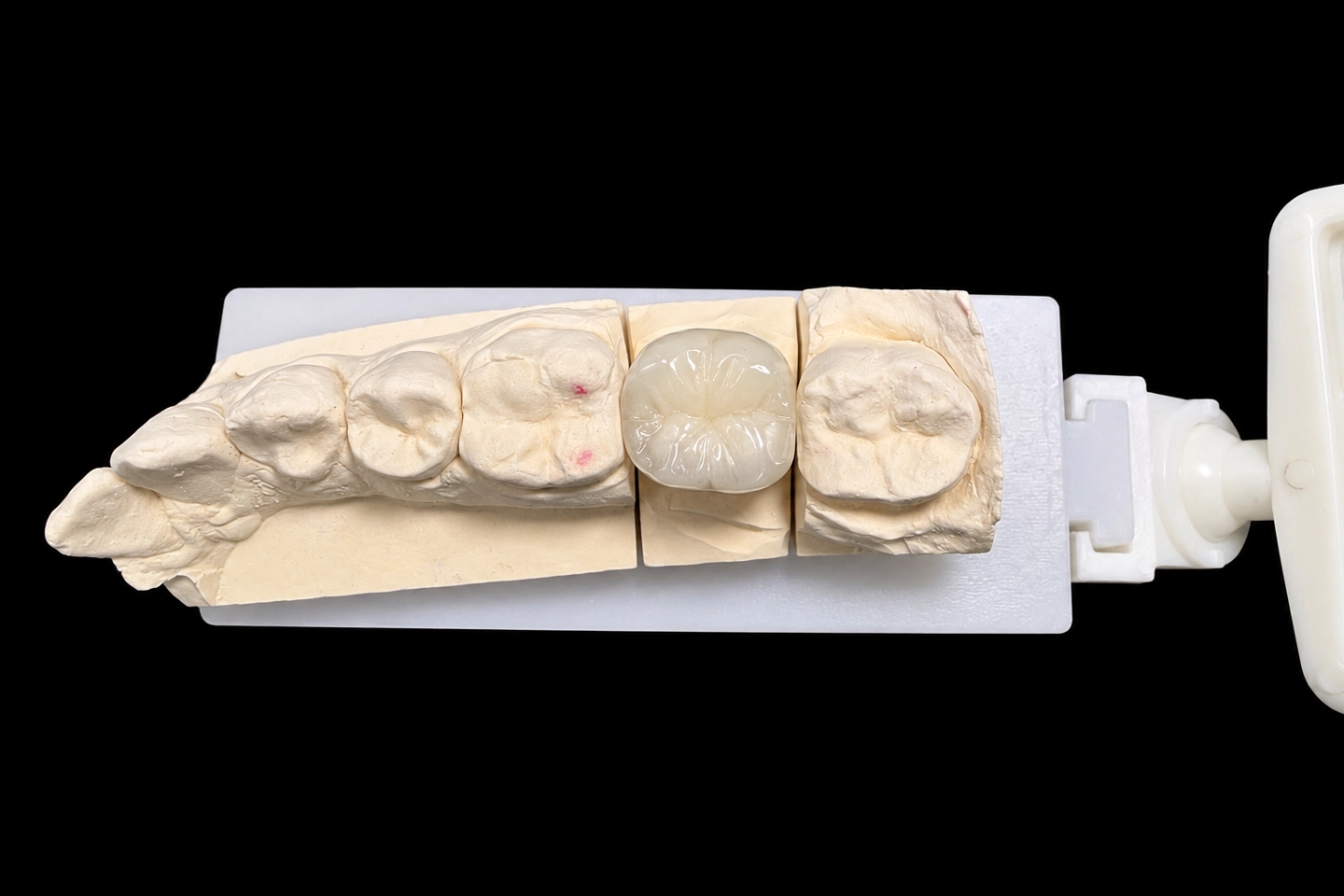
An open contact is our problem to fix, so #30 was remade free, the only one of the 24 zirconia crowns that came back . We didn’t need a new scan. We reused the approved design with a fuller distal surface and checked it on the model against #31 . The dentist cemented the other 23 and kept the provisional on #30 until the new crown came .
What the dentist told us
The dentist sent us a few notes after seating :
What the patient told us
The patient’s comments came to us through the dentist :
What These Crowns Can't Promise
We have no long-term follow-up on these 24 zirconia crowns yet . A meta-analysis of tooth-supported single crowns put five-year survival for monolithic zirconia at 96.8%. That’s single crowns, though. No pooled survival figure exists for a coordinated set of 24 zirconia crowns at a new vertical, so we won’t give you one.
Send Us Your Own 24 Unit Zirconia Crowns Case
Planning a set of 24 zirconia crowns? Here’s what helps us most:
- Tell us the plan: a tooth chart with exact numbers, the teeth you’re leaving alone and what you plan for them, and the vertical change at the pin.
- Rx: use our Rx form. Here’s how to send a case.
And here’s what you get:
- Lead time: generally 5–7 working days at the lab for the final crowns. Design approval can add 1–2 days, and time spent waiting on replies or missing files isn’t counted.
- Shipping: you pay to send work to us, and we pay to ship finished work back, remakes included.
- Warranty: 3 years on crowns. Open margins, a high bite, a crown that won’t seat, a wrong shade or poor shape all get remade free.
- Quotes: itemized to your Rx, not one bundled price. Ask for the price list.
All of it gets made in our own four labs in Shenzhen and Huizhou, China. We’ve been at it since 2012, with about 460 people, including about 100 in CAD design. At peak we make about 15,000 zirconia single crowns a month, and nothing gets outsourced. Factory-wide, 95% of cases pass final inspection the first time, and clients send back 2–3%. Those are two separate numbers, and neither is specific to this kind of case.
Istar is an FDA-registered establishment, Registration Number 3039441248, which you can look up in FDA’s establishment database. The lab runs under ISO 13485. You can also book a factory or video visit.
Got a bite change where some teeth stay unrestored? Send it as a test case. Send your first case or talk to us.
FAQ
What if I want a design you've flagged as risky?
That’s your call, and you don’t need to sign anything. We flag it and ask once. If you still want it, we make it to the Rx. Problems from that choice, remakes included, aren’t ours to cover.
Can you ship one arch before the other?
Yes. Tell us before milling starts. Once the crowns are on the machine or in the furnace, we usually can’t split the order anymore.
Can I get the zirconia brand and batch for the case?
Yes. Ask, and we’ll give you the brand, origin, batch number and certificates for that case. If you want a certain brand, put it on the Rx. We won’t swap a material without your OK.
Can you rush 24 zirconia crowns?
Rush is free for clients sending 10 or more cases a month. We guarantee the ship date. Arrival depends on customs, so we can’t guarantee that part.