Zirconia Inlays and Onlays for Dentists: A Full-Service Dental Lab Reference
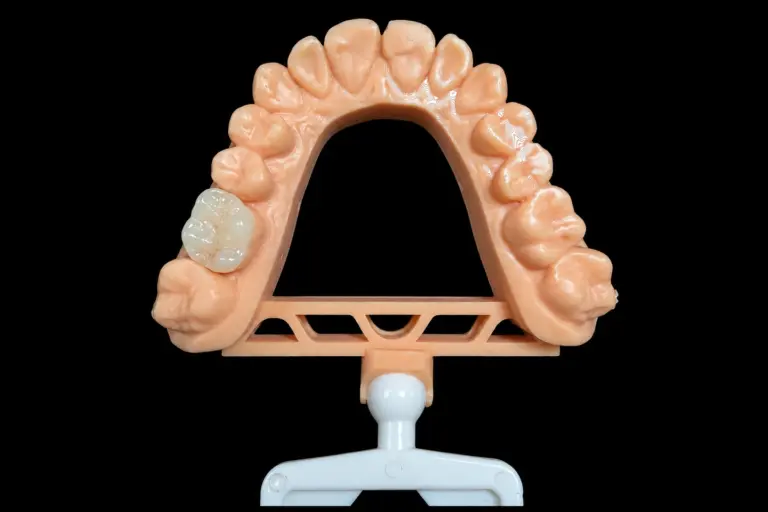
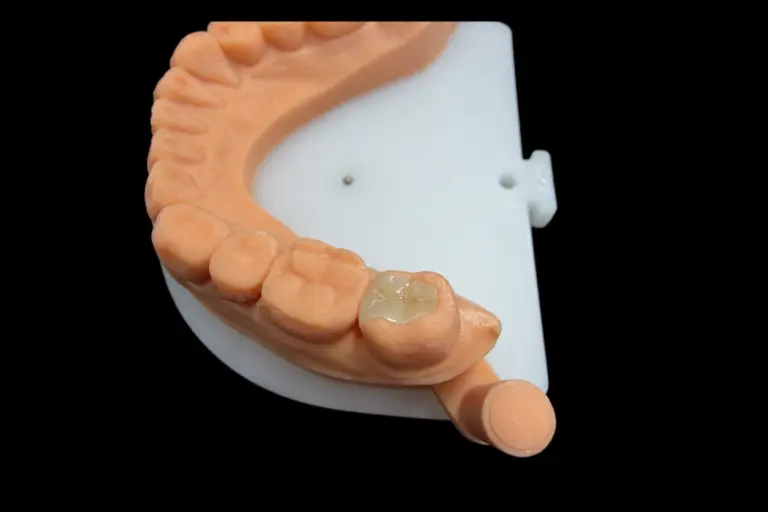
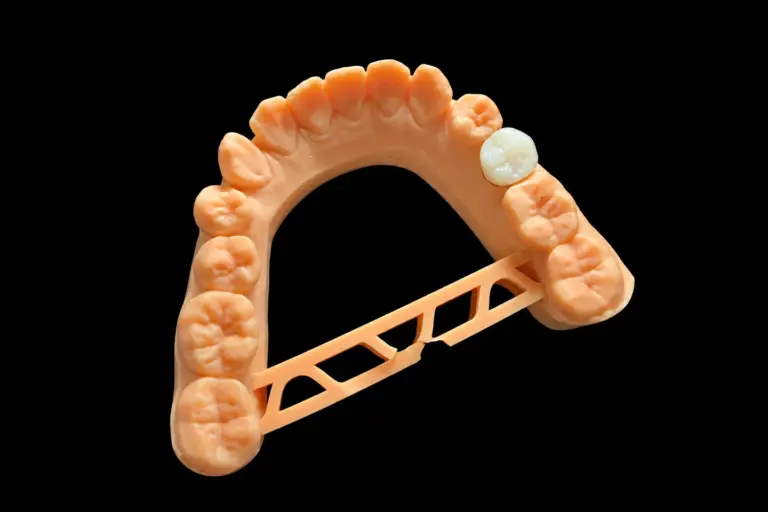
Full-contour monolithic zirconia inlays and onlays, milled in-house at our Shenzhen and Huizhou facilities since 2012 for clinics, DSOs, and partner labs in the US, UK, and Europe. We manufacture rather than broker, so the scan you send is reviewed, designed, milled, finished and inspected on our own benches.
When a Zirconia Inlay or Onlay Is the Right Call
Zirconia is a bonded indirect restoration without a ferrule. That changes which cases it is right for, which cases it is not, and how it has to be prepared and seated.
The dividing line is cusp involvement, not cavity size. A classification that holds up chairside:
| Restoration | Cusp involvement | Occlusal coverage | Typical use |
|---|---|---|---|
| Inlay | None | Occlusal fossa and up to two proximal boxes, cusps intact | Moderate Class II lesions, confined to the occlusal table |
| Onlay | One or more cusps replaced | Covers the involved cusp(s), remainder preserved | Fractured or undermined cusps, enough sound dentin on at least one wall |
| Overlay | All cusps covered | Full occlusal surface, axial walls preserved | Short clinical crowns, endo-treated posterior teeth where you want to spare the axial walls |
| Full crown | All cusps + full axial coverage | Entire clinical crown | Insufficient ferrule, or where bonding is not reliable |
The upper rows preserve more enamel and dentin than a full crown. In exchange, retention rests entirely on the bond. For endodontically treated posterior teeth, one 2018 systematic review of ceramic onlays concluded that occlusal thicknesses allowing at least 2 mm of ceramic were associated with longer survival, and that pulpless teeth, more posterior tooth position, and bruxism were linked to higher failure rates (Abduo and Sambrook 2018, PMID 29676497). Reach for an overlay or a full-coverage crown when any of those risk factors stack.
Who We Will Not Make This Restoration For
We send cases back more often than most labs admit to, and we would rather turn one down than deliver one that comes back in six months. The usual reasons:
- Confirmed bruxism without a planned nightguard. Choose a full-coverage design we can seat passively instead.
- Non-vital posterior teeth with a questionable ferrule.
- Preparations where moisture control at bonding is not realistic (deep subgingival margins, uncontrolled sulcular bleeding).
- Occlusal clearance under 1.5 mm. Some labs will take a case at that thickness; we won’t, because 1.0–1.2 mm of zirconia occlusally is where most of the fractures we see originate. If the clearance is short, we say so before cutting starts, not after.
The Zirconia Inlay Preparation We Expect
Send us a prep that gives the restoration a chance. These are our working targets, the same numbers we send in case feedback on WhatsApp:
| Parameter | Target | Why |
|---|---|---|
| Occlusal thickness | ≥ 2.0 mm | Associated with longer onlay survival; below this, posterior load drives fracture |
| Axial wall thickness | ≥ 1.0 mm | Resists wedging under cuspal flexure |
| Taper per wall | 6–10° | Allows passive seating of a monolithic restoration without rocking |
| Internal line angles | Rounded | Sharp angles concentrate stress and preferentially crack the inlay from the inside |
| Occlusal margin on covered cusps | Butt joint, 1.0–1.5 mm shoulder | Avoids thin ceramic shoulders that chip during seating |
| Isthmus width | ≥ 1.5 mm | Narrow isthmi fracture at the connector before anything else does |
| Undercuts | Blocked out chairside before scanning | We cannot design a passive path of insertion around undercuts we did not know existed |
| Finish line clarity | Clean, visible, no blood or saliva at scan | A margin we have to guess at is a margin we will not fit |
Mark the finish line manually in your scan software. We don’t rely on auto-detection for inlay margins. The shoulder is often shallower than a crown prep and the algorithms over-smooth it. If you prefer a conventional impression, send the second mix with a sharp sulcular retraction; we can work with either. For the opposing arch, we need the full occlusal plane captured to the terminal molar.
Materials We Mill, and How We Choose Between Them
We mill monolithic zirconia for inlays and onlays. No porcelain veneer. No cement-retained zirconia frames with a layered build-up; those belong to a different conversation about anterior crowns.
Which disc you get depends on tooth position, functional load, and the esthetic demand:
- High-strength multilayer zirconia for first and second molars, especially where occlusal load is heavy or clearance is tight. Higher yttria content near the gingival base of the disc gives mechanical reserve where you need it.
- Translucent multilayer zirconia for premolars and visible-smile cases in patients without parafunction. Translucency climbs with yttria content; strength falls. We will not use the most translucent class for a bruxer.
The flexural-strength numbers printed on manufacturer brochures are useful for comparing within the same test method. They don’t predict survival on their own, and they can’t be compared across 3-point and biaxial reports as if they were the same measurement. We can share the brand, lot number, and manufacturer test certificate for the specific disc your case was milled from. Ask the coordinator when you place the order.
On survival data, the honest answer is uncomfortable. Published 5- and 10-year survival numbers for ceramic inlays, onlays, and overlays (92–95% at 5 years and roughly 91% at 10 years) come from a meta-analysis of glass-ceramic and feldspathic restorations, not monolithic zirconia inlays specifically (Morimoto et al. 2016, PMID 27287305). The onlay-focused review is similar in scope (Abduo and Sambrook 2018, PMID 29676497). Our PubMed check in late 2026 for “zirconia inlay”[TIAB] OR “zirconia onlay”[TIAB] returned 16 records, and none of them were long-term clinical trials of single-tooth monolithic zirconia inlays. If you see a lab advertising a 10-year survival figure for this exact restoration, ask them which paper it comes from.
For resin cement choice, note that cement selection measurably affects tooth fracture resistance after cementation of zirconia inlays, while immediate dentin sealing did not reach significance in the same bench study (Iketani et al. 2021, PMID 34370908). That is a counterintuitive finding and worth knowing before you default to IDS on every case.
From the Scan to Your Office: How We Make It
For a zirconia inlay or onlay, the sequence runs:
- Case intake and prescription review. The coordinator who takes your case checks for missing prescription data, incomplete scans, and mismatched opposing records. If anything critical is missing, production pauses and we message you on your WhatsApp case thread before touching the design.
- CAD design. The designer builds the restoration against your margin line, your opposing occlusion, and the clearance you prepared. We will send a design preview for approval if you ask for one; that adds 1–2 production days.
- CAM milling. We mill the restoration from the disc indicated for the case, with the path of insertion verified in software before the machine runs.
- Sintering. The restoration goes through its validated sintering profile. Shade characterization and glaze happen after sintering.
- Finishing. Occlusal anatomy and intaglio are refined; a dedicated technician on the ceramics team handles stain and glaze for premolar and visible-cusp cases.
- Final inspection. An independent QC technician, not the one who milled it, checks the restoration against every item on our final-inspection checklist. The restoration doesn’t leave this bench unless every item passes.
- Packaging. Each case ships in a foam-lined box sized to the restoration to prevent transit chipping.
What the Final Inspection Checks
The checklist our QC bench works from, item by item:
- Marginal integrity: continuous, uniform margin gap, no lifts, no chips.
- Internal surface: no nodules, no residual sprue, no voids.
- Seat and passive adaptation: full seating on the die, no rocking.
- Proximal contact: appropriate tightness per the prescription.
- Occlusion: centric, protrusive, and lateral excursions verified on the articulated model.
- Form and finish: anatomy matches the design, polish and glaze consistent, no visible fractures or porosity.
Any item that fails sends the case back into the production flow with the specific defect noted. Internally we track two numbers: the first-pass QC yield and the final client-accepted yield. We can send a monthly summary of the metrics for your account on request; it’s a service we already run for a handful of DSO and lab accounts.
Working With Us: The Short Version
Case submission
Send a digital scan via 3Shape Communicate, Medit Link, iTero, Shining 3D, Dexis, Primescan, DS Core, or a direct file transfer. We accept STL, PLY, OBJ, DCM (3Shape native), and native CAD design files from exocad and 3Shape. For a conventional case, send the impression and bite with your usual carrier. The prescription needs the clinic, dentist, patient reference, restoration type, desired delivery date, finish-line type and depth, and proximal contact preference. We publish a downloadable Rx and a case-check list; ask the coordinator for the current version.
What arrives at our dock, and when
Production starts the day we have a complete case. Design-approval wait time, incomplete file resubmission, and your reply time are not counted against the turnaround. Our standard crown-and-bridge turnaround is 2–3 working days in-lab, with longer windows for full-arch and complex implant work. International shipping, customs, and remote-area delivery sit on top of the lab window. Those are carrier-controlled and we don’t include them in the stated turnaround.
Scope
We can do CAD design only, CAM milling only, or the complete production run. For lab-to-lab partners we accept your material library and design parameters; if your design file is missing required material or thickness information we will tell you before the tool path is cut.
What is covered if it comes back
Marginal gaps, open proximal contacts, high occlusion, failure to seat, out-of-shade work, and visible esthetic defects are remakes on our account. Case re-work driven by a change you request after approval (new shade, new material, new preparation) is a new case, priced as one. Issues must be reported within 24 hours of receipt, with the case number, product, cause, and photographs.
Compliance
Istar Digital’s custom restorations are covered under our FDA establishment registration and device listing (which include custom crowns, bridges, inlays, onlays, veneers, and custom implant abutments and superstructures), our EU MDR Annex XIII custom-device notification, UK MHRA registration, and an ISO 13485 quality system. The current registration numbers and certificates are available to approved accounts on request.
Why Dentists and Labs Partner With Istar Digital
- Around 460 technicians across design, milling, implants, ceramics and metals, removable, and QC.
- Our client base includes US, UK, Dutch, German, French, Belgian, Austrian, Swiss, and Luxembourg practices and labs. English is not a second language for the coordinator you will work with.
- Factory visits and video audits are welcome at either facility. Account managers arrange both.
FAQ
How is a case priced, and what does the quote cover?
Unit count is the base. The material class sets the starting price, and anything outside a standard inlay, such as implant components or design complexity, is added on top. A quote covers design, models, components, packaging and transport, and we confirm the total in writing before production starts. The current price list comes from your coordinator, since material and freight costs move. Payment is by bank transfer or PayPal.
If a case comes back with a problem, how quickly do you respond?
A major complaint gets an initial read within three to four hours and a final conclusion within 24. That first read carries the cause and what we intend to do about it, so you are not left waiting on a replacement unit to find out where you stand.
Can you ship direct to my clinic under my lab's branding?
We work with outsourcing labs on a private-label basis. The delivery address is locked once a case has shipped, so it has to be correct at submission. Every case carries a unique Istar Digital reference from intake through delivery, so a receiving lab can tie a shipment back to the exact design file and QC record.
Ready to Send a Case?
Our account coordinators handle submission forms and the first case walkthrough. The fastest path:
- New account. Contact us with your clinic or lab details and your preferred scanner. We will send a quote and your coordinator’s direct contact within one working day.
- Existing account. Message your coordinator on your WhatsApp case thread.
- First time with a digital case. Our How to Send page covers file formats and portal setup.