CoCr Full Cast Crown: All-Metal Cobalt-Chromium Crowns Made to Your Rx
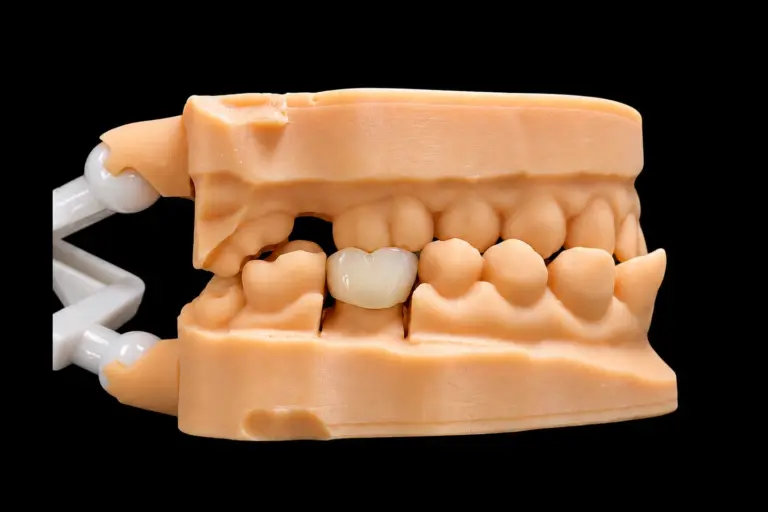
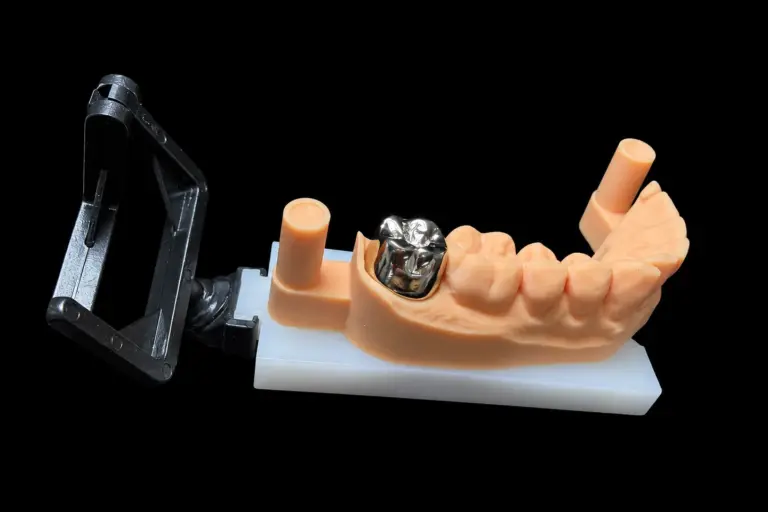
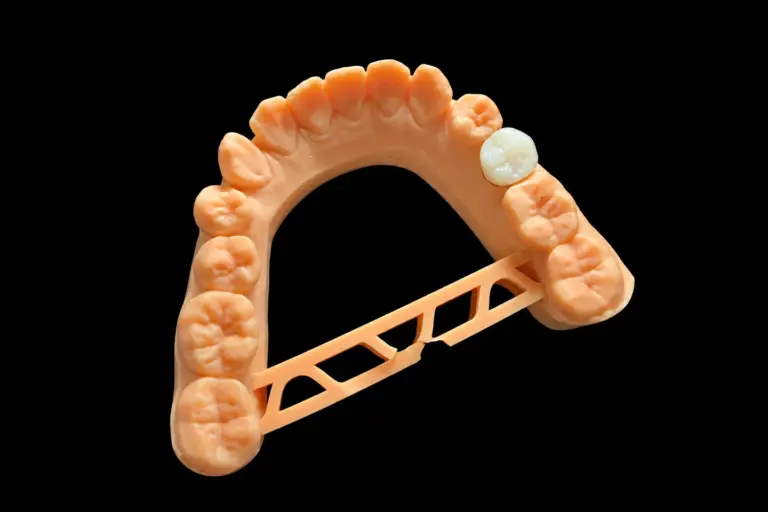
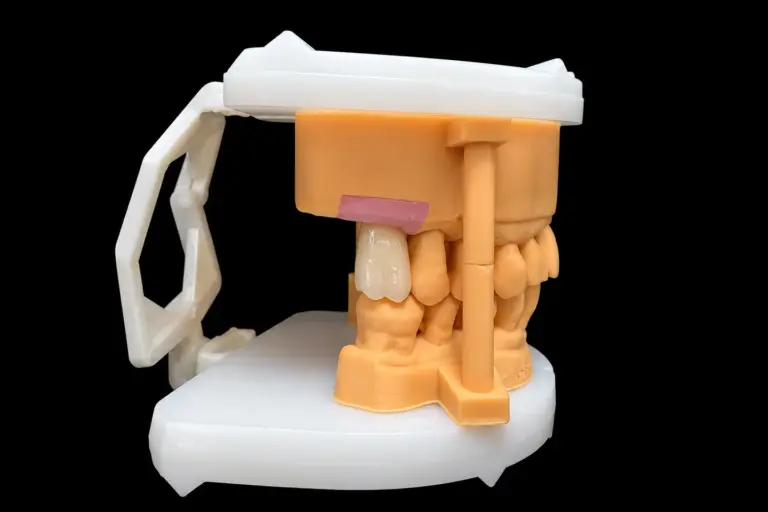
A CoCr full cast crown from Istar Digital Dental Lab is an all-metal crown in cobalt-chromium alloy, with no porcelain layer, made to your prescription for clinics and dental labs in the US and Europe.
What You Can Order as a Full Cast Crown
- Single crowns and bridges in cobalt-chromium, with an all-metal occlusal and axial surface.
- Nickel-free and beryllium-free alloys when the patient’s history calls for them. Write the requirement on the Rx.
- Other alloys on request. We also work with palladium-silver and gold alloys, so if a case needs a noble or high noble metal instead of CoCr, tell us before production.
When a Cobalt Chrome Crown Is the Right Call
An all-metal cobalt chrome crown earns its place where strength in a thin section matters more than appearance.
Good candidates
- Posterior teeth where a metal surface is acceptable to the patient.
- Limited occlusal clearance. With no porcelain layer to make room for, an all-metal crown needs less occlusal reduction than a PFM crown, so it suits short clinical crowns and teeth where you’d rather not reduce further.
- Cases where porcelain chipping is the concern. There’s no veneering ceramic to fracture.
Consider another material when
- The tooth shows when the patient smiles or talks. A metal occlusal or buccal surface is an esthetic limit. Our full-contour zirconia crowns and bridges give you a tooth-colored option for strong posterior cases.
- The patient reports a metal allergy. Confirm the history and choose the alloy by its declared composition, or go metal-free. The ADA notes that 10–20% of the general population is nickel-sensitive, while oral reactions are rarer and less severe.
- You expect a lot of chairside adjustment. Base metal alloys are harder than gold alloys, which makes them slower to adjust and repolish in the mouth.
Cast or Milled: How We Make CoCr Crowns
We fabricate cobalt-chromium crowns by investment casting and by CAM milling. A systematic review of CoCr fixed dental prostheses concluded that marginal fit wasn’t negatively affected by the manufacturing technique, while noting that the effect of technique on fit is still not fully clear. In practice, the records, the design, and the finishing decide how a crown seats at least as much as the route does.
If your practice or your own lab requires one route, write it on the Rx and we’ll confirm it before production. We never change the alloy or the agreed method without your consent, written or verbal.
The metal stage runs under process controls that matter for alloy work:
- Validated equipment. Melting and heat-treatment equipment goes through installation, operational, and performance qualification (IQ/OQ/PQ). We verify temperature control, vacuum or protective atmosphere, and cast quality, and requalify periodically.
- No cross-contamination between alloys. CoCr is processed in its own zone with dedicated tools, separate sandblasting and polishing equipment, and sorted recycling, so its composition stays as specified.
Preparation and Rx Details for a Full Cast Crown
Commonly taught guidelines for a complete-coverage metal crown are summarized in this tooth preparation guide from the Foundation for Oral-facial Rehabilitation:
| Feature | Guideline |
|---|---|
| Margin | Chamfer, 0.3–0.5 mm deep. A knife-edge can be used on some tipped teeth to avoid over-reducing the side the tooth tips toward |
| Occlusal clearance | 1.0–1.5 mm, following the cusp anatomy |
| Total occlusal convergence | 10–20° |
On the Rx, tell us:
- The margin design (chamfer, knife-edge, or other) and whether it’s supragingival or subgingival, and by how much. On a scan, trace the finish line yourself rather than relying on automatic detection.
- Contact tightness: light, normal, or tight.
- Limited space: write “occlusal space inadequate” and the clearance you measured.
- Bruxism or clenching, so we can design a thicker occlusal surface with even, flat contacts that spread the load.
What Happens If the Clearance Is Short
Our technicians measure the occlusal space on the model before design. If it’s too tight for the restoration you ordered, or a large undercut needs reduction, we contact you before going ahead. If you’d like, we’ll also include a note with the finished case naming the tooth and how many millimeters to reduce at seating, so the crown goes in as designed.
You can also ask to see the design before the crown is cast or milled. We send screenshots or files by email or in your case group chat. Design approval adds 1–2 working days.
Records and Digital Files
For each crown or bridge, send the working arch, the opposing arch, and a bite record, either as physical impressions with a wax bite or as an intraoral scan. The opposing scan should cover the full occluding dentition back to the last molar, plus 2–3 teeth next to the preparation and the surrounding gingiva.
We accept scans from 3Shape TRIOS, Medit, iTero, CEREC, Shining3D, and Planmeca, in STL, PLY, OBJ, DCM, or 3Shape .3oxz, and receive cases through 3Shape Communicate and Medit Link. STL is enough for a posterior metal crown. Zip each case in its own folder (not RAR), keep single-arch STL files under about 150 MB, and use one case ID across the files and the Rx.
We check incoming scans within one working day. A blurred or missing finish line, holes in the mesh, a misaligned bite, or a missing opposing arch means a rescan, and we’ll tell you right away. A clinic case number is enough to identify the patient. The digital dental laboratory page covers the full digital workflow.
Inspection Before Each Crown Ships
Final release is done by dedicated quality inspectors who don’t make restorations themselves. Each cobalt-chromium crown is checked on the model against the approved Rx and design:
- Margins: even marginal gap, no lifted or chipped edges
- Internal surface: no burrs or bumps
- Seating: full and passive
- Contacts: tightness as prescribed
- Occlusion: centric, protrusive, and lateral contacts, with early contacts removed
- Metal quality: visual and magnified inspection for porosity, cracks, and distortion
- Form and finish: anatomy, contour, and polish
Inspection uses microscopes, scan comparison, and digital measurement. The metal surface is ground and polished in stages with polishing compound, then cleaned ultrasonically and with steam to remove dust and residue.
Across our labs, 95% of restorations pass final inspection. Separately, our overall remake rate, meaning cases clients send back, runs at 2–3%. Both figures cover all restoration types, not CoCr alone.
Alloy Documentation and Traceability
For every case, we can provide the brand, origin, batch number, and certificate of the alloy used, and proof of its composition. That gives you something concrete to file with the patient record.
Every case carries a unique number that ties it to the technicians, equipment, material batches, and inspection results behind it. Our materials come with their manufacturers’ documentation, including ISO 10993 biocompatibility data.
The ADA classes (high noble, noble, predominantly base) describe how much gold and platinum-group metal an alloy contains. ISO 22674 types describe mechanical properties such as proof stress and elongation. A CoCr alloy is predominantly base metal under the first system, and its ISO type comes from its manufacturer’s documentation. One doesn’t tell you the other.
Registrations
Istar Digital Dental Lab is an FDA-registered establishment. Our Registration Number is 3039441248, which you can verify in the FDA establishment registration database. Our device listings cover custom crowns and fixed bridges. For EU clinics, custom-made crowns follow the MDR custom-made device procedure, with a statement for each case. Our labs run an ISO 13485 quality management system.
Turnaround, Quotes, and Shipping
A CoCr full cast crown takes 5–7 working days in the lab, counted from the day we receive complete records. Time waiting for missing records or your reply, including design approval, isn’t counted. Weekends and Chinese public holidays aren’t production days.
Rush service is free for clients who send 10 or more cases a month. International shipping and customs clearance sit outside in-lab time, so on a rush case we guarantee the ship date but not the arrival date.
Quotes are itemized to what you order rather than bundled into one price, and you can confirm the full cost before production starts. You pay to send impressions or models to us, and we pay to ship finished work back, remakes included.
Warranty and Remakes
Full cast crowns and bridges carry a 3-year warranty. We remake or adjust lab-caused problems free of charge, including:
- An open margin or open contact
- High occlusion
- A crown that doesn’t seat
- Visible defects or poor form
A remake is charged when you change the material or the basic requirements of the case, or when we made the case at your request from an impression we’d flagged as unclear.
For a seating, margin, or bite problem, send a new scan, model, or impression along with the crown, because the original records may be the cause. Sending the crown and records to us is at your cost.
Why Clinics and Labs Send Their Metal Work to Istar Digital
Istar Digital Dental Lab has made dental restorations since 2012, for more than 50 dental labs, 100 clinics, and 400 dentists. We run four labs in Shenzhen and Huizhou, China, with about 460 staff, including a ceramic and metal department of about 70 people and a separate quality control team of about 25.
Nothing is outsourced: every production step happens in our own labs. For our other fixed work, see the crown and bridge dental laboratory.
CoCr Full Cast Crown FAQs
Which CDT code applies to a CoCr full cast crown?
A full cast crown in cobalt-chromium is generally reported as D2791, crown – full cast predominantly base metal. A CoCr crown with porcelain falls under D2751 instead. Coding and payer rules are the treating dentist’s decision.
Which cement should I use?
Metal crowns can be cemented with conventional cements such as glass ionomer or polycarboxylate, or with a resin cement. Follow the cement manufacturer’s instructions for surface treatment.
Can you ship finished crowns directly to my client's office?
Yes. We ship to any address you give us, so a dental lab can have finished work sent straight to the prescribing clinic. The sender address on the waybill can’t be changed.
Can you keep each dentist's preferences on file?
Yes. Our case system records design preferences separately for each dentist, which helps group practices and DSOs. Our labs use largely the same materials but have separate technician teams, and if you prefer one team’s work, we’ll assign your cases to it.
What are your office hours, and how fast do you reply?
Our customer service team works 9:30 a.m. to 6:00 p.m. China time (UTC+8), and stays available until midnight for special or urgent cases. During working hours, technical questions usually get an answer within an hour. Outside them, the time difference can stretch that to 7–8 hours, but never more than 12.
How does billing work?
We accept bank transfer and PayPal. Transfer fees are paid by the sender, at the exchange rate on the day of payment. Invoices are issued per batch, or as a monthly statement for some accounts, and show your case number, patient ID, or purchase order number. New clients can apply for one-month payment terms.
Send Your First Full Cast Crown Case
The fastest way to judge our metal work is one crown on your own patient. Single trial cases are welcome, and ongoing partnerships work best with a regular flow of cases.
- Digital case: email or upload your scans with a completed Rx form.
- Impression case: follow the how-to-send guide. We can send you a prepared shipping waybill, or you can ship to our address and send us the tracking number.
- Checking us out as a supplier? Ask for the alloy documentation that comes with a case, or book an on-site visit or a video tour of the factory.
- Pricing or a specific case: contact our crown and bridge team for the current price list or a case review.